The headlines are bleeding with the same tired narrative. Regional instability in the Middle East—specifically the specter of an Iran-Israel escalation—is supposedly the dagger aimed at the heart of the Bangladeshi economy. Analysts point to the Red Sea, the Strait of Hormuz, and the inevitable spike in Brent crude as the horsemen of a fiscal apocalypse. They claim higher freight costs and lost remittance income are "uncontrollable external shocks."
They are wrong.
Calling these disruptions "unforeseen" is a convenient lie told by policymakers to mask a decade of structural negligence. To suggest that Bangladesh is a passive casualty of Middle Eastern geography is to ignore the fact that the country’s economic vulnerability is a choice. We aren't seeing a crisis of geopolitics; we are seeing the inevitable collapse of a high-risk, low-diversity economic model that treated "stability" as a permanent gift rather than a fleeting window for reform.
The Myth of the Energy Price Victim
Every time a drone flies over the Persian Gulf, Dhaka panics. The common argument is that Bangladesh, as a net energy importer, is defenseless against the resulting price volatility. This is the "lazy consensus" of the decade.
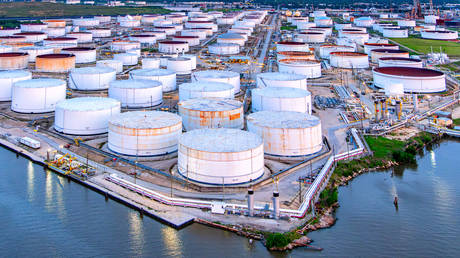
The reality? The crisis isn't the price of oil. The crisis is a power sector built on the back of expensive, imported fossil fuels while ignoring domestic gas exploration and renewable integration. For years, the Bangladesh Power Development Board (BPDB) has paid billions in "capacity charges" to private power plants that sit idle, while the nation remains tethered to the spot market for Liquefied Natural Gas (LNG).
When global prices surge due to Iranian tensions, the government cries foul. But the data shows that Bangladesh’s energy intensity—the amount of energy used to produce a unit of GDP—is remarkably inefficient compared to regional peers. We are burning more money to produce less value.
Imagine a factory owner who refuses to fix a leaking pipe and then blames the water company for a high bill during a drought. That is the current state of Bangladeshi energy policy. The "higher costs" being reported aren't an "Iran problem." They are a "maintenance and strategy problem" that has been festering for years.
Remittance is a Fragile Crutch Not a Foundation
The competitor pieces mourn the potential "lost income" from the millions of Bangladeshi workers in the Middle East. They fear that a regional war will send these workers packing, drying up the foreign exchange reserves that keep the Taka on life support.
This fear reveals a deeper, more uncomfortable truth: Bangladesh has outsourced its social safety net to the whims of foreign monarchs.
The reliance on low-skilled labor export is an admission of failure in domestic industrialization. We are exporting human capital to build cities in the desert because we haven't created a high-value manufacturing base at home beyond the Ready-Made Garment (RMG) sector.
If your entire economic stability depends on the Strait of Hormuz remaining open, you don't have a "robust" economy. You have a hostage situation. The "lost income" everyone is terrified of is the price of failing to transition from a labor-exporting nation to a value-adding hub.
The Freight Cost Fallacy
"Shipping costs are ruining our exports!"
This is the battle cry of the RMG barons every time the Red Sea gets choppy. They claim the diversion around the Cape of Good Hope adds 10 to 15 days to transit times and jacks up insurance premiums. While mathematically true, it misses the point entirely.
The RMG sector in Bangladesh operates on razor-thin margins and a "Fast Fashion" clock that is inherently unsustainable. The "disruption" is only a crisis because the industry has failed to move up the value chain. If you are selling $5 t-shirts, a $0.50 increase in shipping is a catastrophe. If you were selling $50 high-tech technical apparel, it would be a rounding error.
By staying in the basement of the global supply chain, Bangladeshi exporters have ensured that any global hiccup becomes a local cardiac arrest. We are blaming the Houthi rebels for our inability to innovate beyond basic cotton knits.
The Hidden Opportunity in the Chaos
Contrarian logic suggests that these disruptions are exactly what Bangladesh needs to force a long-overdue pivot.
As long as oil was cheap and the Red Sea was calm, there was no incentive to fix the banking sector, hunt for domestic gas, or diversify export markets. The current "pain" is actually a market signal—a brutal, unfeeling, but necessary correction.
- Energy Sovereignty over Spot Markets: This is the moment to stop subsidizing inefficiency and start aggressive domestic gas drilling and solar auctions. The cost of a solar farm doesn't change when a tanker is seized in the Gulf.
- Market Diversification: Why is 70% of our trade tethered to routes that pass through the world's most volatile checkpoints? The ASEAN and East Asian markets are screaming for engagement, yet we remain obsessed with the Euro-Atlantic corridor.
- Financial Reform: The volatility in the Middle East wouldn't be such a threat if our own banking sector wasn't riddled with non-performing loans (NPLs). The "dollar crisis" is exacerbated by capital flight and hundi systems, which thrive precisely because the formal banking sector is opaque and mismanaged.
Stop Asking "When Will it End?"
People also ask: "How can Bangladesh protect its economy from the Iran-Israel war?"
The honest, brutal answer is: It can't. Not in the short term.
You cannot fix twenty years of strategic laziness in twenty days of a geopolitical flare-up. The premise of the question is flawed because it assumes the "war" is the variable we should be managing. It isn't. Our internal resilience is the only variable we control.
I’ve seen this play out in the 2008 crash and the 2022 post-pandemic inflation spike. The companies and nations that survived weren't the ones that predicted the crisis best; they were the ones that had the least "fat" and the most "flex." Bangladesh is currently all fat and no flex.
The current narrative of "woe is us" serves only to protect the status quo. It allows leaders to point to a map of the Middle East and say, "Look, it’s their fault," while the local economy suffocates under the weight of bad debt, energy mismanagement, and a lack of imagination.
The Iran-Israel conflict is a mirror. It is reflecting the structural weaknesses we’ve ignored for a decade. Instead of praying for peace in the Levant so we can go back to our comfortable, failing habits, we should be using this crisis to dismantle the monopolies and inefficiencies that made us this vulnerable in the first place.
Security is not the absence of conflict; it is the presence of an economy that can withstand it. Bangladesh doesn't have a Middle East problem. It has a Bangladesh problem.
Fix the house. The weather is never going to be perfect.