The official Real Madrid press machine wants you to bow at the altar of the newly renovated Santiago Bernabéu. They call it a grand stage. They call it a historic marvel. They paint pictures of a glittering, retractable-roof colosseum that will anchor the club’s dominance for the next half-century.
It is a beautiful illusion.
The lazy consensus in sports business journalism accepts the club's narrative hook, line, and sinker: spend €1.8 billion, install a retractable pitch, host Taylor Swift, and magically secure your financial supremacy forever. But while the press marvels at the hyper-modern aesthetics, they ignore the crippling structural reality. Real Madrid has not built a vanguard asset; they have anchored themselves to a massive, depreciating physical anchor in an era where value has gone completely digital.
I have spent nearly two decades analyzing sports infrastructure financing and club valuations. I have watched legacy giants sink under the weight of concrete ambitions while agile operators capture the actual growth markets. The new Bernabéu is a triumph of 20th-century thinking wrapped in 21st-century steel. It is a financial trap disguised as a monument.
The Retractable Pitch Illusion: Why Non-Football Revenue is Overrated
The centerpiece of the Bernabéu hype is its multi-purpose capability. The pitch rolls away into an underground greenhouse, allowing the venue to host concerts, NFL games, and conventions 365 days a year. The club projections claim this will generate an extra €300 million to €400 million annually.
Let us look at the actual math, not the PR brochures.
Live entertainment operates on notoriously razor-thin margins for the venue host. When a global pop star plays a stadium, the artist takes the lion's share of the ticket gross—often up to 85%. The stadium keeps concessions, parking, and a nominal facility fee. To clear €400 million in pure profit from non-football events, the Bernabéu would need to operate at maximum capacity nearly every mid-week night of the year.
Spain's macroeconomic reality violently collides with this ambition. Madrid is not London, New York, or Tokyo. It does not have the infinite corporate entertainment spend or the density of high-net-worth individuals required to sustain premium-priced events on a Tuesday night in November.
Worse, stadium debt is an aggressive predator. Real Madrid structured their stadium loans across multiple tranches, racking up total repayment obligations that comfortably exceed €1.7 billion when accounting for interest. This creates a massive, inflexible fixed cost. If consumer spending dips, or if the touring concert market enters a cyclical downturn, the Bernabéu becomes an expensive, empty cavern eating away at the club's wage budget.
The False Equivalence: Madrid is Not the NFL
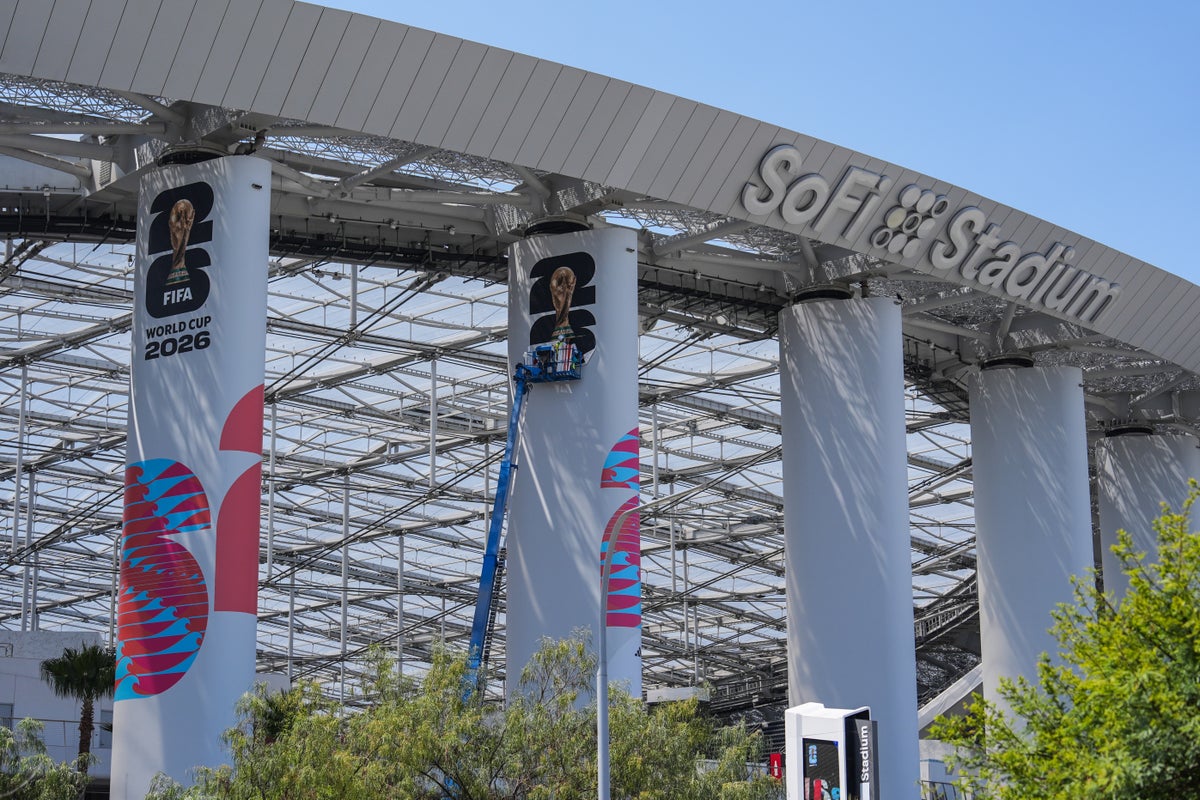
Proponents of the Bernabéu project constantly point to US stadiums like SoFi Stadium in Los Angeles or Allegiant Stadium in Las Vegas as blueprints for success. This comparison is fundamentally flawed.
NFL stadiums operate within a closed franchise system with strict salary caps and guaranteed, equalized television revenue distribution. A franchise owner can comfortably service stadium debt because their biggest operational cost—player salaries—is artificially capped by a collective bargaining agreement.
Real Madrid operates in the wild west of European football. There is no salary cap. They compete in an open market against state-backed entities like Manchester City and Paris Saint-Germain, whose capital structures do not rely on traditional stadium yields. Every Euro Madrid spends servicing a variable-rate loan or covering stadium maintenance is a Euro that cannot be offered to the next generational superstar in wage negotiations.
Imagine a scenario where Madrid's non-football revenue underperforms by just 20% over a three-year period. In the NFL, that is a minor corporate headache. In La Liga, that is the difference between signing the world's best forward or being forced to sell your star midfielder to a Premier League rival to balance the books for UEFA's Financial Sustainability Regulations.
Physical Infrastructure is Yesterday’s Battle
The biggest strategic mistake Real Madrid is making is ideological. They are doubling down on localized, physical real estate at the exact moment the global sports ecosystem is digitizing and decentralizing.
A stadium, no matter how spectacular, only captures value from the miniscule fraction of the fanbase that can physically walk through the turnstiles. Real Madrid claims to have over 500 million followers worldwide. The Bernabéu holds 85,000 people. You are spending billions to optimize the monetization of less than 0.02% of your audience.
The real battle for supremacy in modern sports is happening on screens, in algorithms, and through direct-to-consumer global media products.
- Monetizing the Digital Fan: The teenager in Jakarta or Lagos will never buy a €150 VIP ticket at the Bernabéu. They buy digital shirts, streaming passes, and interactive media experiences.
- The Agility Deficit: Physical assets require constant, expensive capital expenditure just to prevent decay. Digital assets scale with near-zero marginal cost.
- Opportunity Cost: The €1.8 billion sunk into the ground in Chamartín could have built a proprietary global media network, purchased multiple feeder clubs across North and South America, or funded a venture capital arm to control the future of sports technology.
By anchoring their capital to a specific coordinate in Spain, Madrid has restricted their financial velocity.
The Hidden Cost: Gentrification Backlash and Regulatory Risk
The club's communications team conveniently glosses over the escalating friction between the stadium and the city it inhabits. The Bernabéu is not located in an isolated industrial park; it sits squarely in the affluent, densely populated Chamartín neighborhood.
Turning a football stadium into a 365-day-a-year concert venue has triggered furious resistance from local residents. Lawsuits over noise pollution, traffic congestion, and local zoning laws are already piling up. Spain's courts have shown a willingness to side with municipal regulations over corporate interests.
If local courts impose strict curfews or limit the number of non-sporting events allowed per year, the financial model supporting the Bernabéu renovation instantly collapses. The club has assumed regulatory smooth sailing in a world where urban communities are increasingly hostile to massive corporate disruptions in residential zones.
The Vulnerability of the Pure Football Model
There is a distinct downside to my thesis, and it must be addressed honestly. If Real Madrid manages to completely monopolize the European live event market, and if they successfully spearhead a future European Super League that guarantees massive domestic TV rights, this stadium could become a money-printing machine. If you control both the content and the premier venue in Southern Europe, you hold immense leverage.
But that is a massive gamble built on a house of cards. The European Super League project is stalled in political gridlock. Premier League clubs, backed by astronomical domestic TV money, have zero incentive to join a breakaway league that devalues their own asset. Without a guaranteed, American-style closed league structure, Real Madrid remains exposed to the hyper-volatile meritocracy of European football.
One bad sporting cycle—a couple of years finishing third in La Liga and crashing out of the Champions League round of 16—and the premium corporate revenue backing the Bernabéu evaporates. Corporate clients do not pay €10,000 for a VIP box to watch mid-week matches against lower-tier opposition when the team is in transition.
Stop Building Monuments to the Past
European football clubs need to stop copying the stadium-centric models of the early 2000s. The new Bernabéu is an architectural marvel but a strategic misfire. It optimizes for a world where people still need to stand in a physical line to consume a product.
True competitive advantage in the modern sports economy does not come from steel, glass, or retractable grass. It comes from intellectual property, global content distribution, and financial optionality. While the media celebrates Madrid's new playground, the club has quietly traded its financial agility for a mountain of fixed debt and a hyper-localized revenue stream. They have built a monument to 20th-century prestige, leaving themselves dangerously exposed to the digital realities of the 21st.