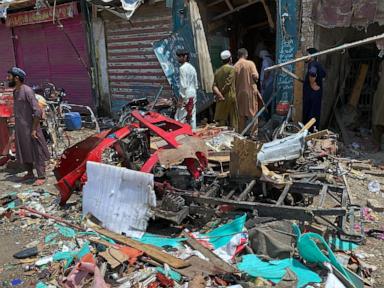
The detonation in Pakistan’s northwest was not just a failure of intelligence but a grim reminder of a deteriorating border policy. Nine lives ended in an instant when a bomb rigged to a rickshaw tore through a crowded market, leaving more than two dozen others to crawl through the glass and smoke of a supposedly secured zone. This was not a random act of chaos. It was a calculated strike on a soft target, timed to exploit the exact moment when local security forces were stretched thin and civilian foot traffic peaked.
The mechanism was simple. An improvised explosive device (IED) was concealed within the chassis of a common three-wheeled rickshaw, allowing it to bypass checkpoints that are often more focused on heavy vehicles than the ubiquitous local transport that blends into the background of daily commerce.
The Rickshaw as a Tactical Blind Spot
Security in volatile regions often focuses on the grand scale. High walls, armored convoys, and biometric scanners protect the elite, but the bazaar remains the vulnerable underbelly of the state. The choice of a rickshaw as the delivery system reveals a deep understanding of local patterns. These vehicles move like blood cells through the veins of the city. They are rarely searched with the scrutiny applied to cars or trucks because their sheer volume makes individual inspections a logistical impossibility.
Terrorist cells have identified this gap. By turning a symbol of working-class mobility into a weapon, they achieve two goals. First, they ensure a high body count in a dense environment. Second, they turn the tools of everyday life against the population, seeding a level of paranoia that persists long after the fires are extinguished. When a citizen cannot trust the vehicle idling next to them at a vegetable stall, the social contract has effectively dissolved.
A Failure of Geographic Containment
The geographic context of this blast cannot be ignored. Situated near the tribal borders, these markets serve as the economic lungs for regions that have spent decades caught between federal oversight and militant influence. While the government frequently touts the success of its "clear and hold" operations, the reality on the ground is a porous sieve.
Militants are no longer operating as large, visible militias. They have evolved. They function now in "micro-cells" of three or four individuals who live within the community they intend to strike. This shift makes traditional signals intelligence—the interception of radio or cellular traffic—less effective. If the attackers aren't talking across distances, there is nothing for the satellites to hear. The intelligence must come from human sources, and human intelligence dries up when the local population fears the insurgents more than they trust the police.
The Recruitment of the Desperate
There is a disturbing trend in how these "mobile IEDs" are deployed. Often, the driver of the rickshaw is not a devoted martyr but a victim of circumstance. Investigative leads in similar past incidents have shown that drivers are sometimes coerced through debt or threats to their families. In other cases, they are paid a small fee to deliver a "package" to a specific spot, unaware that they are sitting on ten kilograms of military-grade explosives wired to a remote trigger.
This method provides the masterminds with total deniability and a disposable delivery system. If the driver survives, he knows nothing. If he dies, a witness is silenced. It is a cold, mathematical approach to urban warfare that prioritizes efficiency over any lingering sense of traditional combat.
The Regional Power Vacuum
The resurgence of these attacks points toward a massive shift in the regional power dynamics. For years, the narrative was that the militancy had been pushed back into the mountains. However, the withdrawal of international forces from neighboring regions created a vacuum that has been filled by a patchwork of extremist groups, some of whom are competing for dominance through "spectacle" attacks.
Each explosion serves as a recruitment poster. By showing they can strike a bazaar at will, these groups signal to potential donors and recruits that the state is weak. They are not trying to hold territory in the traditional sense. They are trying to hold the psyche of the public. The government’s response—usually a mix of temporary curfews and promises of "iron-fisted" retaliation—rarely addresses the underlying radicalization or the sophisticated supply chains that allow high explosives to move across provincial lines.
The Explosives Trail
Where did the material come from? This is the question the authorities often avoid answering in detail. Whether it is diverted commercial blasting agents from mining operations or leftover ordnance from previous conflicts, the black market for TNT and C4 remains remarkably stable.
Security forces often point to the border, but much of the threat is homegrown. Small-scale chemical processing labs can turn agricultural fertilizer into potent explosives with terrifying ease. When you combine this accessibility with a lack of rigorous tracking for industrial chemicals, you get a situation where a bomb can be built in a basement for the price of a used smartphone.
The Economic Aftershocks of the Blast
Beyond the immediate tragedy of the nine dead, the bazaar explosion creates a secondary wave of destruction. Small-scale vendors, already living on the edge of poverty, lose their entire inventory. The fear that follows ensures that customers stay away for weeks or months. This economic strangulation is a deliberate part of the insurgent strategy.
A hungry, desperate population is easier to manipulate. When the state fails to protect the market, and then fails to provide a social safety net for the survivors, the militant groups step in with "charity" and "protection." It is a classic insurgent play: break the system, then offer a shadow version of the system to those left in the rubble.
Infrastructure as a Defense Mechanism
If the government is serious about ending this cycle, it has to move beyond the reactive. This means redesigning the way public spaces operate.
- Bazaar Zoning: Implementing pedestrian-only zones in high-traffic markets to keep vehicles, including rickshaws, at a safe distance from the dense crowds.
- Community Policing: Moving away from heavy-handed military presence and toward a model where local shopkeepers are trained to spot the subtle signs of a "planted" vehicle.
- Chemical Regulation: Tightening the loop on the sale of ammonium nitrate and other precursors that are the lifeblood of the IED trade.
These aren't flashy solutions. They don't make for good political speeches. But they are the only way to harden the targets that the militants find so attractive.
The Myth of Total Security
We have to be honest about the limitations of the state. In a country with the population density of Pakistan, total security is a fantasy. No amount of checkpoints can stop a determined actor who is willing to die or kill for a cause. The focus must shift from the impossible goal of 100% prevention to the manageable goal of disruption.
The nine people who died in the bazaar were not soldiers. They were fathers, sons, and workers trying to survive an inflation-ravaged economy. They were killed because they were an easy way to make a point. As long as the response remains focused on cleaning up the blood rather than dismantling the logistical and ideological pipelines that fueled the rickshaw, the next explosion is already being timed.
The true failure is the acceptance of these events as a routine cost of living in the region. When the "unprecedented" becomes "unexceptional," the terrorists have already won half the battle. They have succeeded in making horror a mundane part of the Tuesday morning commute. Breaking that cycle requires more than just military force; it requires a restoration of the basic trust that a man can go to the market for a bag of flour and expect to return home to eat it.
Stop looking at the rickshaw and start looking at the system that made it a weapon.