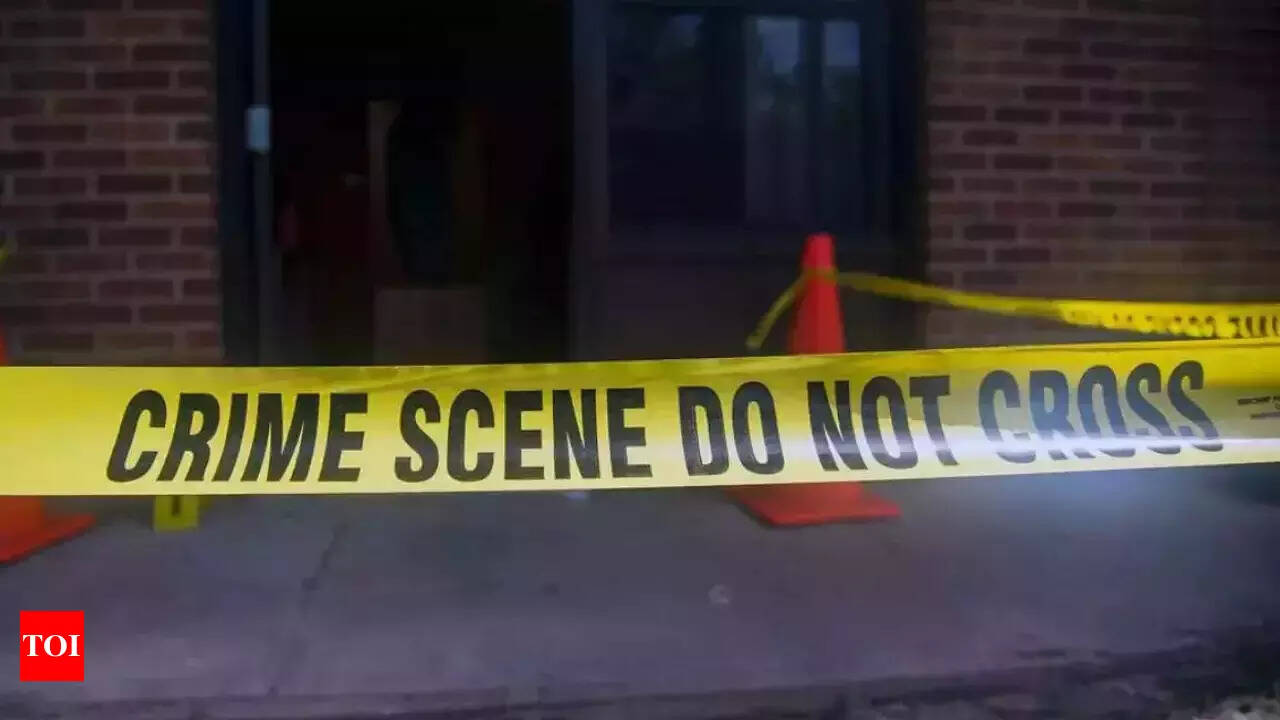
Another night in Texas. Another crowded bar. Another flurry of lead that leaves three dead and fourteen scarred. The media cycle is already spinning its wheels in the mud of predictable outrage. We see the same grainy cell phone footage, the same weeping candles on the pavement, and the same hollow debates about "mental health" versus "magazine capacity."
Everyone is looking at the shooter. Everyone is looking at the gun. Almost nobody is looking at the architecture of the failure. Recently making waves in related news: Finland Is Not Keeping Calm And The West Is Misreading The Silence.
The lazy consensus suggests that these tragedies are unpredictable lightning strikes—act-of-god events that we can only hope to mitigate with more "good guys with guns" or more restrictive laws. This is a comforting lie. It suggests that until the law changes or everyone is armed to the teeth, we are helpless. I have spent years analyzing high-threat environments and urban security failures. I can tell you that the "active shooter" narrative is a distraction from the reality of systemic negligence in how we manage public spaces.
The Myth of the Unpredictable Outburst
We treat a shooting like a natural disaster. It isn’t. It’s a logistics failure. Further insights regarding the matter are detailed by USA Today.
In the Texas bar incident, like so many before it, the environment was a powder keg masquerading as a "safe" nightlife spot. We have built a culture that prioritizes throughput and liquor sales over the fundamental physics of crowd control and threat detection. When you cram hundreds of people into a space with limited egress, high-decibel distractions, and zero friction for entry, you aren't running a business; you're managing a liability.
The standard response is to call for metal detectors or armed guards. This is reactive theater. By the time someone is pulling a trigger at the door or inside the venue, the "security" has already failed. True security is found in Environmental Design and Pre-Event Friction.
- Acoustic Negligence: We design bars to be so loud that a gunshot sounds like a dropped tray or a speaker pop for the first five seconds. Those five seconds are the difference between three dead and zero dead.
- The Bottleneck Trap: Most modern bars are designed to keep people in, not get them out. Architecture that prioritizes "vibe" over "flow" turns a venue into a kill box the moment a threat materializes.
- The Alcohol Fallacy: We act shocked when violence erupts in spaces specifically designed to lower inhibitions and impair judgment.
Stop Asking About the Gun and Start Asking About the Door
The "People Also Ask" sections of the internet are currently flooded with queries about what caliber was used or the shooter’s history. These are the wrong questions. They satisfy a morbid curiosity but offer zero protection for the next person walking into a lounge on a Friday night.
The question you should be asking is: Why was this person able to escalate a grievance to a kinetic event without a single intervention?
Violence in these settings is rarely a "random" explosion. It is a sequence. It starts with an argument, moves to a physical altercation, escalates to a departure to a vehicle, and ends with a return to the venue with a weapon. In the Texas case, and dozens like it, the breakdown happens in the middle of that sequence.
Professional security—not the $15-an-hour "bouncer" in a tight t-shirt—knows that the "return to the scene" is the highest-risk window in the industry. Yet, we see a total lack of communication between staff and local law enforcement during that critical 10-minute gap. If a patron is ejected for a violent threat, and there isn't a hard lockdown or an immediate police notification, the venue is complicit in what happens next.
The Professional Price of "Feeling Safe"
I’ve seen "security experts" recommend everything from bulletproof bar counters to mandatory concealed carry for bartenders. This is nonsense. It’s a tactical solution to a strategic problem.
If you want to survive a night out, stop looking for the "good guy with a gun." Start looking for the Exits.
In any crowded space, the most dangerous element isn't the shooter; it's the Stampede. In the Texas shooting, a significant portion of the injuries didn't come from 9mm rounds. They came from the frantic, uncoordinated surge of bodies trying to squeeze through a single exit point.
We have a "security theater" problem in the US. We put up signs, we hire one guy to check IDs, and we pretend we’ve done the work. Real authority in security comes from admitting the following brutal truths:
- Guards are Speed Bumps: Unless they are trained in proactive behavioral detection (which 99% of bar security is not), they are just there to fill out an insurance form after you get hit.
- Panic is a Choice: We don't train the public on how to exit a building under fire because we think it's "bad for business" to remind people they might die.
- Litigation is the Only Lever: Until bar owners are held criminally liable for failing to provide adequate egress and communication during a threat, they will continue to prioritize profit over your pulse.
Dismantling the Victim Narrative
The media loves to paint the victims as being "in the wrong place at the wrong time." This is a platitude that excuses the environment.
Imagine a scenario where we treated bar security with the same rigor we treat airport security. Not with the TSA’s invasive pat-downs, but with the Israel Model of behavioral observation. You don't need a metal detector if you have a trained professional who can identify the "pre-attack indicators"—the sweating, the fixed gaze, the shielding of a specific part of the body, the erratic movement against the crowd’s flow.
We don’t do this because it’s expensive. It requires high-level training. It requires paying staff a living wage. It’s easier to buy a $500 camera that records you getting shot in 4K than it is to pay for a professional who prevents the trigger from being pulled.
The Logic of the Crowd
We need to stop talking about "preventing" shootings in a country with more guns than people. It is a statistical impossibility. The goal isn't prevention; it's Mitigation.
- Hardening the Perimeter: This doesn't mean walls. It means lighting, sightlines, and controlled access.
- Rapid Communication: Every bar should have a "silent alarm" that immediately notifies every other business on the block. Violence is nomadic. It moves from one bar to the sidewalk to the next bar.
- The End of the "Bouncer": We need to replace the "thug at the door" with a "Safety Director." The role isn't to look tough; it's to manage the physics of the room.
If you are a patron, stop assuming the staff has a plan. They don't. They are usually as confused and terrified as you are. Your safety is a personal logistical operation. Identify your secondary exits. Keep your back to the wall. Watch the door. If a fight breaks out, don't film it—leave. The gap between a "scuffle" and a "shooting" is often less than sixty seconds.
The Hard Truth About Texas
Texas is the perfect case study for the failure of the "more guns" argument. It is one of the most heavily armed populations in the world. Did it stop the fourteen injuries? Did it stop the three deaths? No. Because a chaotic, dark, loud bar is the worst possible environment for a "civilian response."
The data is clear: in high-stress, low-light environments, untrained individuals with firearms often increase the casualty count through crossfire and the "contagion of fire." The status quo is a fantasy world where everyone is John Wick. The reality is a Texas bar floor covered in glass, blood, and the consequences of poor urban planning.
Stop looking for the killer's "why." It doesn't matter. The "how" is where the failure lives. The "how" is an open door, a distracted guard, a dark corner, and a crowd with nowhere to run.
Fix the room, or stop going in.
Check the exits. Every single time. Do not wait for the "Safety Director" to find them for you. They’ll be too busy running for the same door you are.