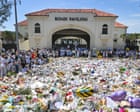
The recent findings from the judicial inquiry into the Bondi security failures have laid bare a systemic breakdown in how New South Wales manages high-risk public gatherings. While the immediate focus of the report centered on a "high" terror risk flagged for a Jewish festival in Hanukkah, the implications stretch far beyond a single event or a specific community. We are looking at a fundamental misalignment between intelligence gathering and boots-on-the-ground operational execution. The inquiry makes it clear that knowing about a threat is useless if the police force lacks the specific mandate or the resources to act on that data effectively.
For years, security at religious and cultural festivals in Sydney’s Eastern Suburbs has relied on a patchwork of private contractors and local police presence. This latest report suggests that "business as usual" is no longer a viable strategy. When intelligence agencies flag an event as a high-priority target, the transition from civilian management to high-stakes law enforcement must be instantaneous and absolute. That didn't happen here. Instead, the Jewish community was left to navigate a labyrinth of bureaucratic red tape while the threat level climbed. Meanwhile, you can read related events here: The Royal PR Machine is Out of Sync With History.
Intelligence Without Action
The core of the Bondi failure lies in the disconnect between the New South Wales Police Force (NSWPF) and the counter-terrorism units that monitor domestic threats. Documents brought to light during the commission show that while the Hanukkah event was identified as a potential flashpoint weeks in advance, the operational orders given to local patrol officers remained largely unchanged. This is a classic case of information silos. The people with the big picture weren't talking to the people on the street.
Security isn't just about having more guards. It is about the quality of those guards and the legal authority they carry. Private security teams, often hired by community organizations to manage crowds, lack the training to handle a coordinated extremist attack. They are there to check bags and manage queues. When a "high" risk is identified, the state has a non-negotiable duty to take the lead. The report argues that the Jewish community should not be forced to bear the financial and logistical burden of defending itself against global ideological threats on Australian soil. To see the bigger picture, we recommend the excellent analysis by Al Jazeera.
The Cost of Community Self Defense
One of the most striking revelations from the inquiry is the sheer amount of money religious organizations are spending on their own protection. Because the state has historically been slow to provide dedicated, permanent security for "at-risk" sites, these groups have built their own private security infrastructures. This creates a two-tiered system of safety. If your community can afford a high-end private firm, you are safe. If not, you are a soft target.
Structural Vulnerabilities in Urban Policing
- Reliance on private contractors: Private guards lack the legal power to detain suspects or access real-time police radio feeds.
- Budgetary constraints: Local area commands are often stretched thin, forcing them to prioritize "active" crime over "preventative" presence.
- Communication Lag: The time it takes for a high-level ASIO threat assessment to trickle down to a sergeant at a local station is often measured in days, not hours.
This private-sector reliance also creates a liability nightmare. If a private guard uses force, the legal repercussions are vastly different than if an officer does the same. By stepping back and letting communities handle their own "high-risk" security, the government has essentially outsourced public safety. The commission rightly identifies this as an abdication of duty.
Reforming the Hanukkah Incident Response
The specifics of the Hanukkah threat were chilling. Intelligence suggested that the visibility of the event made it a prime target for a "lone actor" style attack. In such scenarios, the first three minutes are everything. The inquiry found that the response time for armed police units to reach the Bondi site would have been insufficient had the threat materialized. We are lucky we are reading a report about a "flagged risk" and not a "post-event autopsy."
Wait-and-see is not a counter-terrorism policy. The report calls for a mandatory "escalation trigger." If the threat level hits a certain threshold, the NSWPF should automatically take over the inner-perimeter security of any public event, regardless of who is hosting it. This removes the ambiguity of who is in charge when things go wrong.
The Friction Between Privacy and Protection
There is a natural tension here that the commission spent significant time addressing. Increasing police presence at religious festivals can feel like over-policing or even intimidation to some. However, the Jewish community has been vocal about the fact that they want more visible state protection. They are tired of the "fortress" mentality where every school and synagogue has to be behind three-inch thick glass and steel bars paid for by donations.
The shift required is psychological as much as it is tactical. The police need to see these events not as private parties they are "assisting" with, but as critical infrastructure that requires a state-level defense strategy. The report highlights that the current model treats these festivals as "special events" like a marathon or a local fair. They are not. They are targets of geopolitical aggression.
Tactical Reality Versus Bureaucratic Theory
When you look at the training manuals for local officers, there is plenty of information on how to handle a drunk-and-disorderly situation at a beach. There is significantly less on how to defend a concentrated crowd against a radicalized threat. The inquiry suggests that the "Bondi model" of policing—which focuses on high-visibility foot patrols for general crime—is completely inadequate for modern security challenges.
We need a dedicated unit that bridges the gap between the tactical operations of the riot squad and the local knowledge of the neighborhood police. This unit would specialize in "Vulnerable Community Protection." They wouldn't just show up on the day; they would be involved in the planning of every major cultural event from day one. They would know the exits, the blind spots of the CCTV, and the specific nature of the threats facing that particular group.
The Problem With Regional Commands
The current structure of the NSWPF gives significant power to local commanders. While this is great for catching shoplifters or managing traffic, it creates a fragmented defense when dealing with sophisticated threats. One commander might take a "high" risk seriously, while another might see it as alarmist. The commission recommends a centralized oversight body that can override local decisions when intelligence suggests a specific threat.
The Financial Reality of Public Safety
Critics of the report's recommendations will point to the cost. Stationing dozen of armed officers at every religious festival in Sydney is an expensive endeavor. But the cost of a single successful attack—in terms of lives lost, social cohesion destroyed, and the subsequent massive increase in security spending—is infinitely higher.
The government has already committed to some funding increases, but the inquiry suggests these are "band-aid" solutions. What is needed is a permanent budget line item for the protection of at-risk cultural events. This shouldn't be a grant that communities have to apply for every year. It should be an automatic part of the state's public safety mandate.
Moving Beyond the Report
The Bondi royal commission has provided a roadmap, but a map is useless if you don't start the engine. We have seen these reports before. They usually follow a tragedy. This time, we have the rare opportunity to implement changes before the worst happens. The "high" risk flagged during Hanukkah was a warning shot.
The Jewish community in Sydney, and indeed all communities currently in the crosshairs of extremist ideologies, deserve more than a report that sits on a shelf. They deserve a police force that treats their safety as a core function of the state, not a luxury service that can be outsourced to the lowest bidder.
The era of "suggested" security measures is over. If the intelligence says there is a threat, the police must move. If the infrastructure isn't there to support that move, the infrastructure must be built. Anything less is just waiting for the inevitable. The state must now choose whether to be the shield it claims to be or continue letting private citizens stand on the front lines of a conflict they didn't start.
The immediate action step for the New South Wales government is the creation of a permanent Joint Task Force on Communal Security. This body must have the power to direct police resources without the interference of local council politics or budgetary squabbles. If a festival is at risk, the state takes the wall. No questions asked. No invoices sent. This is the only way to ensure that "Bondi" remains a story about a report, and not a story about a tragedy.
Stop treating religious festivals as private events and start treating them as public responsibilities.