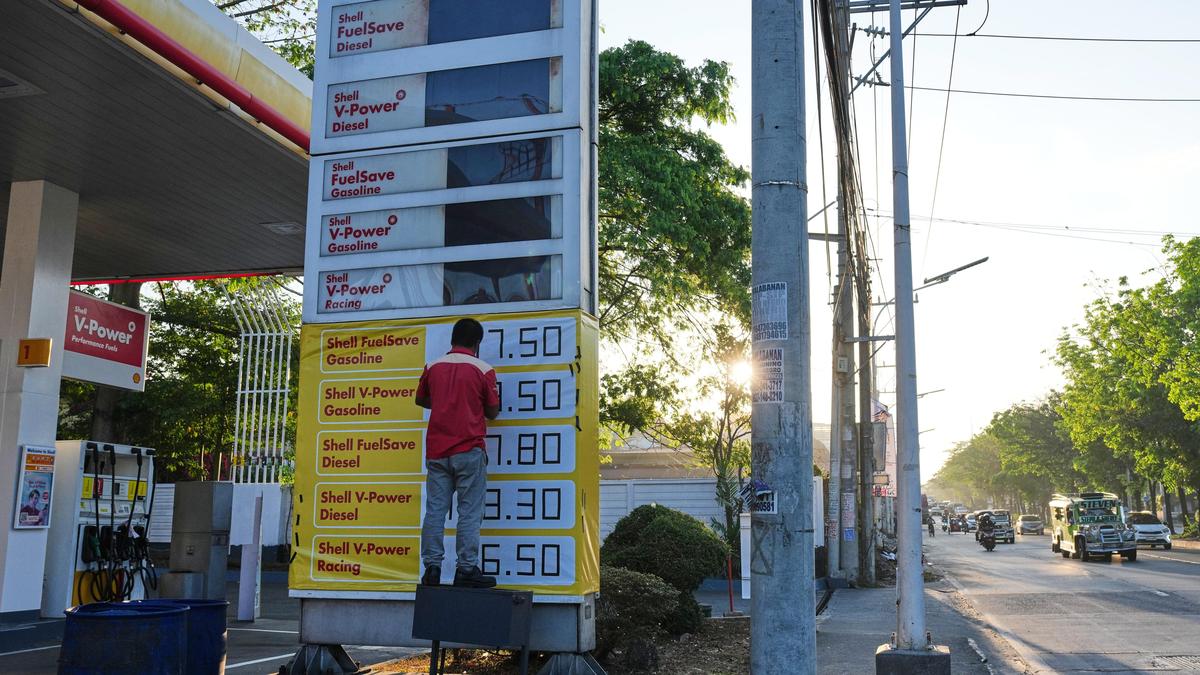
The Philippine government is moving toward a formal declaration of an energy emergency as volatility in West Asia threatens to choke global oil supplies and send domestic power rates into a vertical climb. This is not a drill. It is the inevitable result of a decades-long failure to decouple the national economy from imported fossil fuels. President Ferdinand Marcos Jr. is currently weighing executive maneuvers that would grant the Department of Energy (DOE) sweeping powers to bypass standard procurement timelines and stabilize a grid that is one shipment away from failure.
For the average Filipino household, this means the highest electricity bills in Southeast Asia are about to get worse. For the industrial sector, it signals a period of managed decline unless the state can secure bilateral supply agreements that bypass the open market. The "emergency" is less about a sudden shortage and more about the realization that the country’s energy architecture is fundamentally incapable of absorbing a global price shock.
The Strait of Hormuz Trap
Most of the conversation in Manila focuses on the pump price of gasoline. That is a distraction. The real danger lies in the power generation mix. Despite a massive push for renewables, the Philippines remains stubbornly reliant on coal and gas. When conflict flares in West Asia, specifically around the Strait of Hormuz, the cost of the "risk premium" on every barrel of oil and metric ton of coal begins to bleed the Philippine economy dry.
The Philippines imports nearly all its fuel. We are price takers in a market governed by warlords and global cartels. When the President speaks of an emergency, he is acknowledging that the market-based mechanisms of the Electric Power Industry Reform Act (EPIRA) are failing to protect consumers from geopolitical theater five thousand miles away.
Why the Malampaya Decline Matters Now
The timing could not be worse. The Malampaya gas field, the crown jewel of domestic energy production, is in its twilight years. As its output drops, the country has pivoted toward Liquefied Natural Gas (LNG) imports to fill the void. This was framed as a bridge to a green future. Instead, it has become a noose.
LNG is indexed to global oil prices. By switching from domestic gas to imported LNG, the Philippines has effectively imported the instability of West Asia directly into its baseload power supply. If a tanker cannot make it through a contested waterway, a power plant in Batangas goes dark. It is that simple.
The High Cost of Regulatory Paralysis
An energy emergency declaration allows the government to cut through the red tape that usually defines the DOE’s existence. Normally, building a power plant or securing a long-term supply contract involves a multi-year gauntlet of permits and judicial reviews. Under an emergency, the executive branch can mandate "Competitive Selection Processes" be fast-tracked or set aside to ensure the lights stay on.
However, there is a dark side to this efficiency. Emergency powers often lead to "sweetheart deals" with independent power producers. We have seen this movie before in the 1990s. To solve the rolling blackouts of that era, the government signed take-or-pay contracts that saddled consumers with debt for twenty-five years. The current administration is walking a tightrope between immediate blackouts and long-term fiscal ruin.
Energy security is national security. When a nation cannot power its factories without checking the morning news from Tehran or Tel Aviv, it is not truly sovereign.
The Hidden Fragility of the Luzon Grid
The Luzon grid is the heart of the Philippine economy. It is also a mess of aging infrastructure and insufficient reserves. During the summer months, "Red" and "Yellow" alerts have become routine. These alerts signify that the margin between supply and demand has evaporated.
The Maintenance Nightmare
One overlooked factor in the current crisis is the synchronized maintenance shutdowns of aging coal plants. Many of these facilities are thirty years old. They break down frequently. When they do, the grid must rely on "peaker" plants that run on expensive diesel.
If the West Asia conflict drives diesel prices to record highs, the cost of keeping the grid stable during a routine plant failure becomes astronomical. The government's emergency declaration is an attempt to create a "slush fund" of capacity—essentially paying plants to stay on standby regardless of the cost.
The Myth of the Quick Fix
There is a loud contingent of analysts suggesting that a rapid shift to solar and wind will solve the current emergency. It won't. Not in the short term.
Renewables are essential for the long-term survival of the Philippine economy, but they suffer from intermittency. You cannot run a semiconductor factory on a cloudy day without massive battery storage, which the Philippines currently lacks. The emergency declaration is a recognition that we are stuck with fossil fuels for the immediate future, and we are currently being outbid for those fuels by wealthier nations in Europe and East Asia.
Institutionalized Energy Poverty
The term "energy poverty" is often used to describe those without electricity. In the Philippines, it should describe those who have electricity but cannot afford to use it. We are entering a phase where the "system loss" and "generation charges" on a Meralco bill will exceed the actual value of the economic activity being powered.
Small and medium enterprises (SMEs) are the first to die in this environment. A 20% spike in power costs wipes out the profit margin for a local manufacturer. If the President does not use these emergency powers to subsidize the industrial rate, we will see a wave of bankruptcies by the fourth quarter.
The Geopolitical Chessboard
Manila is playing a dangerous game. By siding heavily with Western interests in regional maritime disputes, the Philippines has limited its ability to negotiate "friendly" energy prices with non-Western blocs. While India and China can buy discounted Russian or Iranian oil to blunt the impact of West Asia tensions, the Philippines remains tethered to the global benchmark.
This emergency is the bill coming due for a foreign policy and an energy policy that have never been synchronized. We are an island nation that behaves like a landlocked European state, assuming the fuel will always arrive as long as we have the cash. But the cash is running out, and the tankers are getting nervous.
The Nuclear Ghost
The Bataan Nuclear Power Plant sits as a $2 billion monument to indecision. While the current administration has flirted with the idea of reviving it or investing in Small Modular Reactors (SMRs), those are decade-long projects. They do nothing for the factory owner who needs to meet a quota next month. The emergency declaration is a frantic "patch" on a system that needs a total rebuild.
Moving Toward a Command Economy
The declaration of an energy emergency signifies a shift from a market-driven energy sector to a state-directed one. For the duration of the emergency, the DOE will likely dictate which plants run, who gets paid first, and which regions face "load shedding" (rotating blackouts) to protect the capital.
It is a brutal form of triage. The government will prioritize Manila and the economic zones, leaving the provinces to deal with the darkness. This is the political reality of energy scarcity.
The only way out of this cycle is a radical, state-funded mandate for base-load geothermal and massive battery arrays. Until that happens, the Philippine economy remains a hostage to every drone strike and diplomatic breakdown in the Persian Gulf. The emergency isn't starting now; we have been living in it for years. We just finally ran out of excuses to ignore it.
Direct your attention to the upcoming DOE circulars regarding "interruptible load programs." If you own a business, buy a generator now. Do not wait for the state to tell you the fuel has run out.