The Architect and the Apostate
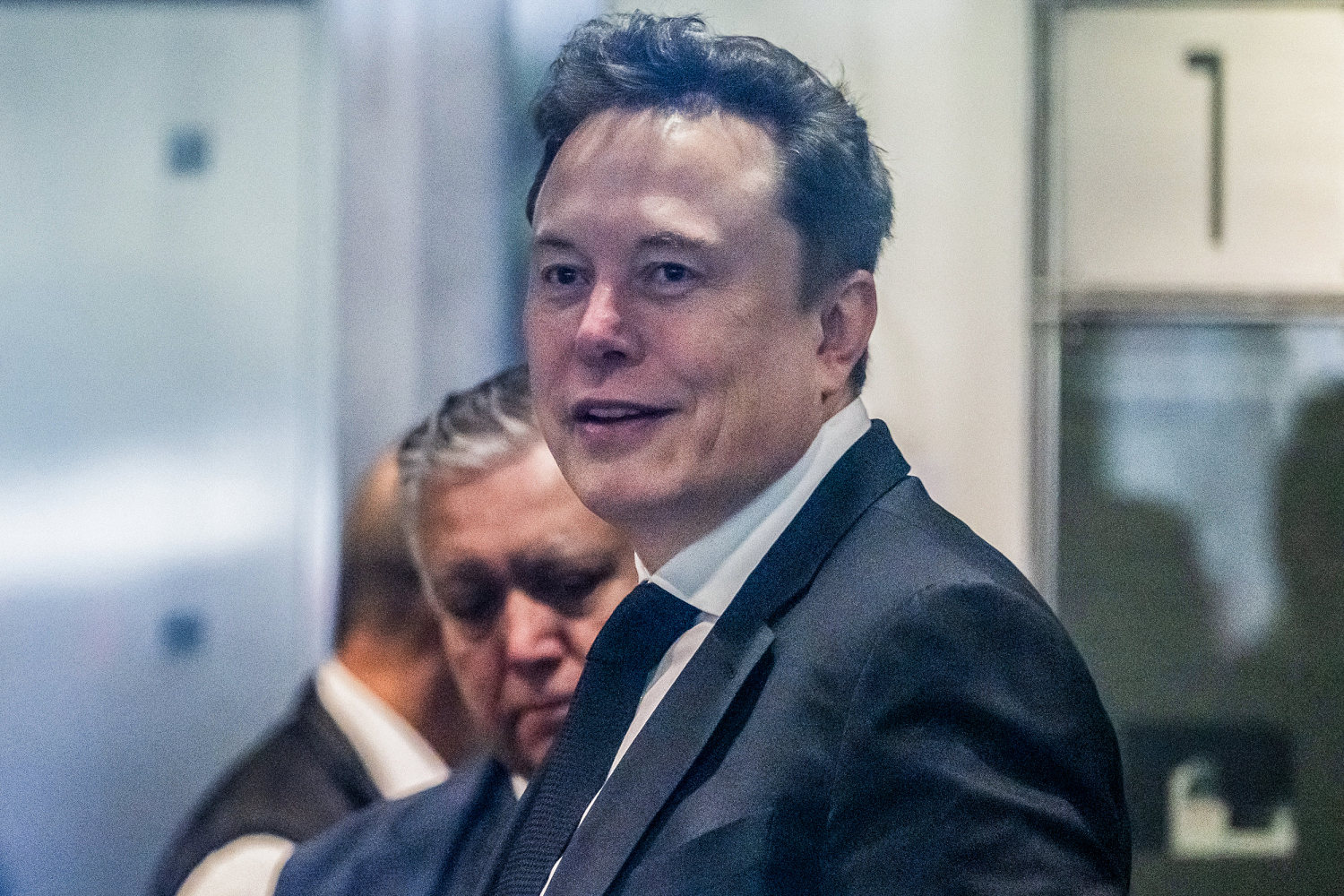
The air in a federal courtroom has a specific, heavy quality. It smells of floor wax and old paper, a sterile environment designed to strip away the ego and leave only the cold, hard bone of the law. But on day two of the trial against OpenAI, the ego was the main event. Elon Musk sat on the witness stand, his frame stiff, his jaw set in that familiar, defiant jut that has launched a thousand rockets and nearly as many lawsuits.
He wasn't just there to argue about contracts or fiduciary duties. He was there to mourn a ghost.
Imagine, for a moment, two men in 2015 sitting over a shared vision that felt more like a religious calling than a business plan. They weren't looking to build a better search engine or a more addictive social feed. They were building a god—or at least, the closest thing humanity would ever see to one. They called it OpenAI. The "Open" part wasn't an aesthetic choice; it was a shield. It was the promise that the most powerful technology in human history would belong to everyone, a public utility for the soul of the species.
Now, years later, Musk looks across the room at Sam Altman’s legal team and sees a fortress. The "Open" has been replaced by a "Closed" sign backed by billions from Microsoft. The mission to save humanity has, in Musk’s eyes, morphed into a mission to maximize shareholder value. This trial isn't just a legal skirmish. It is a messy, public divorce over the custody of the future.
The Friction of the Stand
Cross-examination is an art form meant to provoke. The lawyers for OpenAI didn't go for the jugular with complex technical data. They went for the vanity. They peppered Musk with questions about his own failed attempts to take over the company in its infancy. They painted a picture of a man not driven by a desire for safety, but by a bruised ego because he wasn't the one holding the steering wheel when the vehicle finally accelerated.
Musk didn't take the bait quietly. He grew combative. He snapped. He leaned into the microphone with a clinical sort of rage, dismissing the defense’s narrative as a revisionist history.
To understand the tension, you have to look at the math of betrayal. In the early days, Musk was the primary benefactor, pouring tens of millions into a non-profit structure. The defense’s strategy was clear: show the jury that Musk knew the non-profit model was unsustainable. They pulled up old emails, digital ghosts of a time when Musk himself suggested that OpenAI needed to raise billions to compete with Google’s DeepMind.
"You knew it would cost a fortune," the implication hung in the air.
"I knew it shouldn't belong to a single corporation," was the unspoken retort.
This is the central friction of the trial. It is the clash between the idealism of the garage and the cold reality of the data center. Training a large language model requires more than just brilliance; it requires a small nation’s worth of electricity and enough specialized chips to pave a highway. The defense argues that the pivot to a "capped-profit" entity was an act of survival. Musk argues it was a bait-and-switch.
The Invisible Stakes of the Code
Why does a billionaire spend his week being grilled in a wood-paneled room instead of overseeing a Mars mission? Because of the invisible stakes.
Artificial General Intelligence (AGI) is the "X-factor" in this courtroom. It is a theoretical point where software becomes smarter than the people who wrote it. If you believe, as Musk does, that AGI is a digital "demon," then the ownership of that demon is the only thing that matters.
Consider a hypothetical scenario: a small group of people discovers a way to turn lead into gold. If they are a non-profit, they might use that wealth to end global hunger. If they are a subsidiary of a tech giant, they might use it to buy every other company on Earth. That is the metaphor Musk is trying to hammer home. He isn't suing for money; he’s suing to force the "gold" back into the hands of the public.
But the defense has a counter-narrative that is equally human and far more pragmatic. They see a man who walked away when the going was tough, who doubted the team’s ability to reach the finish line, and who is now throwing stones because they succeeded without him. It is a classic tale of the founder’s dilemma, played out on a scale that affects the entire planet.
The Ghost in the Documents
The courtroom screens flashed with internal communications from 2017 and 2018. These aren't just pieces of evidence; they are a window into the breakdown of a brotherhood. You see the moments where the emails go from "we are going to change the world" to "here is why you are wrong."
The legal argument hinges on whether a "founding agreement" actually existed. OpenAI claims there was never a formal contract—just a shared set of intentions that evolved as the technology grew more expensive and complex. Musk’s team points to the spirit of the venture, the public manifestos, and the signatures on the original non-profit filings.
It is a fascinating study in the weight of a person’s word. In the world of high-stakes venture capital, "intent" is often treated as a liquid asset. It changes shape to fit the container. But in a court of law, intent is supposed to be fixed. Musk is betting that the jury will value the original promise over the eventual profit.
The intensity on the stand reached a fever pitch when the discussion turned to Microsoft. To Musk, Microsoft’s multi-billion-dollar partnership with OpenAI is the ultimate evidence of the "closed" nature of the company. He views it as a puppet-master relationship. The defense, however, frames it as a necessary alliance, the only way to keep the lights on in the most expensive laboratory in history.
The Cost of the Crown
Watching Musk on the stand, you don't see the "Technoking" of Tesla or the provocateur of X. You see a man who feels he has been outmaneuvered in his own game. There is a specific kind of bitterness reserved for those who believe they were the only ones who saw the cliff coming, only to be pushed off it by their peers.
The trial moves slowly, a rhythmic grinding of motions and objections. But the emotional core is raw. It is about whether or not we can trust the people building the future to keep their promises once that future starts looking profitable.
If Musk wins, it could force OpenAI to open up its "black box," potentially slowing down the most aggressive AI development cycle in history. If he loses, it cements the era of the "Closed AI"—a world where the most powerful tools are guarded behind a subscription wall and a corporate board.
As the sun began to set on the second day, the lawyers moved for a recess. Musk stood up, Adjusted his jacket, and walked out past a sea of cameras. He didn't look like a man who had found clarity. He looked like a man who was realizing that even with all the money in the world, you cannot buy back a vision once it has been sold to someone else.
The trial continues, not just in that room, but in every server farm and boardroom across Silicon Valley. We are all waiting to see if the cathedral will be open to the public, or if the doors are locked for good.
The jury is still out, but the verdict on the friendship that started it all has already been delivered. It is buried under a mountain of legal filings, a silent casualty of the race to build a mind.