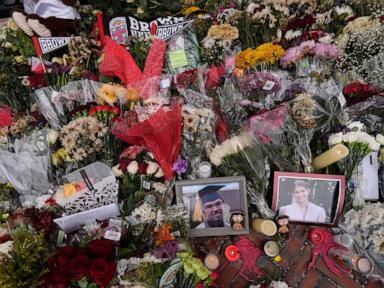
Stop Suing the Walls and Start Facing the Reality of Risk
The standard media narrative surrounding the recent lawsuit against Brown University is as predictable as it is flawed. Two students, tragically injured in a shooting, are suing the institution for "security failures." The headline practically writes itself. It’s a story of corporate negligence, a wealthy Ivy League school failing its most precious assets, and a demand for "accountability" that usually translates to more cameras and more guards.
It is also a total fantasy. For an alternative look, read: this related article.
By framing this tragedy as a failure of campus security, we are engaging in a dangerous form of safety theater. We are pretending that an open, urban campus in Providence, Rhode Island, can—or should—be turned into a high-security green zone. This lawsuit isn’t just about seeking damages for victims; it is an attack on the very nature of a modern university. If the plaintiffs win, the cost won't just be the settlement check. The cost will be the death of the open campus.
The Myth of the Perimeter
I have spent years analyzing how large organizations manage liability. I have seen universities dump tens of millions into "smart" surveillance and biometric access points. Do you know what it actually buys? A false sense of security and a massive data trail for the lawyers to pick apart after the inevitable happens. Further analysis on this trend has been shared by NBC News.
The competitor reports on this case are obsessed with "security lapses." They point to broken gates or slow response times as if a university is a locked-down data center. It isn't. Brown University is integrated into the fabric of Providence. You cannot secure a "perimeter" that doesn't exist.
When a school is sued for failing to prevent a random act of violence, the legal system is effectively asking the institution to predict the unpredictable. We are demanding that universities become de facto police states. This is the nuance the "negligence" crowd misses: Total security is a binary choice with total freedom. You cannot have a vibrant, integrated urban campus and a bulletproof bubble at the same time.
Liability is Not Prevention
The lawyers filing these suits aren't interested in making students safer. They are interested in the "deep pockets" doctrine.
In the legal world, we see this cycle constantly:
- A tragedy occurs.
- Experts are hired to find a "gap" in policy—a door left ajar, a guard who was on a bathroom break.
- The institution is blamed for not having a 100% success rate.
- The school settles to avoid bad PR.
- The school implements draconian security measures that do nothing to stop the next incident but make life miserable for everyone on campus.
Let’s be brutally honest. Even if Brown had doubled its security budget, a determined individual with a weapon can cause harm in seconds. Response time is a metric for cleanup, not prevention. By focusing on "security failures," we ignore the statistical reality that these events are outliers. You cannot build a policy around an outlier without destroying the core function of the institution.
The High Cost of the "Safe" Campus
If we follow the logic of this lawsuit to its end, here is what the "ideal" campus looks like:
- Ten-foot fences with razor wire.
- Armed checkpoints at every street corner.
- Total surveillance of every square inch of student life.
- Zero interaction with the surrounding community.
Is that an Ivy League education or a minimum-security prison?
The "lazy consensus" says that more security is always better. It isn't. Excessive security creates an environment of fear and isolation. It signals to students that the world outside is a war zone. It turns the university into an island, which is exactly the opposite of what higher education is supposed to achieve.
I’ve watched institutions spend more on their "Safety and Security" line items than on their library acquisitions. We are trading intellectual growth for a feeling of safety that is, at best, a temporary illusion.
The "People Also Ask" Trap
People often ask: "Shouldn't the school have known the area was dangerous?"
This is a classic "hindsight bias" question. Yes, Providence has crime. Every city has crime. To suggest that a school is responsible for the general crime rate of its host city is an absurd legal stretch. If we hold universities liable for the environment they exist in, we are effectively telling them to move to the middle of a desert and build a fortress.
Another common query: "What could they have done differently?"
The honest, albeit brutal, answer? Probably nothing that would have changed the outcome. You can have the best technology in the world, but human behavior is volatile. A lawsuit demands a world where every variable is controlled. Real life doesn't work that way.
Accountability or Scapegoating?
The students who were hurt deserve compassion and support. They do not, however, deserve to redefine the legal responsibility of an educational institution based on a traumatic event.
When we sue schools for the actions of criminals, we are shifting the blame from the perpetrator to the nearest entity with a large bank account. It is a form of socialized risk where the university becomes the insurer for every possible bad thing that can happen in a five-mile radius.
This is the uncomfortable truth: Living in a free society involves a baseline level of risk. If you want to live in a place where no one can ever get hurt, you are looking for a vault, not a campus. By entertaining these lawsuits, we are incentivizing universities to prioritize liability over liberty. They will stop being centers of excellence and start being centers of risk mitigation.
The Real Fix (That Nobody Wants)
Stop asking for more guards. Stop asking for more cameras.
If you want a safer campus, you invest in the community. You invest in mental health. You acknowledge that "security" is a social contract, not a technical specification.
The current legal strategy is a race to the bottom. It encourages schools to over-promise "safety" to parents and then pay out millions when that promise—which was impossible to keep in the first place—is broken. It’s a cycle of dishonesty.
We need to stop pretending that a university is a guardian of your physical personhood 24/7. It is a provider of education. The moment we blur that line, we lose the university.
The Brown lawsuit is a symptom of a culture that would rather sue a brick wall than admit that some things are beyond our control. We are trading our open society for the comfort of a courtroom victory, and we are losing the very thing we are trying to protect.
Write the check, settle the suit, and watch as the gates go up and the lights go out on the American campus. That is the future these lawsuits are building. If that’s the "safety" you want, you’re asking the wrong questions.
Don't look for more security. Look for more reality.



