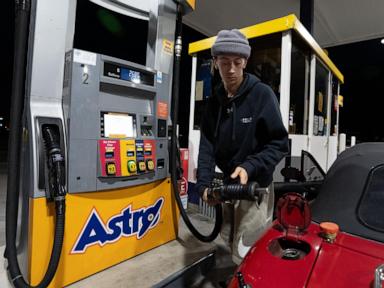
The brief cooling of gasoline prices earlier this spring was never a trend. It was a statistical fluke. Motorists who felt a moment of relief at the pump are now facing a harsh reality as prices resume a climb that shows no signs of hitting a ceiling. While standard news reports blame "seasonal demand" or "refinery maintenance," those are surface-level excuses for a much deeper, more systemic squeeze on the American wallet. The truth is that the global energy market has shifted into a structural deficit that ensures high prices are the new baseline, not a temporary spike.
Crude oil remains the primary driver, but the math of the modern pump involves a volatile cocktail of geopolitical maneuvering, shrinking refining capacity, and a domestic energy policy that is stuck in a state of paralysis. We aren't just paying for the liquid in the tank. We are paying for decades of underinvestment in physical infrastructure and the high cost of a global transition that is proving far messier than anyone in Washington or Brussels wants to admit. For another view, see: this related article.
The Refining Bottleneck No One Mentions
Most drivers assume that if we drill more oil, the price of gas goes down. It is a logical assumption, but it is fundamentally flawed. You cannot pour crude oil into a Ford F-150. For that oil to become gasoline, it must pass through a refinery, and the United States is currently missing a massive chunk of its historical processing power.
Since 2020, the U.S. has lost significant refining capacity as older plants were shuttered or converted to biofuels. No one builds new refineries in North America anymore. The regulatory hurdles are too high, the capital costs are too steep, and the long-term political messaging suggests that internal combustion engines are on their way out. Why would a company spend $10 billion on a facility that the government wants to be obsolete in fifteen years? Related reporting on this trend has been shared by The Motley Fool.
This creates a permanent bottleneck. Even when crude prices dip, the "crack spread"—the difference between the price of crude oil and the products refined from it—remains historically high. We are essentially trying to shove a massive amount of demand through a very narrow straw. When one refinery in the Gulf Coast goes offline for a "hiccup," the entire national supply chain feels the tremor.
The OPEC Plus Shadow
We are also at the mercy of a coordinated effort by the world’s largest oil producers to keep the market tight. For years, the U.S. shale revolution acted as a "swing producer," able to flood the market and crash prices whenever OPEC tried to squeeze the West. Those days are over.
Wall Street has demanded that American oil companies prioritize shareholder returns and debt reduction over aggressive drilling. Instead of reinvesting every cent into new wellshttp://googleusercontent.com/image_content/186
, CEOs are issuing dividends and buying back stock. This "capital discipline" is great for investors but disastrous for the person trying to fill up a minivan. Without the U.S. shale industry acting as a check on global prices, the Riyadh-Moscow alliance has regained total control over the marginal barrel of oil. They want prices high enough to fund their sovereign wealth projects but just low enough to avoid a global recession. It is a delicate, cynical balance, and the American consumer is the one footing the bill for that tightrope walk.
The Hidden Cost of the Environmental Tug of War
The transition to a greener economy is necessary, but the execution is currently in a "valley of death" phase. We are discouraging investment in fossil fuels before the infrastructure for electric vehicles and renewables is ready to handle the load. This creates a supply gap that translates directly to higher costs at the pump.
Environmental regulations also mandate specific "summer blends" of gasoline that are more expensive to produce and harder to transport between regions. These blends are designed to reduce smog, but they fragment the market into tiny islands. If a pipeline goes down in the Midwest, they can't easily pull supply from the South because the chemical specifications don't match. This lack of fungibility turns every local supply issue into a regional price crisis.
The Strategic Petroleum Reserve Gamble
The administration’s decision to tap into the Strategic Petroleum Reserve (SPR) provided a temporary bandage, but the wound is still gaping. The SPR is at its lowest level in decades. This leaves the country with very little "insurance" against a genuine supply shock, such as a major hurricane hitting the Houston Ship Channel or an escalation of conflict in the Middle East.
Market traders know the cupboard is bare. They price that risk into every gallon you buy. The knowledge that the U.S. eventually has to buy back millions of barrels to refill the reserve creates a "floor" for oil prices. Even when demand should be falling, the looming presence of the government as a massive future buyer keeps the price from dropping.
Why Demand Isn't Dropping Despite the Cost
In a standard economic model, when the price of a good goes up, demand should go down. Gasoline is proving to be the ultimate exception. For the vast majority of Americans, driving isn't a luxury or a choice; it is a requirement for survival.
People still have to drive to work. They still have to drop kids at school. They still have to buy groceries. Because our cities are built around the automobile, gasoline demand is "inelastic." People will cut spending on dining out, new clothes, or streaming services before they stop buying gas. Retailers are already seeing the impact of this. When gas hits $4 or $5 a gallon, it acts as a massive "regressive tax" that sucks the disposable income right out of the middle class.
The Geopolitical Risk Premium
We live in an era of "polycrisis." The war in Ukraine disrupted Russian supply, but that was just the beginning. The constant tension in the Strait of Hormuz, through which a fifth of the world's oil flows, adds a "risk premium" to every barrel. Traders are betting on the worst-case scenario.
Even if there isn't a physical shortage of oil today, the fear of a shortage tomorrow drives the price up. This is the "financialization" of the pump. Commodities are traded as speculative assets, and in an unstable world, oil is the ultimate speculative bet. Your local gas station owner isn't the villain here; they often make only a few cents per gallon. The real money is being made in the futures pits of Chicago and London, where paper barrels are traded back and forth by people who wouldn't know how to change their own oil.
The Inflationary Feedback Loop
High gas prices don't just stay at the gas station. They migrate into every corner of the economy. Diesel fuel powers the trucks that deliver food and the ships that carry electronics. When the cost of moving goods rises, the price of the goods themselves must rise.
This creates a secondary wave of inflation. You pay more for gas, then you pay more for the bread that was delivered by a gas-powered truck. It is a compounding effect that erodes purchasing power far faster than wage growth can keep up. The Federal Reserve can raise interest rates all they want, but higher interest rates don't produce more gasoline or build more refineries.
Looking at the Hard Truth
There is no "quick fix" on the horizon. The structural issues—lack of refining, geopolitical tension, and capital flight from the oil patch—took twenty years to build. They will take years to dismantle. Expecting prices to return to the $2.00 range is a fantasy based on a world that no longer exists.
The only way to insulate yourself is to recognize that energy volatility is the permanent state of the 21st century. High gas prices are a signal from a broken system that can no longer meet the demands of the global population under the current rules of engagement.
Stop waiting for a "respite" that isn't coming. The climb is steady because the foundation of our energy security is crumbling. Until there is a massive, coordinated shift in how we produce, refine, and move energy, the numbers on that digital sign at the corner station will only continue their upward march. Pay attention to the crack spreads and the refinery utilization rates, not the political promises of "lowering prices." The math simply does not support the optimism.