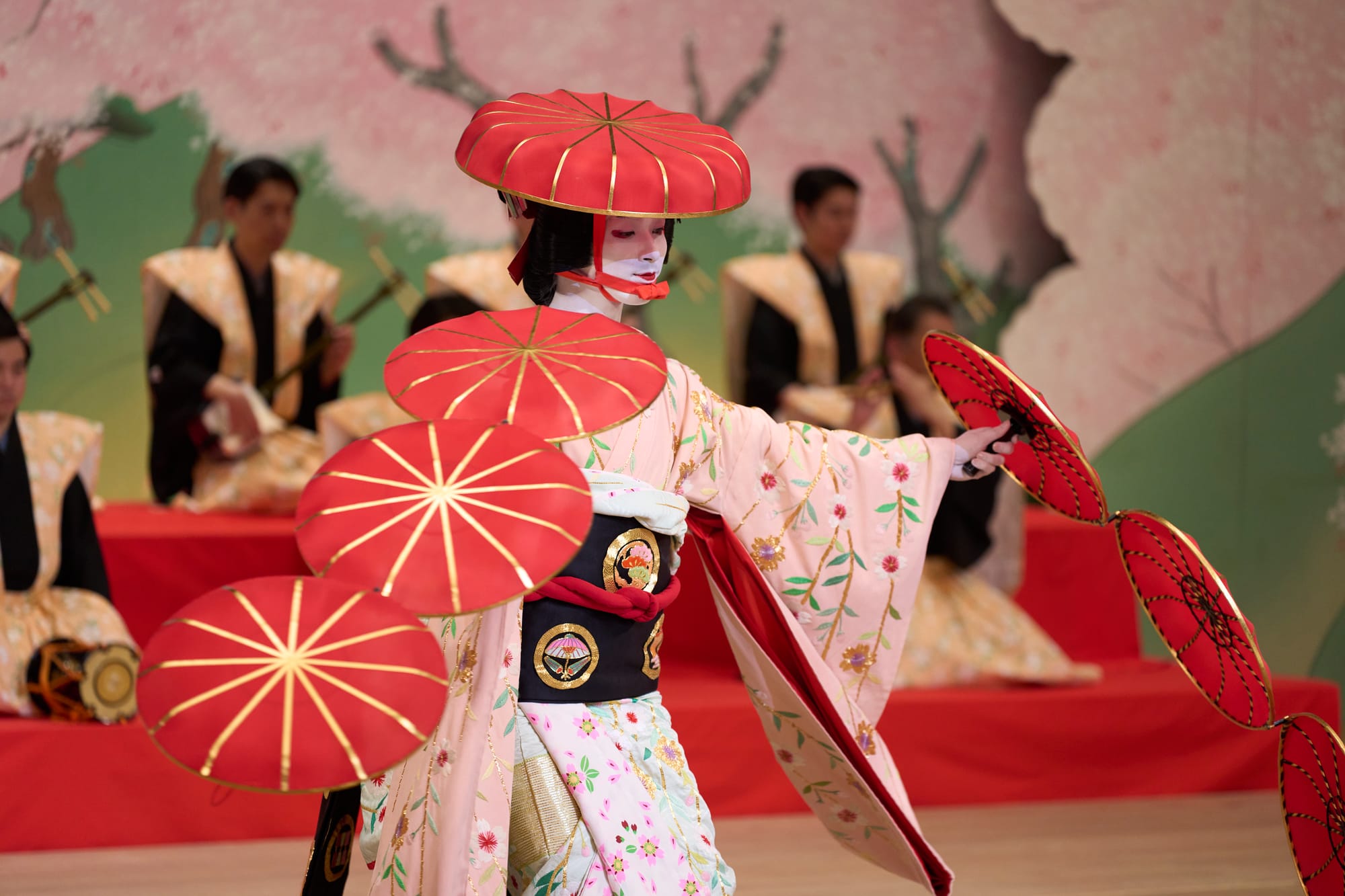
The crimson stage curtains of the Kabuki-za do more than hide a stage. They mask a rigid, hereditary power structure that is currently vibrating under the weight of its own preservation. While the world watches the elegant, slow-motion choreography of Kokuho—the fictionalized exploration of this "Living National Treasure" culture—the reality of the industry is far more jagged. The true story isn't just about the applause or the heavy white makeup. It is about an ancient business model fighting to survive a talent drought and the crushing expectations of bloodline-based succession.
Kabuki survives because it refuses to change, yet that same stubbornness now threatens its biological foundation. To understand the friction within the theater, one must look past the aesthetic of the onnagata—men who play women—and into the ledger books and family trees that dictate who gets to stand in the center of the hanamichi. For another perspective, see: this related article.
The Bloodline Monopoly and Its Cracks
At the heart of the kabuki world lies the "shumei" system. This isn't just a name-taking ceremony; it is a corporate rebranding of a human being. When an actor takes the name of a famous ancestor, he isn't just inheriting a role. He is inheriting a debt to history. The pressure to maintain the "Kokuho" status—a designation for individuals who are preservers of Important Intangible Cultural Properties—creates a psychological pressure cooker that few outside the guild can imagine.
For centuries, the art was a closed loop. If you weren't born into one of the "Otowaya" or "Naritasan" lineages, your chances of playing a lead role were effectively zero. You were destined to be a "room boy" or a background actor, forever supporting the stars who happened to have the right DNA. This meritocracy-free zone worked when there were plenty of heirs. But today, Japan’s shrinking population and the allure of modern film and television have left the great houses scrambling for bodies. Further reporting regarding this has been shared by Variety.
We are seeing a quiet revolution of adoption. Families are now looking outside their immediate kin to find "talented outsiders" to adopt into the lineage. It is a desperate move to keep the brand alive, but it creates a subterranean class war. The "true" sons of the lineage often resent the newcomers who possess more raw skill, while the adopted heirs live in constant fear of being seen as imposters. This is the backstage clash that defines the modern era. It is a battle between the purity of the blood and the necessity of the craft.
The Economic Reality of the Lacquered Stage
The cost of mounting a single kabuki production is staggering. We aren't just talking about the electricity for the lights. The wigs alone, made of real human hair and custom-fitted copper plates, cost thousands of dollars and require a specialized guild of artisans to maintain. The kimonos, heavy with hand-stitched gold thread, are historical artifacts in their own right.
The Shochiku Company, which holds a near-monopoly on professional kabuki, has to balance this immense overhead against a changing audience. The traditional fan base is aging. To keep the lights on, the industry has turned to "Super Kabuki"—incorporating LED screens, pop music, and even anime tie-ins like One Piece or Naruto.
Purists call it sacrilege. The bean counters call it survival.
This creates a dual identity for the modern actor. During the day, he might be performing a 300-year-old ritualized suicide play. At night, he is strapped into a harness flying over the audience in a neon-colored costume. This split personality is draining the artistry. The "Living National Treasures" of the previous generation spent decades perfecting a single hand gesture. The current generation has to be a cross-media brand, a social media influencer, and a traditionalist all at once. The math doesn't add up. Something has to give, and usually, it is the depth of the performance.
The Onnagata Paradox
The most striking element of kabuki—the male portrayal of women—is also its most vulnerable point. An onnagata does not simply "act" like a woman. He constructs an idealized version of femininity that does not exist in nature. It is a performance of an abstraction.
However, in a globalized world, this practice is under scrutiny. Not from a standpoint of gender politics, but from one of relevance. When women were banned from the stage in 1629, the onnagata was a necessity born of shogunal decree. Today, it is a choice. The internal debate among younger actors is whether this exclusion still serves the art or if it has become a gimmick that prevents the theater from tackling modern themes.
The training for an onnagata is brutal. It begins in early childhood. It involves binding the knees to create the correct pigeon-toed walk and spending years mastering a falsetto that doesn't strain the vocal cords. If a young actor decides at age 20 that he no longer wants to be a "woman" on stage, he has effectively wasted fifteen years of specialized training. There is no pivot. In the kabuki world, you are what your father decided you would be before you could walk.
The Invisible Labor Behind the Curtain
While the star takes the bow, a small army of "kurogo"—the stagehands dressed in black—moves the world around them. They are meant to be invisible, and the audience is expected to treat them as such. But the kurogo represent the shrinking middle class of the traditional arts.
These are not just stagehands; they are scholars of the craft. They know every cue, every prop, and every beat of the music. Yet, they are paid a fraction of what the stars earn. As the cost of living in Tokyo rises, these essential workers are disappearing. They are taking jobs in logistics or tech, where their discipline is valued but their passion for the theater isn't required.
Without the kurogo, the "lacquered world" stops spinning. We are approaching a tipping point where a production might have a superstar lead but lack the skilled labor to actually move the scenery. It is a hollowed-out excellence.
The Shadow of the Living National Treasure
The title of Ningen Kokuho (Living National Treasure) is the highest honor a Japanese artist can achieve. It comes with a government stipend and immense prestige. But it is also a golden cage.
Once an actor is designated, they are no longer allowed to fail. They become a museum piece. They are expected to perform the "correct" version of a play, every single time. This kills the very thing that made kabuki vibrant in the Edo period: its spontaneity. Back then, kabuki was the equivalent of a tabloid or a rock concert. It was messy, political, and dangerous.
By turning it into a "national treasure," the government has essentially taxidermied the art form. The actors are so focused on not making a mistake that they sometimes forget to make the audience feel something. The "backstage clash" isn't just between actors; it is a fight against the suffocating weight of state-sponsored "perfection."
The Survival Blueprint
If kabuki is to survive beyond being a tourist curiosity, it must address three specific failures:
- The Apprenticeship Gap: The industry must create a viable path for non-hereditary actors that doesn't involve being "adopted" into a family. Talent must be the primary currency, not blood.
- Technological Integration: Instead of just using tech as a flashy backdrop, it needs to be used to lower the barrier of entry for the audience. Earphone guides are a start, but they are a 1980s solution to a 2020s problem.
- Emotional Modernization: The stories must stop being treated as static scripts. The themes of loyalty, betrayal, and sacrifice are universal, but they are often buried under layers of archaic language that even native Japanese speakers struggle to follow.
The glitz of the lacquer and the sharp snap of the fans are intoxicating. But don't let the beauty fool you. Behind the scenes, the foundation is cracking. The actors are tired, the lineages are thinning, and the audience is moving on. The "epic clash" isn't coming—it’s already here, happening every time the curtain rises on a house that isn't quite full.
The next time you see a kabuki actor frozen in a mie pose—eyes crossed, body tense, a picture of ultimate power—look closer at the sweat beads breaking through the white lead makeup. That isn't just the heat of the stage lights. It is the physical manifestation of a man trying to hold up an entire crumbling history on his shoulders alone.
Visit the theater while the masters are still breathing, because the version of kabuki that survives the next thirty years will likely be a hologram of the soul that currently inhabits the stage.


