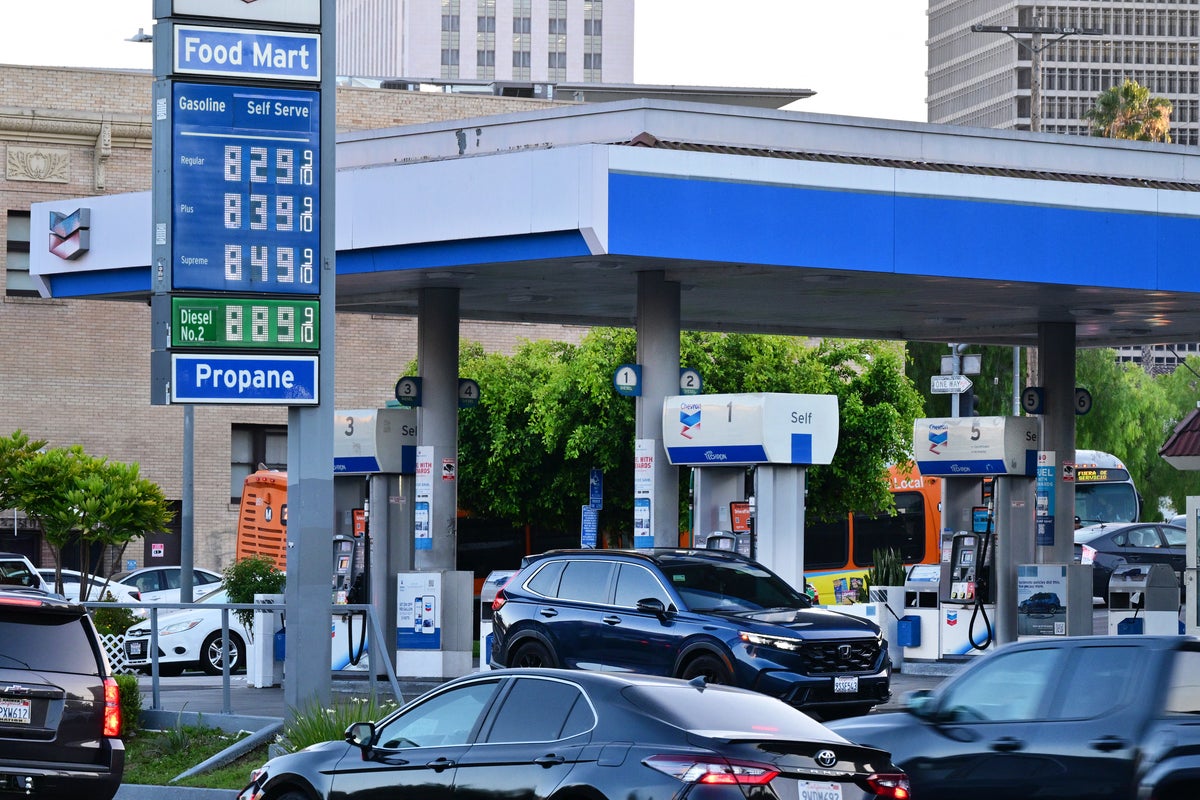
The national average for a gallon of regular unleaded gas just hit $4.23, a number that has sent a jolt through every household budget in the country. This isn't just a minor fluctuation. It is the highest price Americans have seen since the immediate aftermath of the 2022 invasion of Ukraine. While it is easy to point toward familiar villains, the reality at the pump today is driven by a far more complex and dangerous cocktail of geopolitical fractures and infrastructure decay than we faced four years ago.
Drivers are looking for someone to blame, but the truth is spread across several continents. We are no longer dealing with a single isolated conflict. Instead, a deadlock in US-Israeli peace talks with Iran has effectively paralyzed the Strait of Hormuz, a chokepoint that carries 20% of the world’s oil. When a fifth of the global supply becomes a question mark, the markets don't just react; they panic.
The Hormuz Stranglehold
The current price spike is a direct symptom of the gridlock in the Middle East. For weeks, negotiators have failed to reach an agreement that would reopen vital shipping lanes. This has pushed Brent crude to $111 a barrel, while the US benchmark, WTI, hovers near $100. Unlike the 2022 crisis, which was largely about isolating Russian supply, the current situation threatens the very transit of oil from multiple producers.
Investors are pricing in a worst-case scenario where the Strait remains impassable for the foreseeable future. This creates a "risk premium" that gets passed directly to the consumer. You aren't just paying for the oil itself; you are paying for the fear that the next shipment might not arrive.
A Cartel in Chaos
While the shipping lanes are blocked, the organizations meant to manage global supply are falling apart from the inside. The United Arab Emirates (UAE) recently announced its exit from OPEC, effective May 1, 2026. This is a seismic shift in the energy landscape. The UAE is a major producer, and its departure signals a massive loss of cohesion within the cartel that has dictated prices for over sixty years.
The exit of the UAE leaves Saudi Arabia to carry the burden of price stability almost entirely on its own. Without the UAE’s "shock absorber" capacity, the market is exposed to much higher volatility. The UAE wants the freedom to pump more oil and monetize its massive investments, but in the short term, this internal bickering within OPEC+ creates even more uncertainty for global markets.
The Empty Safety Net
In previous crises, the United States could lean heavily on the Strategic Petroleum Reserve (SPR) to blunt the impact of price hikes. That safety net is now dangerously thin. As of late April 2026, the SPR stands at approximately 413 million barrels, its lowest level in over four decades.
The government has been releasing roughly 1.7 million barrels a week in a desperate attempt to stabilize the market. However, with the reserve at nearly half its total capacity, there is a limit to how much more the administration can intervene without compromising national security. We are fighting a five-alarm fire with a garden hose that is starting to run dry.
Regional Disparities and the Refining Gap
The $4.23 national average hides the staggering pain felt in specific regions. In California, drivers are seeing prices as high as $5.96, while states like Oklahoma remain closer to $3.44. This gap isn't just about state taxes. It is about a shrinking refining capacity on the West Coast.
- PADD 5 (West Coast): High regulatory hurdles and aging infrastructure have led to refinery closures.
- Gulf Coast: Remains the most resilient region due to its proximity to production and massive refining hubs.
- Midwest: Seeing sharp spikes—Kentucky and Tennessee have recorded year-over-year increases exceeding 40%.
The problem isn't just getting the crude oil out of the ground; it is the bottleneck of turning that crude into the gasoline sitting in your tank. US refinery capacity has plateaued, and with no major new refineries on the horizon, any minor mechanical failure at an existing plant now triggers an immediate price jump.
Why Prices Won't Drop Tomorrow
There is a common misconception that if the war ends or a deal is signed, prices will reset overnight. This ignores the "rocket and feather" effect. Prices go up like a rocket when news is bad, but they drift down like a feather once the crisis abates. Retailers are slow to lower prices because they are already buying their next delivery at the current, inflated spot price.
Furthermore, the industry is currently rewarding capital discipline over expansion. After years of volatility, oil companies are more interested in returning value to shareholders through buybacks than they are in aggressive new drilling projects. They have seen the boom-and-bust cycle too many times to overextend themselves now.
The $4.23 mark is more than just a number on a sign. It is a signal that the global energy order is fundamentally broken. Between a fragmented OPEC, a depleted US reserve, and a shuttered Strait of Hormuz, the path back to $3.00 gas looks increasingly narrow.
The immediate action for the consumer is clear: stop waiting for a miracle at the pump. The factors driving this surge are structural, not just seasonal, and they will require more than a diplomatic handshake to resolve.
Monitor the Strait of Hormuz traffic reports weekly; as long as the transit volume remains near zero, expect the $4.00 floor to hold.