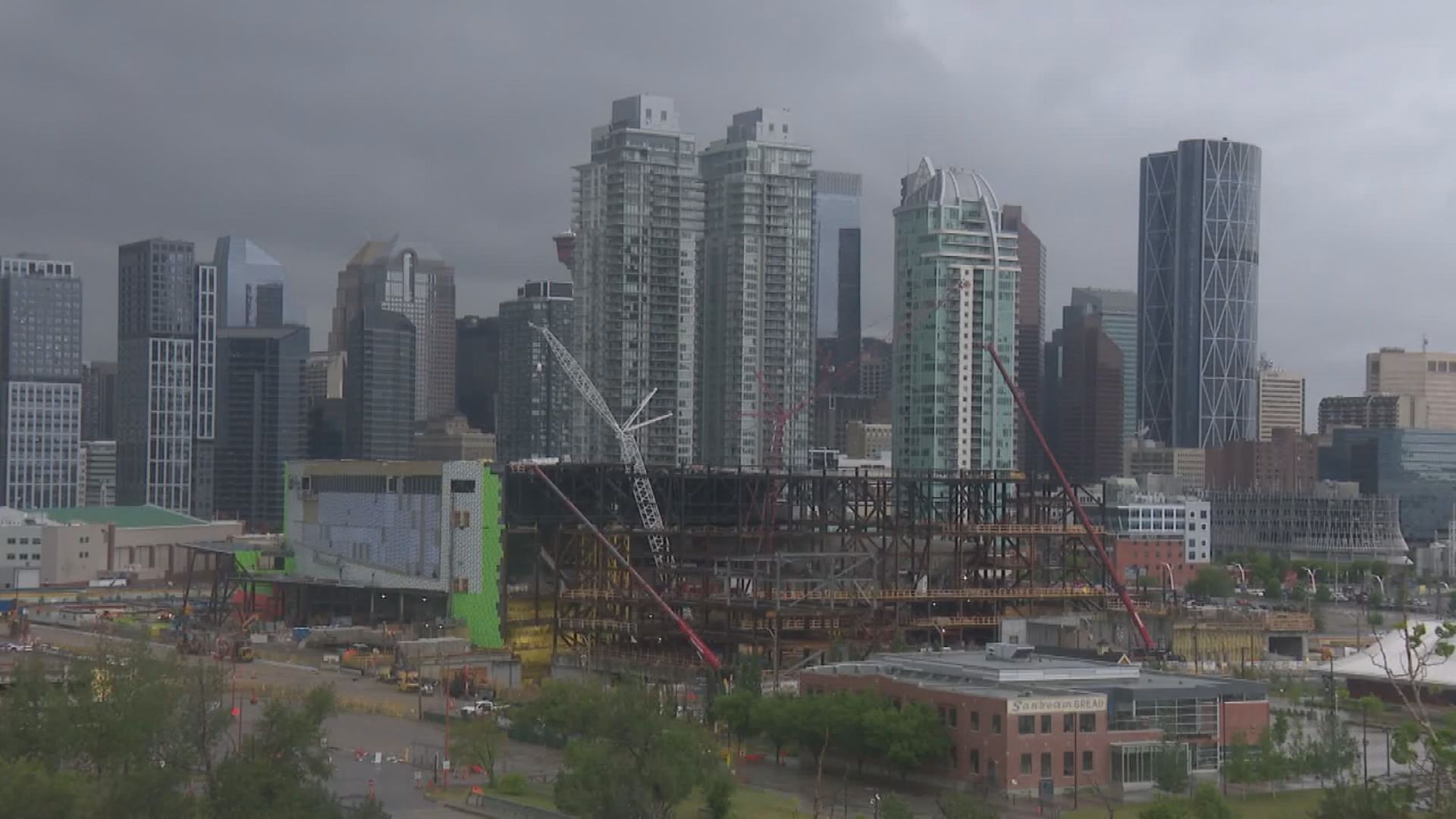
Calgary’s new $1.22 billion NHL arena project, Scotia Place, is currently being hailed by city officials as a triumph of municipal project management. In a recent progress update to the city’s Infrastructure and Planning Committee, project leaders declared the development on time for a fall 2027 opening and strictly within its approved budget framework. The official narrative asserts that 37 percent of the budget has been spent, and with 95 percent of the project procurement "bought out," the primary financial risks are handled.
However, looking beneath the celebratory press releases reveals a much more complicated reality. While the physical structure is indeed rising from the Victoria Park excavation site, the claim that the project is safely "on budget" relies on a highly localized definition of fiscal success. By fixing the baseline at the ballooned 2023 agreement cost rather than historical estimates, the city has essentially normalized a massive capital escalation before the first shovel even touched the dirt. For taxpayers, the long-term structural liabilities and the true cost of municipal risk absorption remain heavily obscured by the current construction momentum.
The Evolution of a Billion Dollar Baseline
To understand why the "on budget" designation requires an asterisk, one must examine how the financial goalposts were moved. The journey to Scotia Place is littered with abandoned frameworks and escalating spreadsheets.
- In 2019, the city and Calgary Sports and Entertainment Corporation (CSEC) agreed to a $550 million event centre, split evenly down the middle.
- By mid-2021, that figure crept to $608.5 million due to inflationary pressures and structural design adjustments.
- That specific deal collapsed entirely late in 2021 over micro-disputes regarding climate mitigation costs and sidewalk infrastructure.
When the current deal emerged in April 2023, the price tag had not just increased; it had doubled to $1.223 billion.
| Funding Partner | 2019 Original Commitment | 2023 Finalized Agreement |
|---|---|---|
| City of Calgary | $275 million | $537.3 million |
| CSEC (Flames Ownership) | $275 million | $356 million (Present Value) |
| Province of Alberta | $0 | $330 million |
The city’s upfront cash contribution jumped from $275 million to $537.3 million. Meanwhile, the provincial government stepped in with $330 million to cover surrounding infrastructure, land acquisition, and the eventual demolition of the Scotiabank Saddledome. CSEC’s share is structured as $748.3 million over 35 years, which translates to roughly $356 million in 2024 dollars when adjusted for the time value of money.
When project officials state that the project is hitting its financial targets, they mean it is hitting the revised 2023 targets. The project is insulated today because the massive, half-billion-dollar cost correction was baked into the agreement before construction commenced.
The Procurement Illusion and Subsurface Risk
Project representatives recently announced that 95 percent of the project has been "bought out," implying that fixed-price contracts protect the remaining phases from market volatility. This is standard industry phrasing designed to comfort equity markets and taxpayers, but it glosses over how modern commercial construction contracts operate.
A buyout means major subcontracts for steel, concrete, and mechanical systems have been awarded. It does not mean those numbers are immutable. Change orders remain the primary escape hatch for contractors facing unforeseen site conditions or design discrepancies.
The structural work completed so far has consumed over 41,000 cubic metres of concrete and is moving into the installation of 39,000 metric tonnes of steel rebar. This phase is notoriously vulnerable to schedule friction. While the deep excavation and foundation work are behind schedule risks, the complexity of the "inverted bowl" layout and the underground community rink require highly specialized labor.
The upcoming phases will see the workforce on-site scale up from 200 workers daily to an estimated 1,200 craftsmen. Managing that volume of trades within a constrained 10-acre downtown footprint introduces significant logistical complexity. Any delay in trade sequencing or a localized shortage of specialized labor will rapidly generate cost overruns that fixed-price allocations cannot fully absorb.
The Event Centre as a Loss Leader
The economic justification for Scotia Place relies on the premise that a modern facility will catalyze the surrounding Rivers District into a vibrant commercial hub. Academic consensus, however, paints a vastly different picture of municipal arena investments.
Decades of independent economic research show that professional sports facilities rarely generate net-new economic activity. Instead, they trigger a substitution effect. Disposable income spent on hockey games, concert tickets, or a meal at one of the arena's four planned restaurants is simply redirected from neighborhood businesses elsewhere in the city.
The city owns the building, but CSEC retains the operational revenues, concession profits, and naming rights cash flow under a 35-year lease. The public returns are largely indirect, tied to long-term property tax generation in the surrounding entertainment district. For the municipal treasury to break even on its $537.3 million upfront investment, the surrounding area must experience unprecedented, sustained commercial development.
Designing for an Unpredictable Touring Environment
A central engineering argument for retiring the historic Saddledome is its structural limitation regarding modern concert rigging. The iconic saddle-shaped concrete roof cannot support the immense weight loads required by today's top-tier stadium tours. Scotia Place solves this with a conventional roof design capable of supporting virtually any production configuration.
The facility is built with a flexible capacity sweet spot of roughly 18,400 for hockey, expandable to 20,000 for concerts, featuring curtaining systems to scale down for intimate events. This operational flexibility is essential, but it arrives in an entertainment market plagued by soaring touring costs and shifting consumer spending habits.
While the new building guarantees that global acts can stop in Calgary, it does not guarantee they will. The facility will find itself competing directly with Rogers Place in Edmonton and established venues across Western Canada for a limited pool of viable stadium tours.
The green credentials of the facility are equally complex. The inclusion of 700 solar panels and rainwater collection systems represents a step toward modern corporate expectations. The ultimate target is to transition the facility to a net-zero footprint by the year 2050. Achieving this will require substantial future capital reinvestments to overhaul mechanical and HVAC systems, expenses that will eventually challenge the operational budget allocations of the city and its partner.
The Real Cost of Hitting the Target
The current operational assessment of Scotia Place is undeniable: steel is rising, the schedule is intact, and the contingency funds remain unliquidated. But celebrating this as a model of public thrift ignores the massive financial restructuring required to achieve this stability. The project is tracking smoothly because the public partners absorbed the macro-inflationary shocks beforehand.
The actual test of this civic investment will occur long after the first puck drops in the autumn of 2027. It will be measured over decades in the property tax assessments of the Rivers District, the actual maintenance costs of a massive municipal asset, and the opportunity costs of hundreds of millions of dollars in public capital locked into a professional sports venue. Construction stability is a positive operational indicator, but it should not be confused with long-term fiscal prudence.