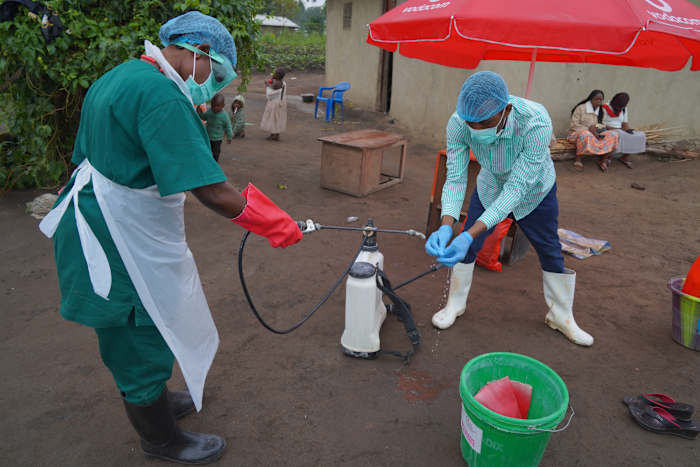
The global healthcare framework for displaced populations is not just under strain; it is effectively dead. While international bodies release polished reports documenting "rising health risks" for the world’s 110 million forcibly displaced people, the reality on the ground is far more cynical. We are witnessing the intentional erosion of medical access as a tool of border policy. For migrants and refugees, the danger isn't just the lack of a doctor. It is a calculated bureaucratic exclusion that turns treatable conditions into death sentences.
The core failure lies in the disconnect between international law and national self-interest. Most nations have signed treaties promising "health for all," yet their internal policies are designed to make medical care a luxury that requires documentation many refugees cannot possibly possess. This creates a shadow class of millions who are technically eligible for care but practically barred from it. For an alternative perspective, check out: this related article.
The Fiction of Universal Access
The World Health Organization often speaks of "Universal Health Coverage" as if it were a switch that could be flipped. It isn't. In the current geopolitical climate, health access is being used as a deterrent. Governments fear that providing high-quality, free healthcare to undocumented migrants will create a "pull factor," attracting more arrivals. This logic is medically illiterate. People do not flee war zones or economic collapse because of a dental clinic in a neighboring country. They flee to survive.
By the time a refugee reaches a host country, they are often carrying the physical toll of the journey: respiratory infections, untreated chronic illnesses like diabetes, and severe psychological trauma. When a host system denies them primary care, it doesn't save money. It simply pushes the cost down the road. An untreated infection becomes a septic emergency. A managed case of hypertension becomes a catastrophic stroke. The burden eventually hits the emergency rooms, where the cost of care is ten times higher than a simple clinic visit. Similar reporting on this matter has been published by National Institutes of Health.
The Weaponization of Bureaucracy
Investigating the "how" of this exclusion reveals a sophisticated set of hurdles. It is rarely a sign on a hospital door saying "No Refugees." Instead, it is the requirement for a permanent address to register with a GP. It is the demand for a valid national insurance number that cannot be issued without a work permit. It is the threat that medical data will be shared with immigration enforcement.
In several European and North American jurisdictions, the "firewall" between health services and border control has vanished. When a migrant believes that seeking a life-saving surgery will lead to their deportation, they stay home. They suffer in silence. This isn't a failure of the system; for some policy makers, this is the system working exactly as intended. It is a slow-motion medical purge.
The Hidden Toll of Mental Health Neglect
While physical ailments are easy to track, the psychological destruction of displacement is being ignored on a massive scale. We are currently cultivating a global generation of "waiting room orphans"—children and young adults who have spent their formative years in a state of legal and medical limbo.
The traditional humanitarian model focuses on acute trauma. We treat the immediate wound from a shelling or the dehydration from a sea crossing. But we have no infrastructure for the "long-term acute" stress of life in a camp. Research into epigenetics suggests that the prolonged cortisol spikes experienced by refugees can lead to permanent changes in gene expression, predisposing future generations to metabolic and mental health disorders. We aren't just failing the people currently crossing borders; we are baking chronic illness into the DNA of the future.
The Privatization of Misery
As public systems retreat, a fragmented web of NGOs and private charities has stepped in. While their work is heroic, it is inherently unsustainable. Healthcare cannot be a patchwork of "goodwill."
When a large NGO pulls out of a region due to funding cuts or security risks, thousands of people lose their only link to medication. This creates a dangerous volatility in disease management. In places like Lebanon or Jordan, where refugee populations make up a significant percentage of the total inhabitants, the collapse of these NGO-funded clinics threatens the stability of the entire national health infrastructure. Viruses do not respect visa status. An outbreak of measles or tuberculosis in a crowded, under-served refugee settlement will eventually migrate into the general population. Neglecting migrant health is a form of public health suicide.
The Myth of the Burden
The most common counter-argument is that host nations simply cannot afford the influx. This is a fiscal fairy tale. Multiple studies across the OECD have shown that migrants are net contributors to the economy over the long term. Even in the short term, the cost of providing basic primary healthcare to a refugee is a fraction of the economic loss caused by an unhealthy, unproductive population or a localized epidemic.
The real "burden" is the administrative cost of exclusion. The billions spent on monitoring, policing, and rejecting healthcare claims could easily fund the very clinics that are being shuttered. We are spending money to ensure people stay sick, then wondering why the "health risks" are rising.
Breaking the Cycle of Tactical Neglect
Fixing this requires more than just more funding for the WHO. It requires a fundamental decoupling of healthcare from immigration status.
- Implement strict firewalls: Medical data must be legally protected from immigration authorities. No doctor should be an informant.
- Abolish residency requirements for primary care: Access to a general practitioner must be based on physical presence, not legal status.
- Integrate, don't segregate: Transition away from "refugee-only" clinics toward strengthening the existing public health systems to handle everyone in a geographic area.
The current trajectory leads toward a world where your right to survive a heart attack is determined by a passport. That is not a healthcare system; it is a caste system. If we continue to treat health as a reward for citizenship rather than a prerequisite for human stability, we will continue to be "surprised" by every new report of rising mortality rates.
The data is clear. The humanitarian pleas have been made. The only thing missing is the political courage to admit that an undocumented person’s fever is just as dangerous, and just as treatable, as a citizen’s. We can pay for the clinic now, or we can pay for the catastrophe later. There is no third option.