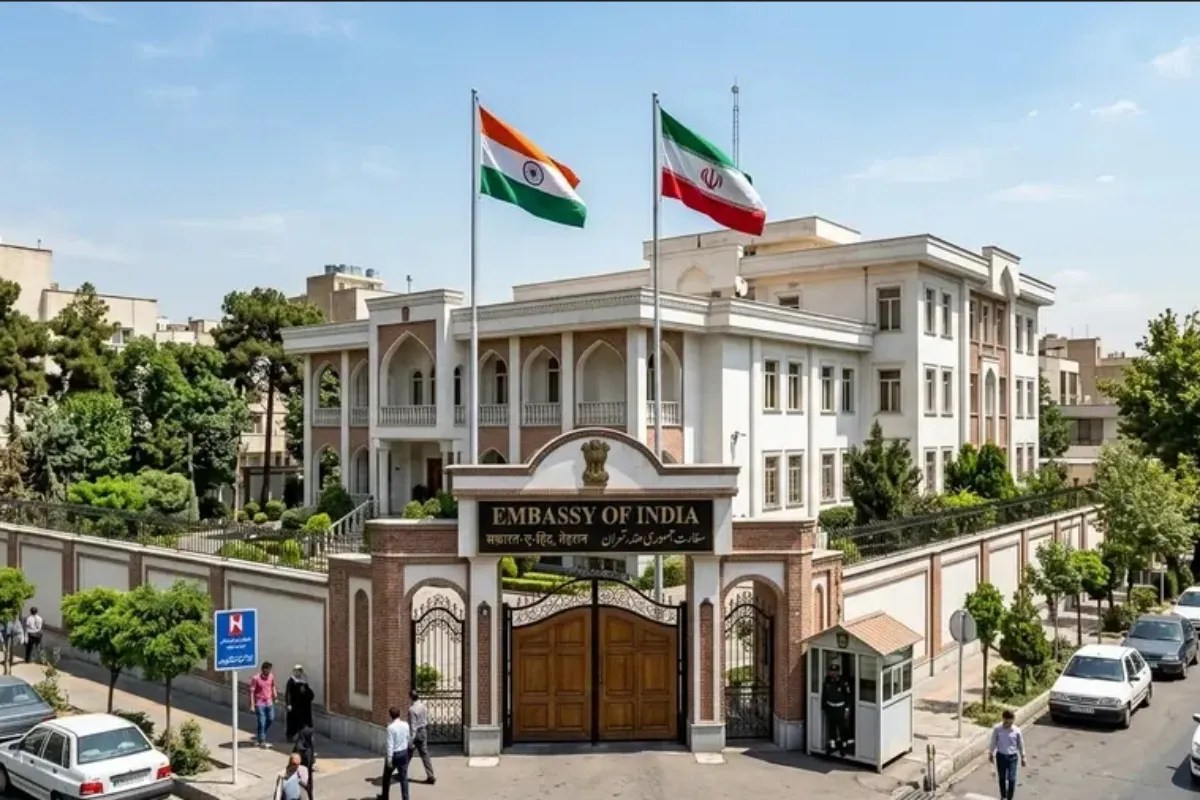
The Indian Ministry of External Affairs does not issue "leave immediately" advisories on a whim. While much of the global media is currently fixated on the fragile ceasefire agreements flickering across the Middle East, New Delhi has signaled a far more cynical view of the regional stability. By advising Indian nationals in Iran to depart as soon as possible, the government is moving beyond routine caution. This is a calculated risk assessment that suggests the current lull in hostilities is not a resolution, but a tactical pause. For the thousands of Indian students, traders, and oil workers currently on Iranian soil, the window for a safe and orderly exit is closing faster than the diplomatic statements suggest.
The directive follows a period of unprecedented escalation. New Delhi’s intelligence suggests that the infrastructure for a wider regional conflagration remains entirely intact despite the surface-level talk of a ceasefire. When a state tells its citizens to flee, it is acknowledging that it can no longer guarantee their safety through diplomatic channels alone. Don't forget to check out our previous post on this related article.
The Mirage of Middle Eastern Stability
A ceasefire in this part of the world is often just a period used for rearming. To understand why India is pushing its citizens toward the exit, one must look at the specific vulnerabilities of Iran's airspace and maritime borders. In previous escalations, we saw how quickly commercial flight paths can become combat zones. India is haunted by the logistical nightmare of "Operation Ganga" in Ukraine and the frantic evacuations from Kabul. The foreign office is determined not to be caught flat-footed again.
The geopolitical math is simple. If the current ceasefire collapses, Iran becomes the primary focal point of retaliatory strikes. Unlike previous years where "strategic patience" was the mantra, the current threshold for direct kinetic action against Iranian interests has dropped significantly. New Delhi knows this. They are reading the satellite imagery and the back-channel chatter that the general public never sees. If you want more about the history of this, Reuters offers an in-depth summary.
Why the Urgency Matters Now
Timing is everything in diplomacy. By issuing this advisory now, India is providing its citizens the chance to book commercial flights before prices skyrocket or runways are cratered. Waiting for a "hot" war to begin before evacuating leads to the chaos of chartered rescue flights and military extractions, which are dangerous, expensive, and politically sensitive.
The advisory is particularly targeted at those in non-essential roles. While diplomats and core staff remain, the message to the broader Indian diaspora is clear: Your presence in Iran has become a liability that the Indian state is no longer willing to underwrite.
The Intelligence Gap and Hidden Triggers
Publicly, the ceasefire is touted as a success. Privately, Indian analysts are likely looking at the movement of high-value military assets across the Persian Gulf. There is a specific kind of silence that precedes a storm in the Middle East, and we are currently in that silence.
India’s relationship with Iran has always been a tightrope walk. We need their energy and the strategic access provided by the Chabahar port to bypass Pakistan and reach Central Asia. However, those long-term strategic interests are currently being outweighed by the immediate physical risk to Indian lives. If a single Indian hostel or work site is hit by a "miscalculated" missile, the political fallout in New Delhi would be catastrophic for the current administration.
The Logistics of a Mass Departure
Moving thousands of people out of a country under heavy sanctions is not a simple task. Iran's commercial aviation sector is already strained by a lack of spare parts and limited international carriers.
- Flight Availability: Most European carriers have already pruned their schedules to Tehran.
- Exit Visas: For Indian workers, navigating the Iranian bureaucracy to secure exit permits can take days or weeks.
- Financial Constraints: With the Iranian Rial in a state of constant flux, liquidating assets to buy an emergency ticket is a losing game for many laborers.
This is why the advisory emphasizes "as soon as possible." It is a recognition that the exit pipes are narrow. If everyone tries to leave at once, the system will break.
The Economic Aftershocks for the Diaspora
We cannot ignore the human cost of this geopolitical maneuvering. Many Indians in Iran have invested their life savings into small businesses or are midway through medical degrees that are not easily transferable. For these individuals, the MEA's advisory is not just a safety warning; it is a financial death sentence.
New Delhi is essentially telling these people to abandon their livelihoods to save their lives. It is a brutal trade-off. The government rarely offers compensation for the losses incurred during these "voluntary" evacuations. This creates a dangerous hesitation among the diaspora. Many will choose to stay, gambling that the ceasefire holds, simply because they cannot afford to go home to nothing.
The Role of Chabahar and Energy Security
There is a glaring irony in this exit order. Even as India tells its citizens to leave, it continues to dump millions into the development of the Chabahar Port. This highlights the dual-track nature of Indian foreign policy.
- Track One: Protect the human capital at all costs to avoid domestic political blowback.
- Track Two: Maintain the hard infrastructure that ensures India's long-term relevance in the Eurasian corridor.
The port workers and technical staff are in a unique bind. They are the "essential" personnel who often fall through the cracks of these advisories, caught between their contracts and their country’s warning.
Countering the Narrative of De-escalation
The mainstream narrative suggests that the worst is over. This is a dangerous delusion. The underlying frictions—nuclear ambitions, proxy networks, and maritime dominance—remain entirely unresolved. A ceasefire that does not address the root causes of the friction is merely a countdown.
India's advisory serves as a cold bucket of water on the optimism of the international community. By telling its people to get out, India is effectively betting against the success of the current peace talks. They are choosing pragmatism over hope. History shows that in the Middle East, the pragmatists are usually the ones who survive.
Operational Reality for Indian Nationals
For those currently on the ground in Tehran, Mashhad, or Isfahan, the instructions are granular. Register with the embassy. Keep travel documents in a "go-bag." Avoid areas of public gathering. This is the language of a state preparing for the total breakdown of civil order or a sudden surge in kinetic strikes.
The MEA's stance also signals a shift in how India views its "Non-Resident Indian" (NRI) responsibilities. In the past, the government was reactive. Now, it is becoming hyper-proactive. This shift is driven by the power of social media; the government knows that images of stranded Indians pleading for help can go viral in minutes, turning a foreign policy crisis into a domestic nightmare.
Beyond the Official Statement
What isn't in the press release is the most important part. The advisory likely stems from a specific piece of intelligence regarding a "red line" that is about to be crossed. Whether it’s a shift in drone deployment or a change in the posture of regional air defenses, the trigger for this exit order was likely specific and credible.
The geopolitical landscape of 2026 does not allow for the luxury of "wait and see." Security is now a proactive commodity. If you are an Indian national in Iran, the government has given you the final warning. The responsibility for what happens next has been officially shifted from the state to the individual.
Pack your bags. Secure your documents. Do not wait for the sirens to start before you head to the airport. The "ceasefire" is a shadow, and the sun is moving.