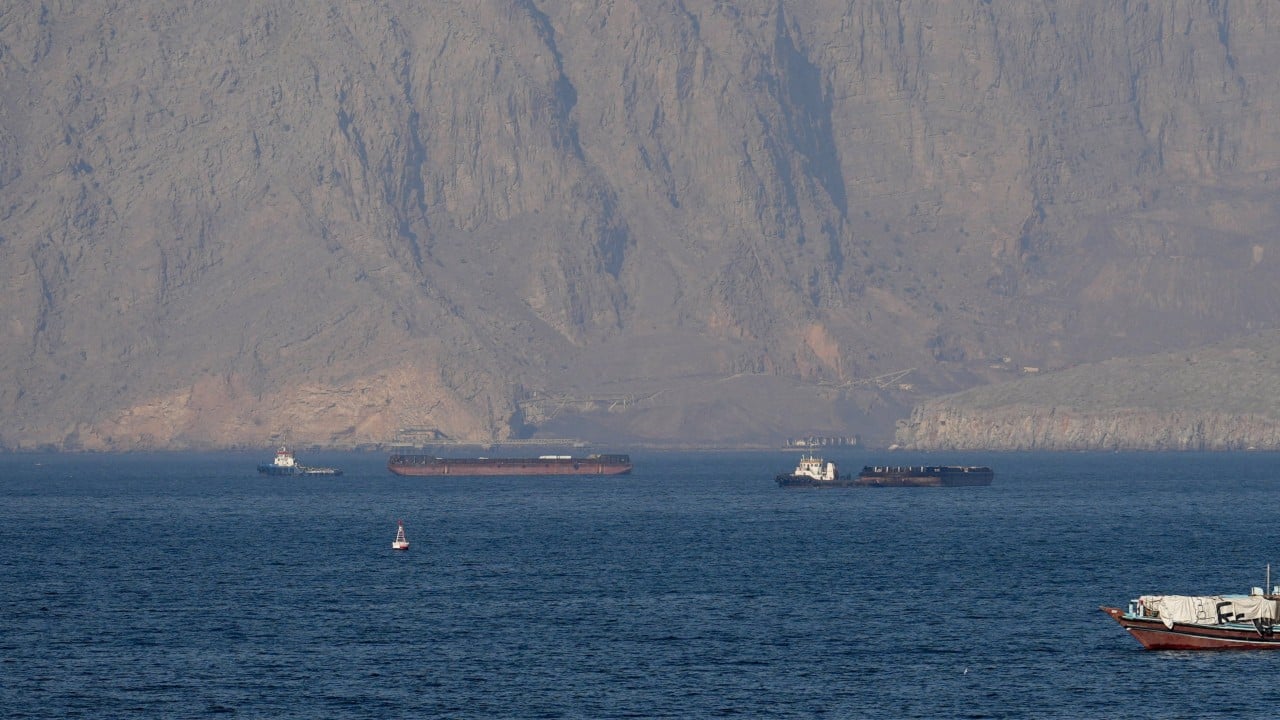
The maritime corridor connecting the Persian Gulf to the Indian subcontinent is currently the most dangerous stretch of water on the planet. Recent strikes against Indian-bound tankers have stripped away the illusion that regional partnerships offer a guaranteed safety net. While Tehran often positions itself as the primary guardian of these narrow shipping lanes, the reality on the water tells a much more fractured story. Iran lacks the conventional naval reach to provide a true umbrella of protection for the massive volume of trade passing through the Arabian Sea, particularly when its own proxies and geopolitical interests are the very forces destabilizing the route.
For New Delhi, the stakes are existential. India relies on this specific maritime artery for nearly 80 percent of its energy needs. When a drone or missile slams into a chemical tanker like the MV Chem Pluto, it isn't just a tactical failure. It is a direct challenge to the idea that "friendly" relations with Iran can translate into physical security for commercial assets. The protection Iran offers is conditional, often serving as a diplomatic lever rather than a consistent military service. This gap between Tehran's rhetoric and its actual operational capacity is the central friction point redefining global shipping insurance, route planning, and national security strategies across the Indo-Pacific.
The Myth of Persian Gulf Policing
Tehran has long asserted that regional security should be handled by regional powers, a direct swipe at the presence of the U.S. Fifth Fleet. However, there is a massive difference between harassing a vessel and protecting one. The Islamic Republic of Iran Navy (IRIN) and the Islamic Revolutionary Guard Corps Navy (IRGCN) are built for asymmetric warfare. They excel at "mosquito" tactics—using swarms of fast-attack craft, mines, and shore-based missiles to deny access to an enemy.
These tools are designed for disruption, not for the sustained, blue-water escort missions required to protect a scattered fleet of slow-moving supertankers. To protect a tanker from a modern drone threat, a naval vessel needs advanced radar integration, long-range surface-to-air missiles, and the ability to project power hundreds of miles from its home coast. Iran’s aging frigates and smaller patrol boats simply do not have the sensor suites to provide a multi-layered defense against the very types of loitering munitions that are currently haunting the Red Sea and the Gulf of Aden.
The recent attacks reveal a glaring paradox. Many of the weapons being used to target shipping in these lanes share a common lineage with Iranian technology. When a tanker carrying Indian cargo is hit by a drone that bears the hallmarks of a Shahed-series design, the question of whether Iran "can" protect these ships becomes secondary to whether it "will" restrain the networks it has spent decades cultivating.
The Indian Dilemma and the Cost of Neutrality
New Delhi has historically walked a tightrope. It maintains a strategic partnership with the United States while preserving deep energy and infrastructure ties with Iran, most notably through the Chabahar port project. This "multi-aligned" foreign policy is now being tested by the hard physics of naval warfare.
The Indian Navy has responded by deploying guided-missile destroyers like the INS Kochi and INS Kolkata to the Arabian Sea. This move is a silent admission. If Iran were truly capable of or willing to act as the regional guarantor of safety, India would not need to burn millions of dollars in fuel and man-hours to patrol its own commercial interests so far from home.
Insurance Premiums as a Metric of Failure
The shipping industry does not trade in diplomatic promises; it trades in risk assessment. When the "safe" status of a route is questioned, the "War Risk" premiums spike immediately. For a single voyage of a Very Large Crude Carrier (VLCC), these costs can jump by hundreds of thousands of dollars in a matter of days.
- Primary Risk Factors: Loitering munitions (drones), anti-ship cruise missiles, and ship seizures by paramilitary forces.
- Secondary Consequences: Forced re-routing around the Cape of Good Hope, adding 10 to 14 days to transit times and massive carbon surcharges.
- The Bottom Line: If Iranian protection were credible, these premiums would stabilize for vessels headed to friendly ports. They haven't.
The Invisible Infrastructure of the Shadow War
The attacks on Indian tankers are rarely about India itself. They are move-and-countermove plays in a larger shadow war. When a ship is targeted, the intelligence behind the strike is often looking for "beneficial ownership"—the tangled web of companies and stakeholders behind the vessel's flag.
In this environment, "friendly shipping" is a fluid concept. A ship might be carrying Indian oil, be managed by a Greek company, flagged in Liberia, and have a crew from the Philippines. To an operator sitting in a command center in Sana'a or Tehran, that ship is a target of opportunity if any part of that chain connects to a rival. Iran’s inability to protect these vessels stems from the fact that the modern shipping industry is too interconnected for a localized power to pick and choose who gets a free pass.
The Drone Proliferation Problem
The barrier to entry for disrupting global trade has never been lower. A drone costing $20,000 can successfully disable a ship worth $100 million. Iran has pioneered this "asymmetric sea denial" strategy. By providing the blueprints and components for these systems to various groups, they have created a "security climate" that they can influence but cannot fully control.
This proliferation creates a chaotic maritime environment. Even if the Iranian government officially promises safe passage to Indian tankers, there is no guarantee that a local commander or a proxy group will not take independent action based on real-time developments in Gaza, Lebanon, or Yemen. The chain of command in these waters is often a suggestion rather than a strict hierarchy.
Hardware Gaps in Tehran's Arsenal
To understand why Iran cannot protect ships, you have to look at the hardware. Most of Iran's naval strength is concentrated in the IRGCN, which operates thousands of small, fast boats. These are terrifying for a lone merchant ship to encounter, but they are useless against an incoming cruise missile or a high-altitude drone.
Protecting a tanker requires "Area Defense." This means the escort ship must be able to see and kill threats miles away from the tanker. Iran’s most capable ships, such as the Jamaran-class frigates, are based on 1960s designs. While they have been upgraded with indigenous electronics, they lack the sophisticated "Aegis-style" integration required to defend a slow-moving target against simultaneous attacks from multiple directions.
Furthermore, Iran lacks a meaningful carrier-based air wing or a network of overseas bases. Without the ability to put "eyes in the sky" 24/7 across the entire Indian Ocean, any protection they offer is purely stationary or limited to the immediate vicinity of the Iranian coast. For an Indian tanker coming from the Red Sea, the danger zone begins thousands of miles before they ever reach the Strait of Hormuz.
The Strategic Realignment of the Arabian Sea
The failure of localized "friendly" protection is forcing a massive shift in how Middle Eastern and South Asian powers view maritime security. We are seeing the emergence of a new, high-stakes security architecture that does not rely on Tehran's goodwill.
- Direct Escort Protocols: The Indian Navy is now increasingly acting as a kinetic shield, moving away from passive monitoring to active intervention.
- Technological Hardening: Commercial tankers are beginning to explore "non-kinetic" defenses, such as advanced electronic warfare (EW) suites to jam drone signals, though the cost of these systems is currently prohibitive for most operators.
- Diplomatic Cold-Shouldering: While India will continue to talk to Iran, the military-to-military trust is at a historic low. You don't trust the person who claims to be the lifeguard while their cousins are throwing rocks at you from the shore.
The "why" behind the attacks is often simplified as regional tension, but the "how" reveals a deeper systemic vulnerability. The maritime world is discovering that in the age of cheap, precision-guided weapons, there is no such thing as a "safe" flag or a "protected" route based solely on diplomatic ties.
Why Technical Capability Trumps Political Will
Even if the leadership in Tehran had a sincere, 100 percent commitment to protecting every Indian tanker, they would still fail. Naval protection is an engineering problem. It requires a specific density of sensors and interceptors that Iran does not possess in sufficient numbers to cover the vastness of the Arabian Sea.
$$Defense Coverage = \frac{Sensor Radius \times Number of Escorts}{Total Area of Transit}$$
When you plug the numbers in, the math is devastating. Iran's effective radar horizon for low-flying drones is limited by the curvature of the earth and the height of their masts. To protect a 500-mile transit corridor, they would need a fleet ten times the size of their current operational force.
The Indian tankers are essentially on their own, caught between the shifting goals of a regional power and the cold reality of a naval force that is better at breaking things than fixing them. The maritime industry is currently being forced to accept a new normal where "friendly shipping" is a relic of a more stable era.
Security in these waters is no longer a given; it is a commodity that must be bought with naval steel and high-end surveillance, not negotiated over tea in Tehran. The era of the "regional guardian" is dead, replaced by a chaotic scramble for self-preservation where every ship must be its own fortress.