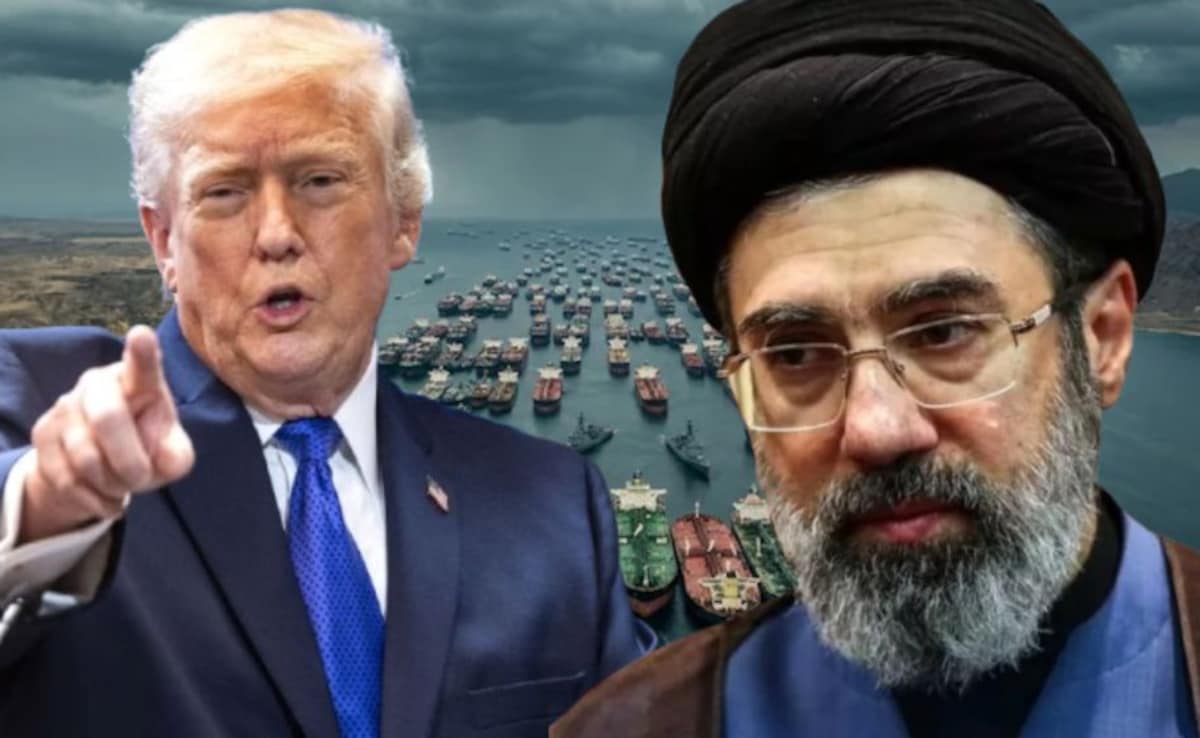
The United States military has significantly escalated its posture in the Middle East by issuing direct warnings to vessels in the Strait of Hormuz, stating that any attempt to interfere with commercial shipping will be met with the use of force. This isn't a mere change in rhetoric. It is a fundamental shift in the rules of engagement designed to deter Iranian seizures of tankers. By deploying destroyers, F-35s, and A-10 Warthogs to the region, the Pentagon is drawing a hard line in the water. The message is clear: the era of passive monitoring is over. If a ship is approached by Iranian Revolutionary Guard Corps (IRGC) fast boats with intent to seize, the U.S. Navy now has the green light to intervene with lethal capability.
The Mechanics of a Maritime Confrontation
To understand why this is happening now, you have to look at the mechanics of maritime law versus the reality of naval power. For years, Iran has utilized a "gray zone" strategy. They don't declare war; they simply harass, board, and redirect tankers under the guise of legal disputes or safety violations. It is a low-cost, high-reward tactic that forces the West to choose between escalation or embarrassment.
The U.S. response involves a massive influx of hardware. We aren't just talking about a single carrier strike group. The deployment of the Bataan Amphibious Ready Group and the 26th Marine Expeditionary Unit brings thousands of Marines and specialized landing craft into the mix. This provides the U.S. with the ability to put boots on the deck of a commercial tanker faster than an Iranian boarding party can secure it.
Why the Persian Gulf is Flirting with Disaster
The Strait of Hormuz is the world's most important oil chokepoint. Approximately 20% of the world’s petroleum passes through this narrow stretch of water. It is a geographic nightmare for a traditional navy. At its narrowest point, the shipping lanes are only two miles wide in either direction.
This creates a "kill zone" where high-tech U.S. assets are forced to operate in close proximity to swarms of small, agile Iranian boats. These IRGC craft aren't looking for a fair fight. They use "swarm tactics," attempting to overwhelm the sensory and defensive systems of a multi-billion dollar destroyer with dozens of cheap, missile-laden speedboats. The new U.S. orders to "use force" are a direct counter to this. It tells the Iranian commanders that the U.S. will no longer wait for a shot to be fired before neutralizing a perceived threat.
The Failed Policy of Strategic Patience
For the last several years, the U.S. followed a policy often called "strategic patience." The idea was to avoid a full-scale war by ignoring minor provocations. It failed. Iran saw this restraint as a lack of resolve. Between 2021 and 2023, Iran harassed or seized nearly 20 internationally flagged merchant vessels.
By refusing to fight back, the U.S. inadvertently encouraged more aggressive behavior. Shipping companies began to lose faith in the security of the route, driving up insurance premiums and threatening global energy stability. The current buildup is a desperate attempt to regain the "deterrence credibility" that was lost during those years of inaction. It is a high-stakes gamble that showing teeth will prevent a bite.
The Role of Intelligence and Aerial Dominance
Success in this theater doesn't just come from the water. It comes from the air. The A-10 Warthog, a plane designed to kill Soviet tanks in Eastern Europe, has found a new life hunting speedboats in the Gulf. Its massive 30mm cannon is devastating against the thin-hulled vessels favored by the IRGC.
Meanwhile, F-35 Lightning II fighters provide a "stealth eye" in the sky. These jets can track dozens of targets simultaneously without being detected by Iranian radar, passing that data down to the destroyers on the surface. This creates a "networked" battlefield where the U.S. knows where every Iranian boat is before they even leave the harbor.
The Economic Consequences of the Standway
If a single shot is fired and a tanker is hit, the global markets will react instantly. We aren't just talking about a few cents at the pump. A prolonged conflict in the Strait would lead to a maritime insurance "blackout."
In such a scenario, commercial vessels would refuse to enter the Gulf regardless of U.S. protection. The risk of being caught in the crossfire of a naval engagement between a destroyer and a swarm of missile boats is too high for any commercial entity to bear. This is the paradox of the current U.S. strategy: to keep the oil flowing, the U.S. must threaten a war that could potentially stop the oil from flowing entirely.
Tracking the IRGC Move for Move
Iran’s Revolutionary Guard operates independently of the regular Iranian military. They answer directly to the Supreme Leader. This makes them unpredictable. They have spent decades preparing for an asymmetrical war against the United States.
They have mined the sea floor with sophisticated, "smart" mines that can distinguish between the acoustic signature of a tanker and a warship. They have tucked anti-ship cruise missiles into the rugged coastal mountains of the Musandam Peninsula. The U.S. Navy isn't just staring down a few boats; they are staring down a multi-layered defensive web designed to make the Strait of Hormuz a graveyard for any foreign fleet.
The Shadow of Regional Alliances
Washington isn't doing this alone, though it often feels that way. The International Maritime Security Construct (IMSC) is a coalition of nations—including the UK, Saudi Arabia, and the UAE—aimed at protecting these waters. However, many of these partners are wary. They live in the neighborhood. While the U.S. can eventually sail away, countries like Kuwait and Bahrain remain within range of Iranian missiles.
This creates a diplomatic friction point. The U.S. wants to be aggressive to show strength, while regional partners often prefer back-channel negotiations to keep the peace. This tension limits how much force the U.S. can actually use without alienating the very allies it is trying to protect.
Technical Superiority vs Ground Reality
On paper, the U.S. Navy should win any engagement in minutes. The Aegis Combat System on a Burke-class destroyer can track and engage hundreds of incoming threats. But technology has its limits in the cluttered environment of the Strait.
There are hundreds of civilian dhows, fishing boats, and transport vessels in the water at any given time. Distinguishing a hostile IRGC boat from a legitimate fisherman in a split second is an almost impossible task for an automated system. This means the decision to "use force" ultimately rests on the shoulders of young officers on the bridge, staring through binoculars into the hazy heat of the Persian Gulf.
The Escalation Ladder
The current situation is what military theorists call an "escalation ladder." Each side takes a step up, hoping the other will stop. The U.S. added more troops; Iran conducted high-profile naval drills. The U.S. issued the "use force" warning; Iran unveiled new "unmanned" vessels capable of carrying explosives.
The problem with this ladder is that it eventually runs out of rungs. Once you have threatened force, you must eventually use it, or your word becomes meaningless. Conversely, once force is used, the path to a full-scale regional conflict becomes much shorter.
The Strategic Shift Toward the Indo-Pacific
The irony of this massive buildup is that the Pentagon actually wants to leave the Middle East. For years, the strategic focus has been shifting toward China and the Indo-Pacific. Every destroyer sent to the Strait of Hormuz is one less ship available to patrol the South China Sea.
Iran knows this. They understand that the U.S. is "distracted" by the need to pivot to Asia. By creating a crisis in the Gulf, Iran forces the U.S. to keep its best assets tied down in the Middle East. It is a classic move to bleed an opponent’s resources and focus.
Logistics of the Warning
The U.S. Navy broadcasts these warnings on Channel 16, the international maritime distress frequency. It is a cold, professional voice telling Iranian vessels to stay at least 100 meters away from U.S. ships and protected tankers. Failure to comply is interpreted as a "hostile intent."
In the past, Iranian boats would buzz within 20 or 30 meters, taunting U.S. crews and filming the encounter for propaganda. Under the new rules, that 100-meter bubble is a dead zone. If an Iranian boat crosses that line, the U.S. ship is authorized to fire warning shots or engage with "non-lethal" dazzlers. If the approach continues, they open up with the 25mm chain guns.
The Hidden Threat of Underwater Warfare
While the world watches the surface, a different battle is happening underneath. Iran has a fleet of midget submarines—the Ghadir class—that are incredibly difficult to track in the shallow, noisy waters of the Strait. These subs can lay mines or fire torpedoes with almost no warning.
The U.S. countered this by deploying sophisticated sonar-equipped MH-60R Seahawk helicopters. These aircraft hover over the water, "dipping" sonar sensors to listen for the faint hum of an electric motor. It is a constant, exhausting game of cat and mouse played in one of the most hostile environments on earth.
What Happens When a Shot is Fired
The first time a U.S. ship fires on an Iranian boat, the world will change. It won't stay a local incident. Iran will likely respond with its asymmetric toolkit: cyberattacks on Gulf infrastructure, proxy strikes by militias in Iraq or Yemen, and perhaps a total blockade of the Strait using their land-based missile batteries.
The U.S. is betting that Iran doesn't want that. They are betting that the IRGC is rational and values its own survival over a tactical victory. But the IRGC is an ideological organization, not just a military one. Their calculations of risk and reward may not align with Western logic.
Military commanders are now operating under the assumption that a confrontation is no longer a matter of "if," but "when." The hardware is in place. The orders have been signed. The "use of force" is now a standing instruction rather than a theoretical possibility. Shipping companies are being told to stick to the designated lanes, keep their transponders on, and trust that the massive gray hull on the horizon will actually do what it says.
Naval dominance is a fragile thing. It exists only as long as people believe you have the will to use it. By making this warning public and explicit, the U.S. has painted itself into a corner where it must fight if challenged. The Persian Gulf has become a powder keg where the fuse is only 100 meters long.