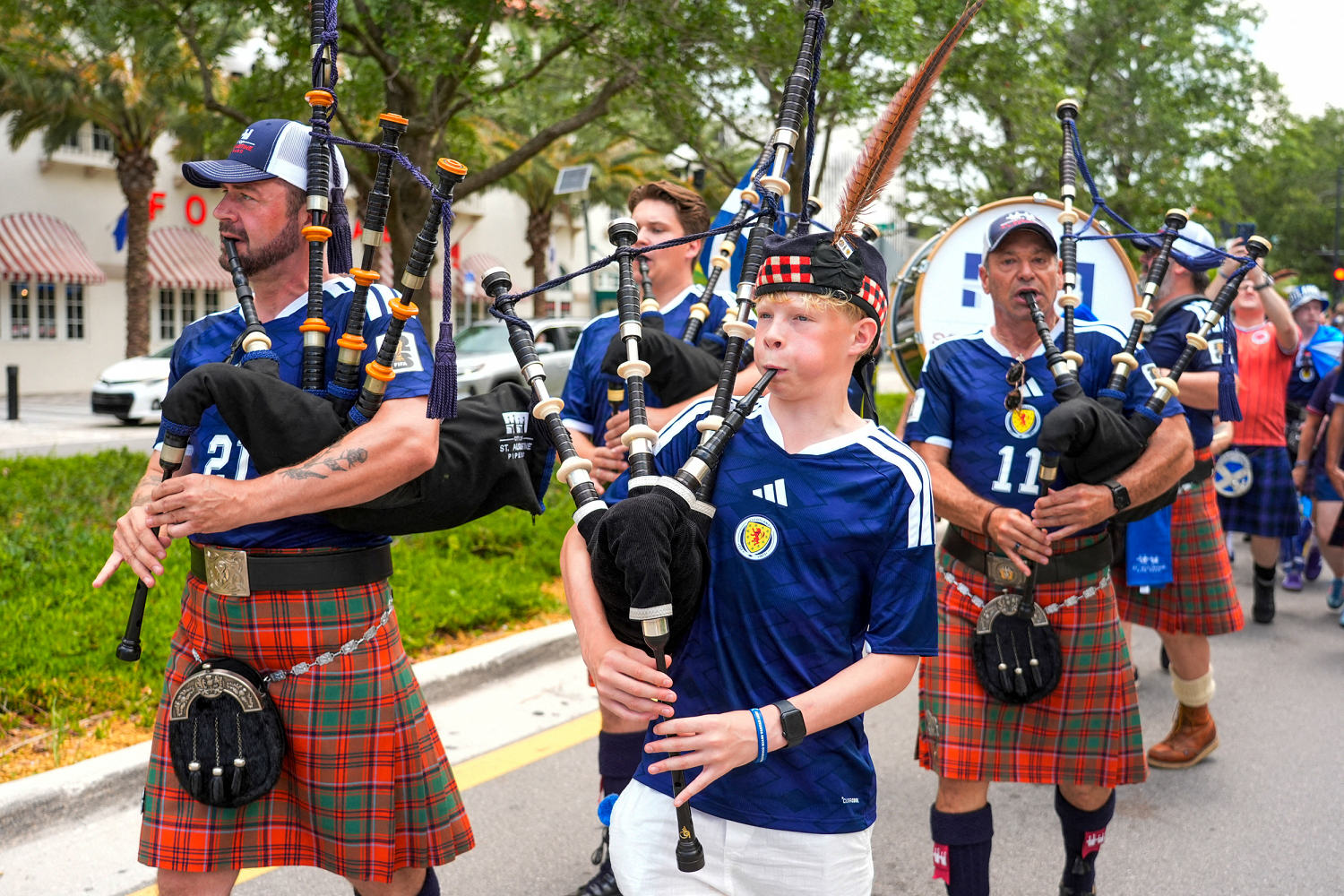
The celebrated renaissance of Scottish football has hit a brick wall, exposing deep structural flaws that a few emotional victories over Spain and Denmark briefly managed to mask. For the last three years, the narrative surrounding the Scotland men's national team—affectionately known as the Tartan Army—was one of defiant resurrection under Steve Clarke. The party, however, is officially over. Scotland's dismal exit from Euro 2024, followed by a grueling, winless Nations League campaign, proves that the initial spike in performance was a temporary high rather than a sustainable shift in power.
The immediate post-mortem pointed directly at tactical rigidness and a lack of elite tournament experience. But those are mere symptoms. The true crisis lies within a broken developmental pathway and an over-reliance on a golden generation of English Premier League talent that has peaked without a contingency plan. Scotland has stopped producing the technically proficient creative players required to compete on the international stage, leaving the national team stranded in a tactical dead zone.
The Illusion of Progress
Football metrics can be cruel, but they do not lie. During the qualification cycle for Euro 2024, Scotland captured the football world's attention by winning their opening five matches. Hampden Park was a cauldron of genuine optimism. What the headlines ignored was a staggering regression in underlying data during the tail end of that very same campaign.
The national team's expected goals (xG) plummeted over their last ten competitive fixtures. They transitioned from a side that punished defensive errors to one that struggled to retain possession in the attacking third of the pitch. When a team relies heavily on low-block defensive structures and hyper-efficient set-pieces, their margin for error shrinks to zero.
Scotland Competitive Form Analysis (Last 12 Matches)
---------------------------------------------------------
Wins: 1 | Draws: 3 | Losses: 8
Goals Scored: 9 | Goals Conceded: 24
Average Possession: 41.2%
The drop-off was not a sudden loss of form. It was an inevitable regression to the mean. International managers across Europe figured out Steve Clarke’s five-at-the-back system. They realized that if you smother Billy Gilmour and force Scotland’s central defenders to carry the ball forward, the entire offensive engine stalls. The system lacked a plan B because the squad lacked the personnel to execute one.
The Elite Midfield Paradox
On paper, Scotland boasts a midfield that should comfortably control matches against mid-tier European opposition. John McGinn, Scott McTominay, and Billy Gilmour are seasoned top-flight competitors. Yet, when deployed together in a dark blue shirt, their individual strengths often cancel each other out.
McTominay’s late-crashing runs into the penalty box provided vital goals during the qualifiers, but this tactical trick requires a specific environment to work. It demands a dominant winger or an overlapping fullback to pull central defenders out of position. Without that width, opponents simply compress the space, forcing McTominay into deep buildup play where he is significantly less effective.
       [Opposition Low Block Defensive Line]
               (Compressed Space)
    -----------------------------------------
       [McTominay]   [McGinn]   [Striker]

    [Gilmour]                        [Ralston]
               [Central Defenders]
Andy Robertson remains a world-class left-back, but his attacking output depends on relationships built at club level. For Scotland, he is frequently tasked with being both the primary defensive anchor on the flank and the main creative outlet. It is an unsustainable burden. When teams double-team Robertson and force Scotland to attack down the right side, the offensive threat drops off a cliff.
A Talent Pipeline Runs Dry
To understand why Scotland cannot adapt, you have to look down. The Scottish FA's Performance Schools project, launched over a decade ago, was designed to cultivate technical elite players. It has failed to deliver at the volume required to sustain a modern international squad.
While nations of similar population sizes—like Croatia or Denmark—consistently export creative midfielders and dynamic wingers to the top five European leagues, the Scottish Premiership remains overly reliant on physical, high-press attrition football. Young Scottish players are caught in a developmental trap.
- Lack of Domestic Minutes: Top-tier Scottish clubs face immense pressure to win immediately, leading them to sign journeymen foreign players rather than blood academy graduates.
- Tactical Conservatism: Youth coaching at the grassroots level in Scotland still prioritizes physical attributes over technical intelligence and spatial awareness.
- The B-Team Impasse: Low-level league structures have resisted the integration of club academy sides, denying young talent meaningful exposure to men's football during their vital developmental years between ages 17 and 20.
The result is a glaring generational gap. Behind the current core of twenty-something stars, there is a vacuum. When injuries strike the starting eleven, the drop in quality to the bench is catastrophic. International football is a squad game; Scotland is playing with half a deck.
The Striker Crisis Nobody Wants to Face
Nowhere is this lack of developmental foresight more obvious than in the striking department. Scotland has not produced an elite, native-born international goalscorer since the 1980s. The recent reliance on converted English-born players through parental eligibility is a short-term band-aid on an open wound.
International football requires forwards who can create their own shots, hold up the ball against elite physical defenders, and press intelligently for 90 minutes. Scotland's current options are either aging target men or industrious runners who lack clinical finishing at the highest level.
Consider a hypothetical scenario where a national team has 65% possession but zero shots on target because their central striker is forced to drop 40 yards deep just to touch the ball. That is the reality Scotland faced throughout their major tournament appearances. Without a forward who terrifies opposing center-backs, opposing midfields can push higher up the pitch, suffocating Scotland's creative players before they even cross the halfway line.
Rebuilding the Engine Room
Fixing this requires more than changing the man in the dugout. It demands a radical overhaul of how football is financed and taught in Scotland. The Scottish Football Association must look at the Belgian blueprint from the early 2000s or the current Austrian model, both of which mandated a unified tactical philosophy across all youth levels.
Club academies must be incentivized financially to give teenage players significant first-team minutes. If a club refuses to play young domestic talent, their central funding should be cut. It is a harsh measure, but survival requires drastic steps.
The Tartan Army supporters will continue to travel in their thousands, bringing color and noise to stadiums across the globe. They deserve a team that matches their loyalty with technical competence. Until the system addresses the rot beneath the surface, those famous victories will remain fleeting anomalies rather than the standard. Scotland does not need another emotional rally; it needs a structural revolution.