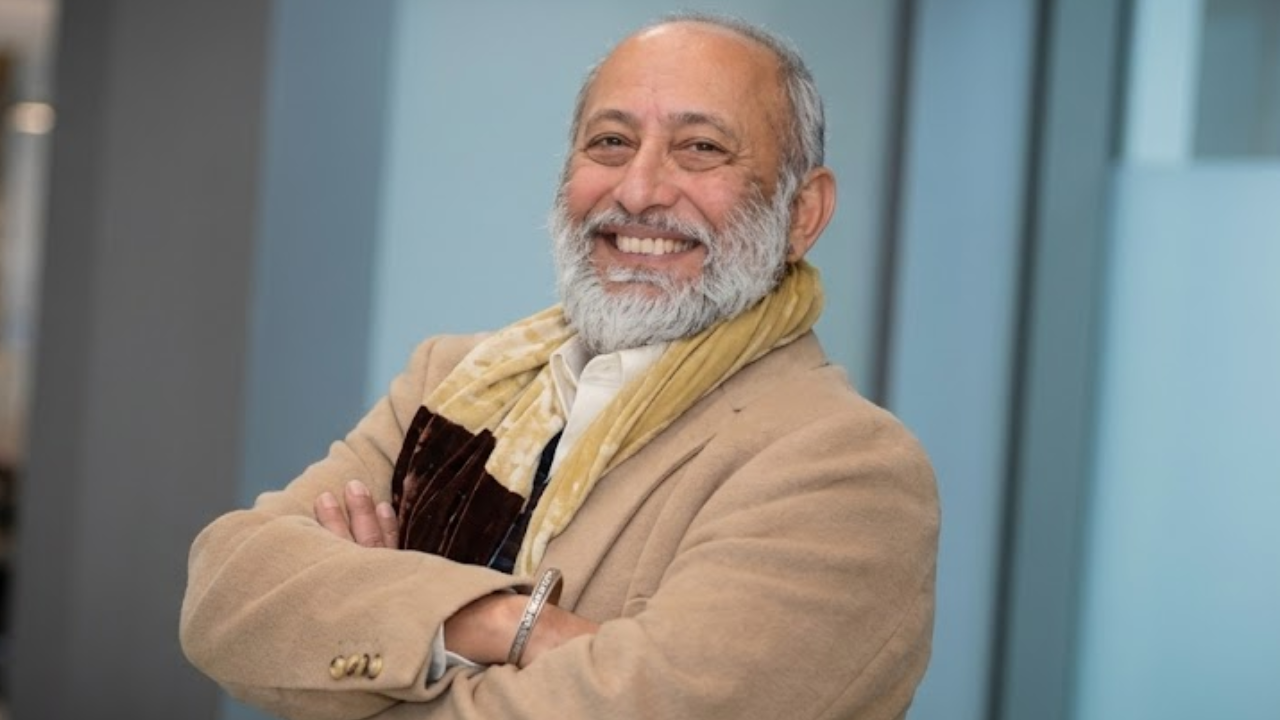
The British political establishment has once again opened the doors of its upper legislative chamber to a new cohort of unelected lawmakers, signaling a deeper shifts within the state machinery. Professor Swaran Singh, an Indian-origin psychiatrist and academic, will join the House of Lords as part of a sweeping list of 26 new life peerages announced amidst the departure of Prime Minister Keir Starmer. While mainstream media coverage focuses on the basic biography of the new inductees, the real story lies in the complex intersection of institutional crisis management, minority representation, and the enduring survival mechanisms of the British class structure.
This latest list of political appointments is not merely an exercise in rewarding party loyalty or recognizing academic merit. It represents a calculated attempt by both major political parties to shore up intellectual authority in an increasingly fractured parliament. Singh entered the national consciousness through his work investigating systemic prejudices within the Conservative Party, and his elevation to the peerage on a Tory nomination serves as a fascinating case study in how modern political structures absorb critique.
The Resignation Honours Tradition and Institutional Backroom Politics
The timing of these appointments is deeply tied to the inner workings of British executive power. Before stepping down from Downing Street, outgoing prime ministers historically wield the power to hand out lifetime legislative seats to allies, donors, and technocrats. It is a system that regularly draws public ire for its transactional nature. Critics often describe it as an undemocratic relic that allows outgoing leaders to pack the upper chamber with partisan actors who will influence legislation for decades to come.
The political environment surrounding this specific announcement is distinct. Downing Street claims this cross-party list was already being prepared well before the prime minister announced his decision to step aside. Yet, the spectacle of a departing leader greenlighting dozens of lifetime legislative appointments right before handed over power to a successor highlights a broader structural problem within Westminster. The House of Lords remains one of the largest legislative bodies in the world, second only to China’s National People’s Congress, and its unchecked expansion raises severe questions about legislative efficiency and constitutional legitimacy.
The presence of figures like Swaran Singh and London Mayor Sadiq Khan on the same list shows the strategic calculus of both major parties. While Labour under Starmer pushed forward key political allies and human rights figures, the Conservative leadership chose to elevate Singh, a figure whose relationship with the party has been defined by scrutiny rather than sycophancy.
From New Delhi Trauma to the Heart of the British Establishment
To understand why the Conservative Party nominated an academic who previously audited their internal flaws, one must examine Singh's trajectory. He began his career not in the comfortable halls of British academia, but as a surgeon in New Delhi.
The transition from surgery to psychiatry was a sharp turning point. Witnessing the profound, long-term psychological destruction inflicted by violent trauma on children and young people forced a shift in his medical focus. He abandoned the operating room to study the human mind.
He arrived in the United Kingdom in 1991, entering the National Health Service at a time when the system was struggling to address the specific mental health needs of an increasingly diverse population. He did not just treat patients. He built an academic architecture around his observations, specifically focusing on how ethnicity, social isolation, and migration affect mental health outcomes. His work as a professor of Social and Community Psychiatry at the University of Warwick eventually made him an undeniable authority on institutional care and public health policy.
This expertise gave him institutional weight. He was appointed as a commissioner for the Equality and Human Rights Commission, placing him directly at the center of the UK's legal framework for managing discrimination and civil rights. It was this specific blend of clinical authority and regulatory experience that made him the perfect candidate for a deeply toxic political assignment.
The Singh Investigation and the Mechanics of Political Absorption
In 2019, the Conservative Party faced severe external pressure over allegations of deep-seated Islamophobia and anti-Muslim sentiment within its ranks. The party needed an independent figure with impeccable credentials to lead a review that could withstand public skepticism. They chose Singh.
The resulting "Singh Investigation" was a complex balancing act. Published in 2021, the report did not pull punches regarding the institutional failures of the party's complaints system. It detailed a clear lack of awareness, inadequate training, and a tendency to dismiss serious allegations of anti-Muslim bias as minor infractions. It stopped short, however, of labeling the party "institutionally racist," a distinction that saved the Tory leadership from absolute political ruin while forcing them to accept a series of systemic reforms.
Predictably, the report drew mixed reactions. Some hailed it as a thorough and necessary cleansing exercise, while others criticized it for being too narrow in its scope, arguing it focused excessively on administrative processes rather than the rhetoric used by senior party figures.
By nominating Singh for a life peerage, the Conservative leadership accomplishes a dual purpose. First, they signal a public commitment to the very values of equity and oversight that Singh championed during his investigation. Second, they pull a highly respected independent critic directly into their legislative fold. It is a classic demonstration of how the British establishment neutralizes dissent by co-opting the dissenter, transforming an outside investigator into an inside lord.
The Growing Crisis of Mental Health Policy in Parliament
Beyond the partisan optics, Singh’s appointment brings a critically needed perspective to a legislative body that frequently debates health policy without adequate clinical expertise. The UK mental health infrastructure is in a state of prolonged collapse. Waiting lists for youth psychiatric services stretch into years, community care clinics are chronically underfunded, and the transition from child to adult psychiatric services remains a bureaucratic nightmare for families.
Singh's research at the University of Warwick directly targets these exact systemic failures. His work on early intervention for psychosis proved that aggressive, well-funded community care during the initial stages of mental illness drastically improves long-term recovery rates and reduces the financial burden on state hospitals.
The House of Lords frequently serves as a revising chamber for complex social legislation. When bills regarding the reform of the Mental Health Act or NHS funding reach the upper house, debates are often dominated by career politicians who view healthcare through the lens of electoral talking points or fiscal austerity. Having a peer who still actively practices as a consultant psychiatrist with the Coventry and Warwickshire Partnership NHS Trust alters the dynamic. He can speak with the direct authority of someone who knows exactly what happens on an understaffed psychiatric ward at three in the morning.
The Complicated Reality of Ethnic Minority Representation
The inclusion of British Asian figures like Singh and Sadiq Khan in the upper house is frequently celebrated as a victory for diversity and inclusion. The reality is far more nuanced. Symbolism cannot be substituted for substantive structural change.
Over the past decade, the top tiers of British politics have become remarkably diverse, yet the socio-economic conditions for working-class minority communities across the UK have largely stagnated or deteriorated. The presence of South Asian faces in the House of Lords or Downing Street does not automatically translate to policies that alleviate poverty, improve underfunded schools, or combat systemic policing bias in urban centers.
Singh himself has explicitly noted the complexities of this dynamic in his academic writings, highlighting how ethnic minorities often face a double disadvantage within the healthcare system due to both cultural stigmas and institutional neglect. His entry into the House of Lords will test whether an expert can use an unelected platform to challenge these entrenched disparities, or whether the archaic rituals of the peerage system will simply dilute his clinical focus.
The Structural Value of Technocratic Peers
The modern House of Lords is widely criticized, and much of that criticism is entirely justified. The chamber contains hereditary peers who inherit their legislative power through bloodlines, along with political donors whose primary qualification for writing laws is the size of their bank accounts.
Yet, the chamber’s sole saving grace is its capacity to act as a repository for genuine expertise. Unlike the House of Commons, where MPs must spend their energy winning media cycles and securing re-election, life peers have the security to focus on long-term policy trends. They can spend years scrutinizing complex environmental regulations, artificial intelligence frameworks, or public health strategies.
+-----------------------------------------------------------------------+
|                 The Dual Nature of the House of Lords                 |
+-----------------------------------------------------------------------+
| Institutional Flaws                 | Technocratic Value              |
|-------------------------------------|---------------------------------|
| - Unelected lifetime appointments   | - Protection from short-term    |
| - Used for political patronage      |   electoral pressures           |
| - Bloated legislative membership    | - Inclusion of deep scientific  |
| - Presence of hereditary elites     |   and medical expertise         |
+-----------------------------------------------------------------------+
| Source: House of Lords Reform Debates and Legislative Analysis        |
+-----------------------------------------------------------------------+
Singh represents the ideal version of this technocratic model. He has no electoral base to appease, no donors to satisfy, and no need to twist scientific data to fit a party manifesto. His allegiance should, theoretically, belong to the empirical realities of medical science and human rights law.
This ideal model is always under threat from the partisan environment of Westminster. Peers nominated by political parties are expected to align with their party whips on crucial votes, creating a constant tension between intellectual independence and political obligation. Whether Singh can maintain his academic objectivity while sitting on the Conservative benches will be a key dynamic to watch as parliament tackles upcoming social care reforms.
The elevation of an academic who built his career studying the intersection of trauma, race, and mental health occurs at a moment when the country is deeply divided over these exact issues. The UK does not need more career politicians or corporate lobbyists in its legislative chambers. It needs individuals who understand the human cost of policy failures. Singh’s journey from the trauma wards of New Delhi to the red benches of Westminster is a remarkable narrative, but his true legacy will be determined by his willingness to disrupt the very establishment that just granted him a lifetime title.