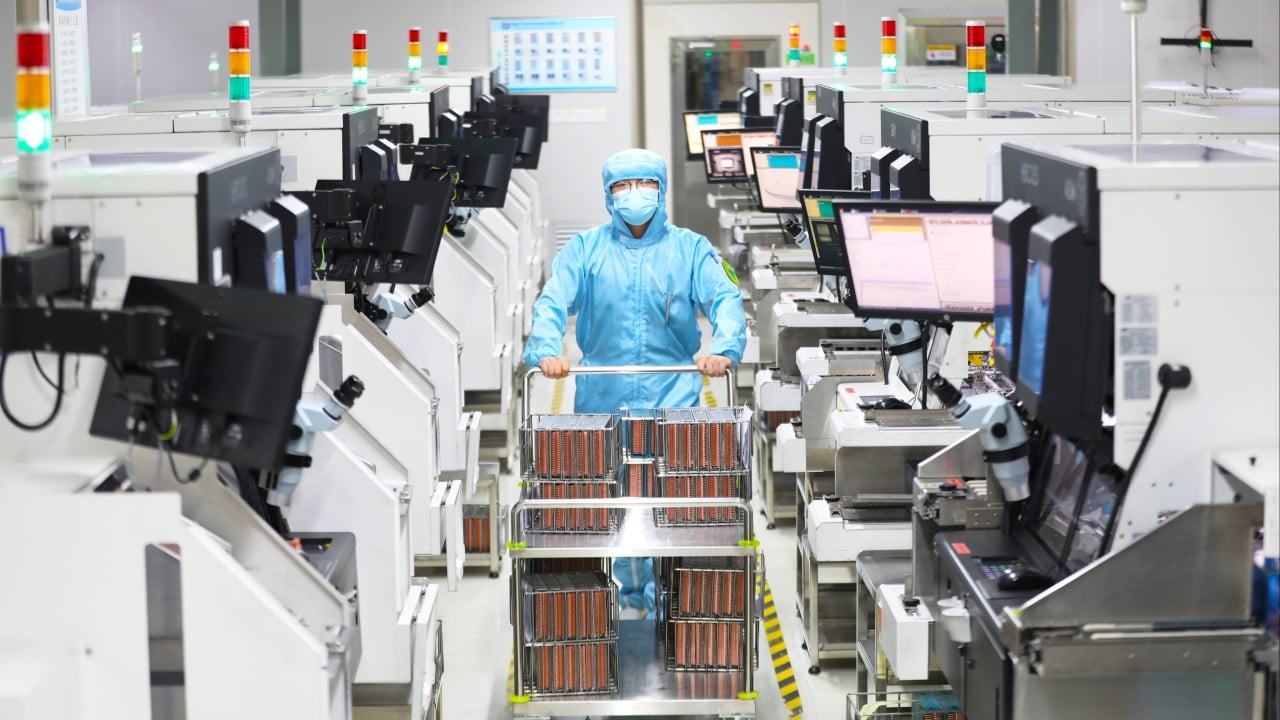
In the glass-walled headquarters of Huizhou, the air smells of ozone and industrial ambition. Victory Giant Technology, a company that was a mid-tier player in the crowded world of printed circuit boards (PCBs) just three years ago, has just launched a Hong Kong IPO aiming to raise $2.2 billion. On the surface, it looks like a standard victory lap for a firm that rode the artificial intelligence wave. But beneath the prospectus lies a more aggressive reality. This isn’t just a fundraise. It is a desperate, high-stakes sprint to lock in capital before the geopolitical window slams shut and the current AI infrastructure build-out hits its inevitable saturation point.
Victory Giant is currently the world’s top supplier of the high-density interconnect (HDI) boards required for AI servers, claiming a 13.8% global market share in the first half of 2025. This is a staggering climb from the 1.7% share it held only a year prior. When Nvidia’s Jensen Huang talks about the industrial revolution of AI, firms like Victory Giant are the ones forging the gears. However, the company’s 273% profit surge in 2025 masks a precarious dependency. When more than 70% of your order book is tied to a single American chip designer during a trade war, you aren't just a manufacturer. You are a hostage to fortune. You might also find this connected article insightful: China’s Quiet Operational AI Takeover Is Reshaping Global Commerce.
The High Build Up Trap
The technology inside an AI server is fundamentally different from the motherboards found in a standard laptop. These "high-build-up" HDI boards require dozens of layers of micro-circuitry, stacked with a precision that pushes the limits of material science. Victory Giant’s revenue from these specific products jumped 388% last year. While the margins are fat—climbing from 22.7% to over 35%—the technical barrier to entry is lowering every day as competitors like Shenghong Technology and Jinan Guoji dump billions into their own R&D.
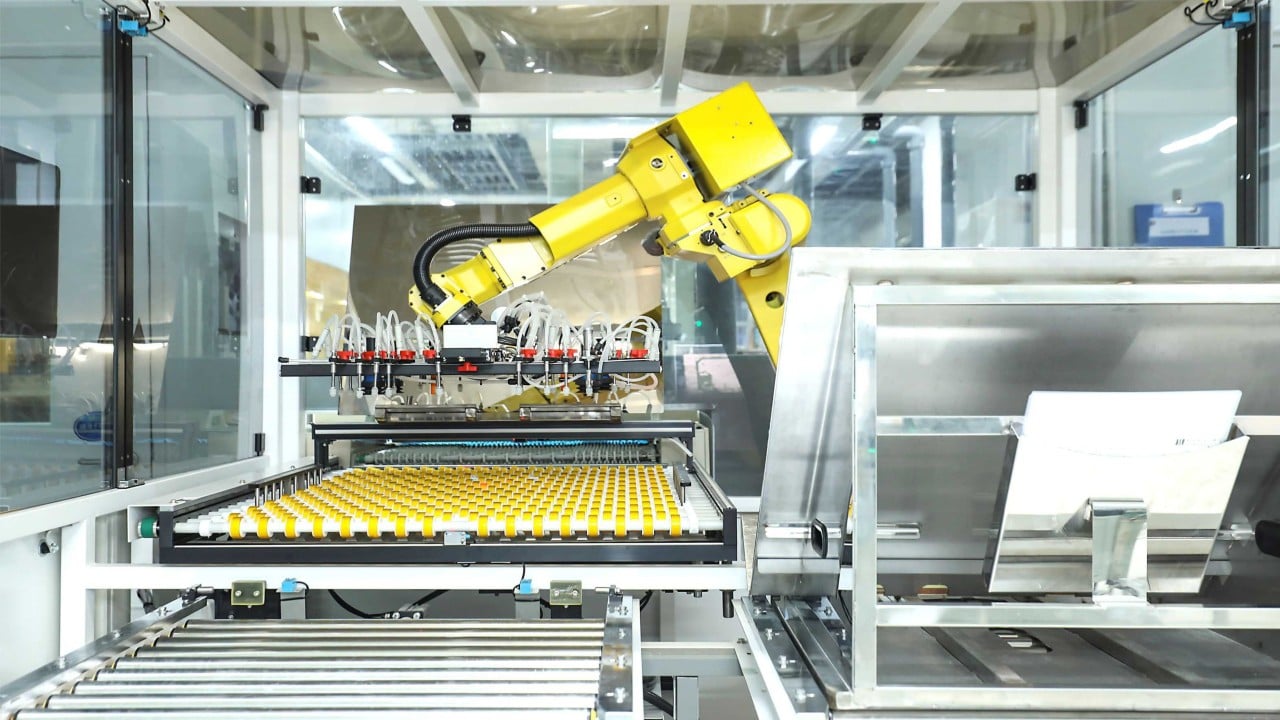
China’s PCB sector is currently cannibalizing itself to win the favor of the few "hyperscalers" building the world’s data centers. Victory Giant is using the $2.2 billion from its Hong Kong listing primarily to fund capacity expansion. This is the classic industry gamble. If they build the factories and the AI frenzy cools, they are left with massive fixed costs and idle machines. If they don't build, they lose the Nvidia contract to a hungrier rival. There is no middle ground. As highlighted in detailed reports by Wired, the effects are widespread.
Capital Flight and the Hong Kong Discount
The decision to list in Hong Kong while already trading in Shenzhen is a telling move. Shenzhen shares for Victory Giant have risen fourfold over the last year, yet the company is offering its Hong Kong shares at a 37% discount to that onshore price.
Why leave money on the table? Because Victory Giant needs "hard" currency.
Domestic yuan is useful for paying Huizhou utility bills, but the sophisticated machinery required to print 24-layer boards often comes from Japan or Europe. Furthermore, the company is aggressively pursuing a "China Plus N" strategy, building facilities in Southeast Asia to bypass potential US sanctions. That expansion requires US dollars. The presence of cornerstone investors like Yunfeng Capital and Hillhouse Investment suggests that the "smart money" is betting on the company's ability to globalize its footprint before it becomes a target of the next round of export controls.
The Overcapacity Ghost
History in the electronics industry is a graveyard of companies that mistook a cyclical surge for a permanent plateau. In 2021, it was the "chip shortage" that led to over-ordering and a subsequent crash. Today, the "AI frenzy" is driving a similar behavior. Amazon’s AWS has reportedly tried to buy out the entire 2026 capacity for specific chips, and PCB makers are responding by building factories at a rate that assumes this demand will grow forever.
But the math is starting to look shaky. The "Made in China 2025" initiative has pushed for 70% self-sufficiency in high-end PCBs, leading to a massive influx of state-backed competition. There are now over 2,000 PCB manufacturers in China. While Victory Giant currently sits on the throne, the sheer volume of capital entering the space—as evidenced by the half-dozen other PCB makers currently pushing for IPOs—guarantees a price war.
The Sovereignty of the Supply Chain
For an investigative eye, the real story isn't the IPO. It’s the materials. China produces 70% of the world’s copper-clad laminate (CCL), the raw material for these boards. Yet, for the most advanced AI applications, the industry still relies on dry film photoresist imported from Japan and Taiwan. Victory Giant is throwing $778 million at R&D to break this reliance, but you cannot simply "buy" a decades-old chemical supply chain with a single IPO.
Victory Giant’s surge is a testament to Chinese manufacturing's ability to pivot at lightning speed. They saw the AI server demand before their Western or Taiwanese counterparts could fully mobilize their larger, slower bureaucracies. But being first is not the same as being permanent. As the US and its allies tighten the screws on AI hardware, Victory Giant is essentially trying to get its "green card" in the global financial markets through this Hong Kong listing.
The company is currently valued at $37 billion. That valuation rests on the assumption that AI infrastructure spending will continue to double every year. If that growth slows even slightly, the "intricate electronic backbone" Victory Giant provides will become a commodity once again. In the world of high-end journalism and industry analysis, we call this the "peak of inflated expectations." Victory Giant is cashing out while the sun is still high. The question for investors is whether they want to be the ones holding the bag when the clouds inevitably roll in.
The strategy is clear: expand, diversify, and entrench. Victory Giant is betting that by the time the AI bubble thins, they will be too large and too deeply integrated into the global supply chain to be discarded. It is a bold move, but in the PCB business, even the smallest misalignment in a single layer can ruin the entire board.