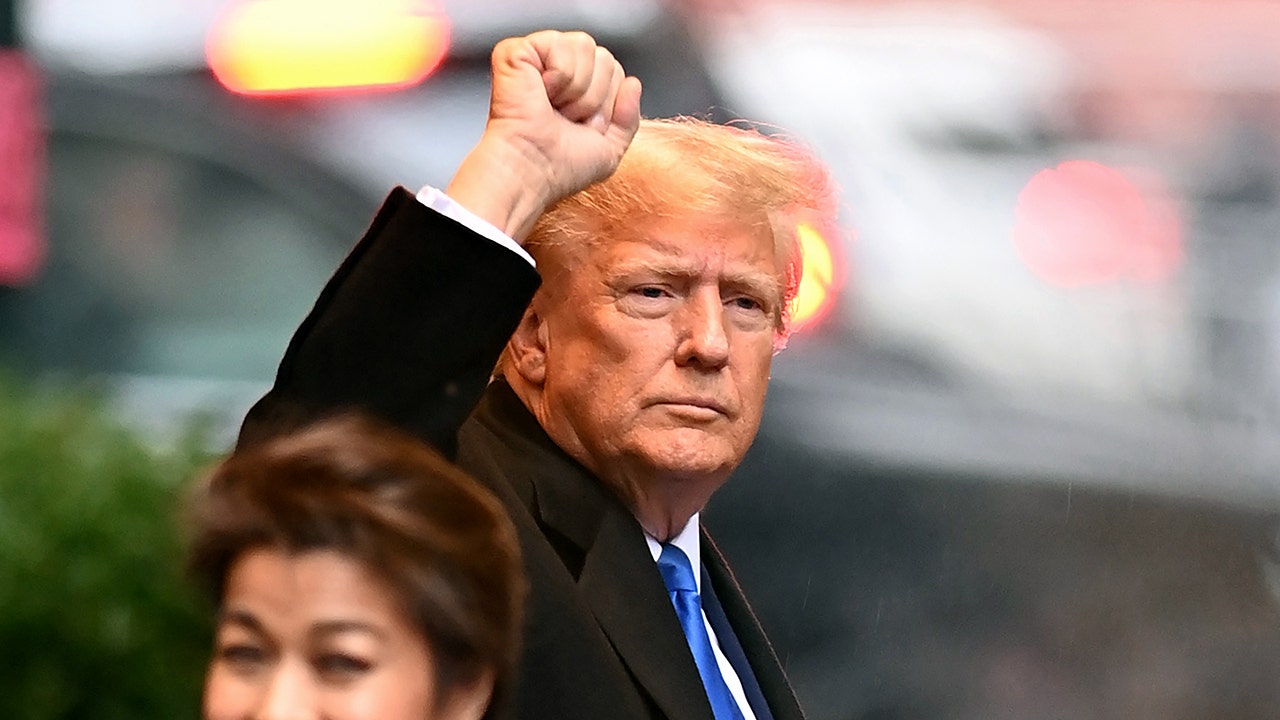
When Donald Trump states that he does not think about the prospect of another assassination attempt, he is not merely offering a psychological update. He is deploying a specific brand of political armor. This public dismissal of mortal risk serves a dual purpose: it projects an image of divine or historical inevitability to his base, while simultaneously stripping his opponents of the "victim" narrative they might use to frame him as weakened or traumatized. To understand the gravity of this stance, one must look past the rhetoric and into the cold machinery of modern political security and the psychological warfare of the 2024 campaign trail.
The core of the issue is not whether Trump actually experiences fear. Every human does. The story lies in the strategic refusal to acknowledge it, a move that forces the American public to view him as a figure beyond the reach of conventional consequence. By claiming he doesn't dwell on the events of Butler, Pennsylvania, or the subsequent threats, he effectively neutralizes the primary weapon of political violence: the ability to induce paralysis.
The Architecture of Political Resilience
Modern history suggests that leaders who survive attempts on their lives generally fall into two camps. They either retreat into a bunker of extreme caution, or they lean into the peril as a badge of office. Trump has chosen the latter with a ferocity rarely seen since Theodore Roosevelt. This isn't accidental. It is a calculated response to a security environment that has been fundamentally compromised.
The Secret Service remains under a microscope, and for good reason. The failure to secure a perimeter within line-of-sight of a former president was a systemic collapse of the highest order. For Trump to say he "doesn't think about it" is also a backhanded way of signaling that he is operating despite the failures of the state. It positions him as a man on a mission that exceeds the importance of his own safety.
Security protocols have undergone a massive shift in the wake of these events. We are no longer seeing the standard "advance team" work that defined the last three decades. Instead, we are witnessing the militarization of the campaign trail. This involves:
- Ballistic Glass Enclosures: The now-ubiquitous clear shields at outdoor rallies.
- Counter-Sniper Saturation: A significant increase in the number of eyes on high-ground positions.
- Electronic Warfare: Jammers and drone-detection systems that create a "no-fly" bubble around the candidate.
Despite these visible layers, the psychological game remains the most potent tool in the arsenal. If a candidate appears rattled, the movement loses momentum. Trump knows this better than anyone in the business.
The Burden of the Secret Service
The agency tasked with protecting the candidates is currently gasping for air. Decades of budget mismanagement, personnel turnover, and a "zero-fail" mission that feels increasingly impossible have left the Secret Service in a state of crisis. When Trump brushes off the danger, he is also indirectly letting the agency off the hook in the court of public opinion, even as his legal and political teams demand more resources behind the scenes.
There is a massive disconnect between the "don't think about it" public persona and the logistical reality of moving a high-value target through a polarized country. Every stop on the campaign trail now requires the coordination of local, state, and federal assets that are stretched to the breaking point. The sheer volume of threats tracked by the FBI and the Protective Intelligence division has spiked to levels that make the 1960s look calm by comparison.
The Intelligence Gap
We often talk about the physical security—the guys in suits and the rifles on the roof. But the real failure in modern protection is the intelligence gap. How do you track a "lone wolf" who has no digital footprint and no formal affiliation? This is the nightmare scenario that keeps agents awake, even if it doesn't bother the man they are protecting.
The Secret Service uses a "threat assessment" model that relies on identifying behaviors rather than just profiles. They look for "pathway to violence" indicators. The problem is that in a hyper-connected world, the time between a person deciding to act and the act itself has shrunk from months to days.
The Psychological Front as a Campaign Asset
By refusing to play the victim, Trump upends the traditional political playbook. Usually, an assassination attempt creates a "rally 'round the flag" effect that the survivor uses to bridge the gap with moderates. Trump, however, used the moment to harden his existing base. The image of the raised fist and the bloody ear became a permanent icon of the movement within hours.
This defiance serves to distract from the very real vulnerabilities of the American political system. If the leading candidate for the presidency is at constant risk of being removed from the board by a random actor, it suggests a level of instability that most Western democracies are not prepared to handle. Trump’s nonchalance is a mask over a very deep, very jagged crack in the foundation of the republic.
The Feedback Loop of Political Violence
There is a dark irony in the "I don't think about it" stance. By ignoring the threat, you may inadvertently invite more of it by appearing invincible. This creates a feedback loop where the rhetoric must get louder, and the security must get tighter, until the campaign becomes a traveling fortress.
We see this in the way rallies are now structured. They are no longer open-air town halls; they are high-security events with restricted access and rigorous screening. The "common man" appeal of the campaign is being choked out by the necessity of survival. Yet, the candidate maintains the "business as usual" attitude because the alternative—admitting that the threat has changed the way he interacts with the people—is a victory for the concept of political terror.
The Logistics of the Modern Rally
To understand the scale of what is being ignored, one must look at the "site survey" process. Two weeks before a candidate arrives, teams are mapping every window, every drainage pipe, and every cell tower.
| Layer | Responsibility | Objective |
|---|---|---|
| Inner Perimeter | Secret Service Shift | Immediate physical protection and extraction. |
| Middle Perimeter | State Police/Tactical Teams | Controlling access points and screening attendees. |
| Outer Perimeter | Local Law Enforcement | Managing traffic and monitoring high-ground or distant threats. |
| Technical Layer | Electronic Countermeasures | Neutralizing drones and intercepting suspicious communications. |
This grid is what allows a candidate to say they don't think about the risk. They are encased in a multi-million dollar bubble of human and technological assets. But bubbles can pop.
A Culture of Constant Threat
The shift in American politics has moved from a battle of ideas to a battle of survival. We have entered an era where "security" is no longer a background detail of the presidency but a primary feature of it. The fact that a candidate can survive an attempt on his life and then face another credible threat weeks later is an indictment of the current social climate.
Trump’s dismissive attitude toward these threats is perhaps his most effective shield. If he were to show fear, he would become human. By refusing to acknowledge the shadow of the gunman, he maintains his status as a larger-than-life figure. It is a performance of strength that is essential for his brand, even if it contradicts the frantic reality of the agents around him.
The Secret Service is currently asking for an additional $15 million specifically for the 2024 cycle. That money isn't for "not thinking about it." It's for more bodies, better tech, and more travel. The gap between the candidate’s words and the agency’s budget request reveals the true state of the union.
The Impact on the Opposition
This posture also puts the Democratic party in a difficult position. How do you attack a candidate who is literally under fire? Standard political critiques about policy or character often feel small when compared to the life-and-death reality of the trail. The assassination attempts have granted Trump a form of "political immunity" where he can frame any criticism as part of the same "incitement" that led to the violence.
This is a potent weapon in a campaign. It allows the candidate to bypass difficult questions by pointing to his own survival as proof of his fitness and his mission. It turns every rally into a celebration of endurance rather than a debate on the future of the country.
The Evolution of the Secret Service Mission
Historically, the Secret Service was about the "man in the bubble." Today, they have to worry about the "man with the drone." The technology of assassination has advanced faster than the technology of protection. A $500 drone with a payload can bypass a $50,000 ballistic glass shield. This is the reality that the "veteran" analysts see, even if the general public is focused on the latest poll numbers.
The agency is now forced to act more like a military unit in a hostile zone than a domestic law enforcement body. This shift changes the vibe of American democracy. It makes the transition of power feel less like a vote and more like a tactical operation.
The Reality of the "Lone Wolf"
The biggest threat remains the individual who operates outside of any known network. These are people who are radicalized in the corners of the internet, often driven by a mix of personal grievance and political fervor. They don't have leaders to flip or phones to wiretap. They are the "unknown unknowns."
When Trump says he doesn't think about them, he is essentially saying he refuses to let the "lone wolf" dictate his schedule. It is a necessary stance for a leader, but it is a terrifying one for those tasked with his safety. The math is never in the favor of the protector; they have to be right every single time, while the attacker only has to be lucky once.
The Silence of the Inner Circle
If you talk to those close to the campaign, the "don't think about it" mantra is the company line. No one is allowed to show cracks. No one is allowed to talk about the "what ifs." This creates a high-pressure environment where the stress is buried under layers of bravado.
The campaign staff, many of whom were present at the first attempt, are dealing with a form of collective PTSD that is being managed through intense work and a shared sense of defiance. They aren't just running a campaign; they are participating in a historical drama where the stakes are absolute.
The Role of Rhetoric in Security
There is a long-standing debate about whether political rhetoric directly fuels these attempts. While the direct link is often hard to prove in a court of law, the correlation in the timing of threats and heated national discourse is undeniable. Trump’s refusal to change his own rhetoric in response to the threats is a key part of his "I don't think about it" strategy. To change his tone would be to admit that the violence had an effect.
The security teams are essentially being asked to protect a candidate who refuses to lower the temperature. This makes their job exponentially harder, as they are not just fighting physical threats, but a social environment that is constantly being recharged with high-voltage language.
The High Cost of Defiance
Ultimately, the stance of "not thinking" about assassination is a luxury of the principal. The staff, the agents, the local police, and the families of those involved don't have that luxury. They have to think about it every second of every day.
The American political system is currently being held together by ballistic glass and the exhaustion of federal agents. As the campaign moves into its final, most volatile phase, the bravado of the candidate will be tested against the cold reality of a nation that has forgotten how to disagree without reaching for a weapon. The "brutal truth" is that we are one lucky shot away from a total national breakdown, regardless of what any candidate says they are thinking about.
The machinery of survival is working overtime to ensure that the "don't think about it" philosophy can continue. It is a fragile peace, maintained by men and women in sunglasses who are watching the tree lines and the rooftops while the rest of the country watches the teleprompter. The silence from the candidate on the topic is not a sign of peace, but a tactical choice in a war of nerves that shows no signs of ending.
Security isn't just a department; it's the invisible foundation of the entire 2024 election. Without the multi-layered defense currently surrounding both major candidates, the democratic process would likely grind to a halt under the weight of sheer physical risk. Every handshaking event, every rope line, and every "impromptu" stop at a diner is a choreographed exercise in risk management that would have been unrecognizable twenty years ago. The fact that this has become the "new normal" is the most significant investigative takeaway of this cycle. We have normalized the high-stakes protection of our political figures to the point where a candidate can dismiss the threat of death as a mere distraction.
The defiance is the message. The survival is the strategy.
_



