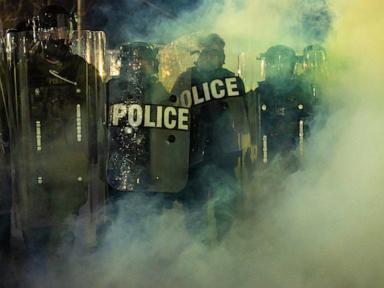
A New Jersey police sergeant gets charged with official misconduct and theft for allegedly walking off with a journalist’s camera bag during an immigration protest. The media rushes in with the predictable headline format. The public nods along to the standard narrative: another rogue cop, another First Amendment violation, another systemic failure.
They are missing the entire point.
The lazy consensus treats this incident as a simple moral failing or an isolated case of petty theft under color of law. It is much worse than that. It is a symptom of a completely broken operational doctrine that confuses tactical crowd management with constitutional policing. When a supervisor in a law enforcement agency thinks a media equipment bag is fair game for casual seizure, we are not looking at a rogue bad apple. We are looking at an institutional blind spot where asset management, property law, and civil rights have completely disintegrated.
Stop looking at the camera bag. Look at the culture that made taking it seem like a viable tactical decision.
The Illusion of the Rogue Actor
Every time an incident like this hits the wire, the institutional defense mechanism kicks in. The department issues a statement. The officer is suspended. The state Attorney General files charges. The narrative closes with a neat bow: the system worked because the bad actor was caught.
I have spent years analyzing municipal liability and police misconduct cases. Let me tell you how this actually plays out behind closed doors. Towns spend millions of dollars defending these suits not because one officer had a lapse in judgment, but because the department’s training manuals are hopelessly vague on the boundaries of journalistic interference.
The New Jersey Attorney General’s Office charged this sergeant with second-degree official misconduct and third-degree theft by unlawful taking. On paper, it looks like a swift hammer of justice. In reality, it is a distraction from the structural failure.
When a sergeant—a supervisor meant to guide junior officers—commits an act this brazen in front of a crowd and rolling video, it means he operated under a profound sense of administrative impunity. He did not think he was stealing. He thought he was exerting control over a chaotic environment. That distinction matters immensely, and it is the nuance the mainstream coverage completely ignored.
Why the First Amendment Argument is Flawed
The immediate reaction from press freedom advocates is always the same: this is a direct assault on the First Amendment. While technically true, framing this solely as a free press issue minimizes the broader danger to every ordinary citizen standing on that sidewalk.
The Problem With "Press Only" Protections
When we hyper-focus on the victim's status as a journalist, we inadvertently validate a dangerous premise: that the police can treat the property of non-journalists with less respect.
- The Equal Protection Reality: The Fourth Amendment protects everyone from unreasonable seizures, whether you hold a press credential or a grocery list.
- The Operational Loophole: By focusing on the press angle, departments create specialized "media relations" training that completely ignores basic property law for the general public.
Imagine a scenario where a non-credentialed bystander had their bag taken under identical circumstances. Would the Attorney General have stepped in to file second-degree official misconduct charges? Historically, the answer is a resounding no. It would have been dismissed as an administrative error, a lost-and-found mishap, or standard evidence processing.
By elevating this exclusively as a press issue, we allow law enforcement agencies to check a box by giving a 45-minute PowerPoint presentation on "Interacting with the Media," while leaving their aggressive asset seizure practices completely intact for the rest of the population.
The True Cost of Municipal Indemnification
Let's look at the financial mechanics of these incidents, because money is where the institutional incentive structure hides.
When a police officer is sued for civil rights violations under 42 U.S.C. § 1983, the public assumes the officer faces financial ruin. They do not. In the vast majority of cases, municipal indemnification statutes mean the taxpayers foot the bill for the settlement, the defense attorneys, and the administrative payouts.
| Stakeholder | Real-World Impact of Misconduct | Financial Vulnerability |
|---|---|---|
| The Officer | Paid administrative leave during investigation; union-funded defense. | Near zero. |
| The Department | Temporary bad press; status quo maintained after news cycle passes. | Zero. |
| The Taxpayer | Increased municipal insurance premiums; diverted public funds. | 100%. |
This reality completely breaks the deterrent effect of criminal charges. Even if this specific sergeant faces criminal liability, the underlying risk management framework for the municipality remains unchanged. The town's insurance pool absorbs the hit, the premiums tick upward, and the line items are buried deep within a municipal budget that nobody reads.
Dismantling the "Chaos of the Protest" Excuse
The inevitable defense strategy for law enforcement officers in these scenarios relies on the "fluid, rapidly evolving situation" doctrine. This is the legal shield carved out by Graham v. Connor, which dictates that an officer's actions must be judged from the perspective of a reasonable officer on the scene, rather than with the 20/20 vision of hindsight.
But let's apply actual logic to the mechanics of this specific incident.
A camera bag is stationary property. It does not pose a kinetic threat. It is not a weapon. Taking possession of a citizen's property without an arrest, a warrant, or immediate exigent circumstances (like a bomb threat) is a textbook constitutional violation.
The defense will argue that the sergeant was clearing the area to maintain public order. This argument is a logical fallacy. You cannot maintain order by violating the very laws you are sworn to uphold. When an officer uses a crowd control situation as a blanket justification for property confiscation, it is not tactical discipline. It is administrative theft disguised as crowd management.
How to Actually Fix Police Accountability
The current playbook for fixing these issues is a waste of time. More body cameras will not fix this; the sergeant in New Jersey was recorded, and it did not stop him. More diversity training will not fix this. More oversight boards without subpoena power will certainly not fix this.
If we want to stop seeing supervisors walk off with civilian property, we have to change the economic and legal incentives that govern their behavior.
1. End Municipal Indemnification for Intentional Torts
If an officer is found to have intentionally violated a clearly established constitutional right—like walking away with a non-threatening citizen's property—the municipality should be legally barred from paying the settlement. The financial liability must shift directly to the individual's pension and personal assets. The moment an officer's personal net worth is on the line, the casual disregard for civilian property will vanish overnight.
2. Mandatory Professional Liability Insurance
Doctors carry malpractice insurance. Attorneys carry malpractice insurance. Police officers should be required to carry professional liability insurance. If an officer accumulates too many complaints or structural violations, their premiums will skyrocket until they are priced out of the profession entirely. This removes the political shield of the union and lets the cold, hard math of the insurance market weed out the liabilities.
3. Immediate De-escalation of Property Seizure Doctrines
Departments must strip supervisors of the autonomous authority to confiscate personal property during peaceful or static protests unless an immediate arrest is occurring. If property must be moved for safety, it must be logged on camera, on-site, with a supervisor signing off on a physical receipt handed to the owner immediately. No exceptions.
The New Jersey sergeant's indictment is not a victory for accountability. It is a stark reminder of how low the bar has fallen. We are celebrating the fact that a cop was caught doing something that would land any civilian in jail within twenty minutes.
Stop treating these incidents as anomalies. Stop waiting for the judicial system to fix a structural design flaw. Until the legal and financial structures that insulate law enforcement from the consequences of their actions are entirely dismantled, the state will keep taking the bags, the public will keep paying the settlements, and the headlines will keep repeating the same tired, useless refrains. Code of silence or code of conduct, the money always comes from your pocket. Focus on the money, or stop pretending you want change.