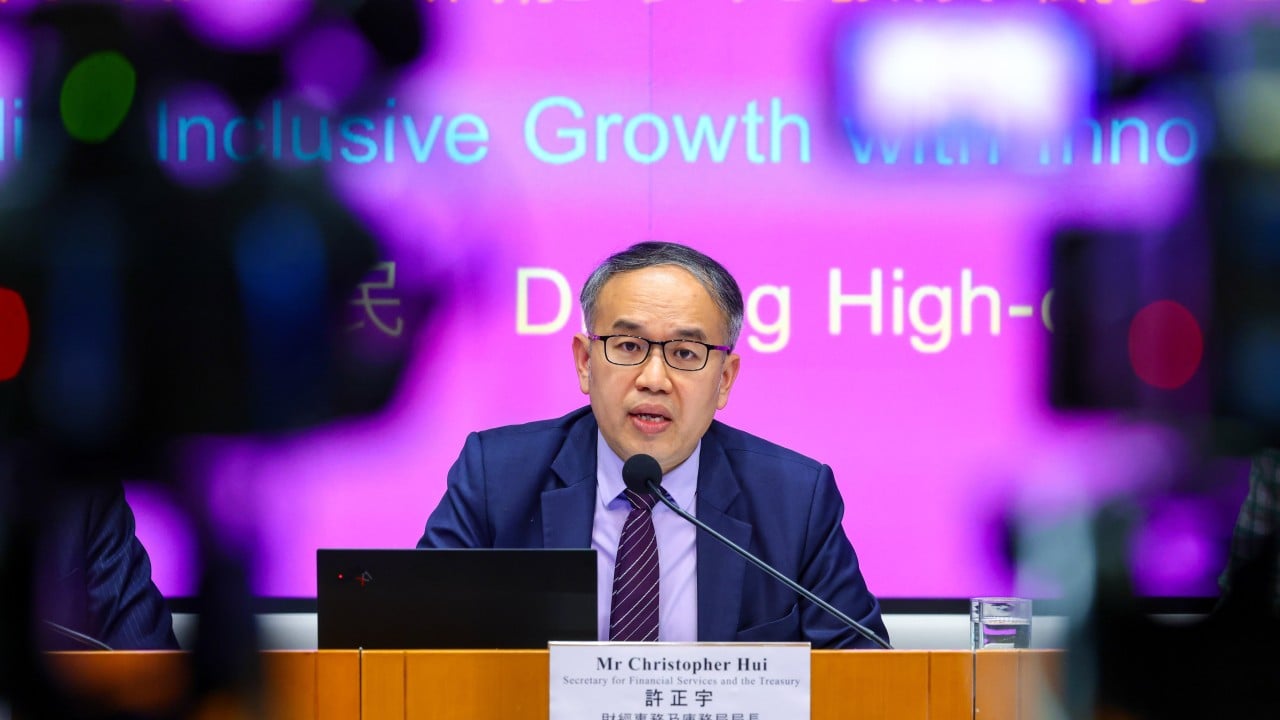
Hong Kong is shifting from a passive tax haven to an active, engineered ecosystem designed to capture institutional and private wealth through specific legislative exemptions. The recent expansion of tax concessions for family offices, the Asian Infrastructure Investment Bank (AIIB), and pension funds is not merely a reduction in overhead; it is a recalibration of the city’s competitive cost-of-capital. By widening the scope of "qualifying assets" and including sovereign-backed entities, the Hong Kong government is attempting to solve for the friction between global regulatory tightening and the need for localized liquidity.
The Architecture of Qualifying Transactions
The efficacy of Hong Kong’s tax regime (specifically under the Inland Revenue Ordinance) hinges on the definition of a "qualifying transaction." Previously, the narrowness of this definition created a tax "cliff" where certain modern investment instruments could inadvertently trigger a standard 16.5% profits tax. The expansion targets this specific inefficiency.
Structural Inclusion of Credit and Infrastructure
The inclusion of the AIIB and various pension funds into the tax-exempt fold functions as a signaling mechanism to the private sector. When sovereign-level entities operate under the same tax-neutral framework as private family offices, it creates a unified liquidity pool. This reduces the "complexity premium" that fund managers previously had to price in when structuring cross-border deals involving both public and private capital.
The core mechanism involves three specific adjustments to the Section 20.20 framework:
- Debt Instrument Broadening: Moving beyond simple bonds to include sophisticated credit instruments and private debt.
- Entity Status Neutrality: Removing the distinction between "private" wealth and "quasi-governmental" funds to ensure that the origin of capital does not dictate its tax liability.
- Ancillary Income Provisions: Allowing a higher threshold for non-core investment income to remain within the exempt envelope, preventing "accidental" tax residency for the entire fund based on minor portfolio rebalancing.
The Family Office Cost Function
For a Single Family Office (SFO), the decision to domicile in Hong Kong versus Singapore or Dubai is a calculation of the Total Cost of Ownership (TCO) of the legal structure. The tax exemption acts as a subsidy on the operational burn rate. However, the Hong Kong model adds a layer of "Efficiency of Deployment."
The Three Pillars of the Unified Tax Regime
To understand the impact of these changes, one must analyze the three pillars that now define the Hong Kong proposition:
- Pillar I: Asset Class Elasticity. By expanding the list of qualifying assets to include overseas property and certain types of intellectual property, the government is acknowledging that modern wealth is no longer confined to public equities. This elasticity allows family offices to run a true "endowment model" of investing without constant tax-compliance friction.
- Pillar II: Minimum Asset Threshold Integrity. Maintaining the HK$240 million (approx. US$30 million) threshold ensures that the ecosystem remains "institutional grade." This prevents the dilution of the brand while providing enough scale for the government to justify the loss in direct tax revenue through the "multiplier effect" of high-value job creation in legal, accounting, and custody services.
- Pillar III: The Safe Harbor Extension. The expansion provides a clearer "Safe Harbor" for incidental transactions. If a family office generates income from a transaction that doesn't perfectly fit the "qualifying" definition, the new rules ensure that only that specific portion is taxed, rather than the entire fund's profit being "tainted" and subjected to the 16.5% rate.
The AIIB and the Institutional Halo Effect
The inclusion of the Asian Infrastructure Investment Bank (AIIB) is a strategic move to cement Hong Kong’s role as the primary "conduit" for the Belt and Road Initiative and regional infrastructure financing. When an organization like the AIIB receives explicit exemptions, it lowers the cost of syndication.
Private investors are more likely to co-invest in infrastructure projects when the primary vehicle is domiciled in a tax-neutral jurisdiction that they already use for their private wealth. This creates a "cluster effect." The presence of the AIIB provides a level of institutional rigor that attracts conservative pension funds, which in turn are now being incentivized by the same tax exemptions.
The Pension Fund Pivot
Pension funds have historically been sensitive to "Permanent Establishment" (PE) risks. If a Canadian or European pension fund manages its Asian portfolio out of Hong Kong, there was always a residual risk that the Hong Kong office could be seen as a PE, making the global fund’s returns taxable in Hong Kong. The new legislative expansions are designed to explicitly kill this risk. By providing a statutory "carve-out" for pension funds, Hong Kong is competing directly with the "Section 13" exemptions found in Singapore's tax code.
Quantification of the Ecosystem Multiplier
The government’s strategy is built on the hypothesis that the "Direct Tax Sacrifice" is dwarfed by the "Indirect Economic Yield." We can deconstruct the economic impact into a simple function:
$$E = (W \cdot M) + (L \cdot S) - T$$
Where:
- $E$ is the Net Economic Benefit.
- $W$ is the total Assets Under Management (AUM) attracted.
- $M$ is the velocity of capital (local investment/reinvestment).
- $L$ is the number of high-value professional roles created.
- $S$ is the average salary and service fee spend.
- $T$ is the foregone tax revenue from the exemptions.
By expanding the scope of the exemptions, the government is betting that the growth in $(W \cdot M)$ and $(L \cdot S)$ will follow a non-linear trajectory, far outpacing the linear loss in $T$.
Risks and Structural Bottlenecks
Despite the legislative optimization, two primary bottlenecks remain that could stifle the effectiveness of these tax exemptions.
The Compliance-Complexity Paradox
The very rules designed to provide clarity—Anti-Money Laundering (AML) and "Know Your Customer" (KYC) requirements—have become so stringent that the "time-to-market" for setting up a family office has increased. A tax exemption is useless if the bank account opening process takes nine months. The government’s next challenge is not tax law, but the "operational plumbing" of the banking sector.
The Geopolitical Risk Premium
Capital is cowardly. While the tax environment is becoming more attractive, the "Geopolitical Risk Premium" remains a variable that no amount of tax exemption can fully offset. Investors are weighing the 16.5% tax saving against the perceived risk of future regulatory shifts driven by external political pressures. Hong Kong’s strategy relies on the "Rule of Law" in the financial sector remaining distinct and predictable.
The Shift from Portfolio to Direct Investment
A critical but under-discussed component of the expansion is the treatment of "Private Companies." Historically, tax exemptions for funds often focused on "Portfolio Investments" (stocks/bonds). The new direction acknowledges that family offices are increasingly behaving like Private Equity firms, taking direct stakes in startups and unlisted companies.
The new rules allow for a "look-through" approach. If a family office holds a stake in a special purpose vehicle (SPV) that holds an underlying asset, the tax exemption can now more easily flow through that structure. This is vital for the "Family Office 2.0" model, which prioritizes direct deals over diversified mutual funds.
Operationalizing the New Framework
For entities looking to utilize these changes, the roadmap involves three distinct phases:
- Instrument Audit: Reviewing current portfolios to identify assets that were previously "grey" but now fall under the expanded "qualifying" list (e.g., specific carbon credits or private credit notes).
- Entity Rescheduling: Pension funds and sovereign-related bodies must re-evaluate their "Fixed Place of Business" in Hong Kong to ensure they meet the updated economic substance requirements.
- Jurisdictional Comparison: A side-by-side TCO analysis against Singapore’s 13O/13U schemes. Hong Kong’s advantage is currently its lack of a "pre-approval" requirement for some exemptions, which offers a faster "Self-Assessment" route, albeit with higher post-audit responsibility.
The strategic play for asset managers is to move beyond the "Hong Kong vs. Singapore" binary and instead view Hong Kong as the specific "Infrastructure and Private Credit Hub" for North Asia. The inclusion of the AIIB and the expansion into a wider array of debt instruments makes Hong Kong the mathematically superior choice for funds whose mandate involves the physical and digital rebuilding of the Asian corridor. The next 24 months will reveal if the "Professional Service Multiplier" can indeed offset the direct tax revenue loss, or if the jurisdictional competition has reached a point of diminishing returns.
Identify the high-yield, non-traditional assets in your portfolio—specifically private debt and regional infrastructure equity—and migrate these holdings into a Hong Kong-domiciled SPV to take immediate advantage of the "Safe Harbor" extension before the next global tax reporting cycle.