The Middle East is currently a theater of precision strikes, intercepted missiles, and the kind of geopolitical chaos that usually forces superpowers to pick a side. But as the 2026 Iran war enters its fourth week, Beijing has perfected a strategy that looks like paralysis but functions like a masterclass in opportunistic restraint. While Washington and Tel Aviv commit thousands of munitions to "Operation Epic Fury," China is busy playing the long game.
You might think that seeing your primary energy supplier and a "Comprehensive Strategic Partner" under fire would trigger a frantic response. It hasn't. Instead, Beijing is demonstrating that in modern geopolitics, the loudest voice in the room is often the one losing the most. China isn't staying out of the Iran conflict because it's afraid; it's staying out because the status quo of "managed chaos" serves its interests better than any victory or defeat ever could.
The Strategy of Strategic Silence
When the first strikes hit Tehran on February 28, 2026, the world expected a fiery condemnation from Beijing. What we got was a shrug and a request for "all parties to exercise restraint." It took two days for Foreign Ministry spokesperson Mao Ning to even use the word "condemn," and even then, she avoided naming the U.S. or Israel directly.
This isn't an accident. It's a calculated move to avoid being the "world's policeman," a role Beijing is more than happy to let the U.S. choke on. By refusing to jump into the fray, China accomplishes three things simultaneously. First, it maintains its "friend to everyone" status with the Gulf states like Saudi Arabia and the UAE, who are quietly cheering for Iran’s wings to be clipped. Second, it keeps its diplomatic hands clean for future mediation. Third, it waits for the inevitable moment when the West gets tired of the bill.
Why the Energy Crisis Doesn't Scare Beijing
Critics argue that China is vulnerable because it's the world's largest oil importer. If the Strait of Hormuz closes, China starves, right? Wrong.
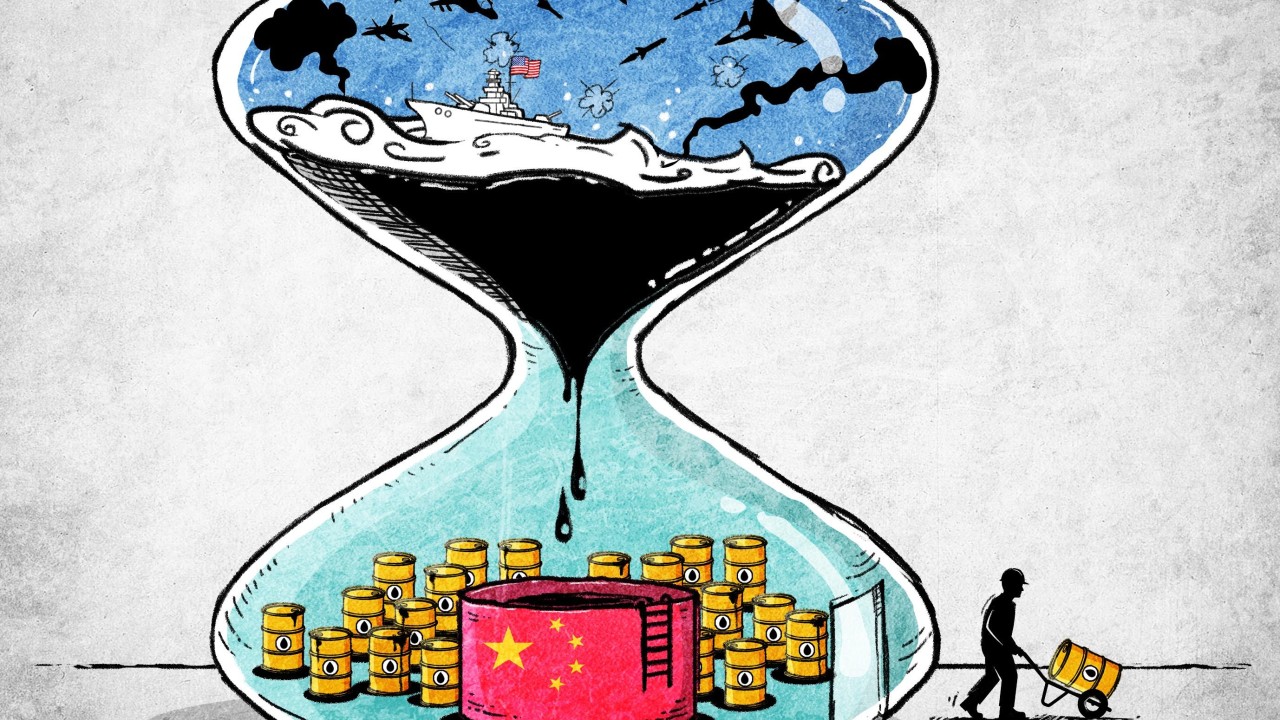
Beijing has been preparing for this exact nightmare for five years. Since 2021, Xi Jinping has been obsessed with "securing energy in our own hands." As of March 2026, China is sitting on a massive strategic petroleum reserve of roughly 1.4 billion barrels. That’s enough to keep the lights on and the factories humming for about 120 days of net imports without a single drop from the Gulf.
- Diversification: While Japan and Korea rely on the Middle East for over 90% of their oil, China has capped that exposure by leaning on Russian pipelines and Central Asian infrastructure.
- The "Teapot" Buffer: Smaller, private Chinese refineries (the "teapots") have been buying sanctioned Iranian oil for years using the Renminbi-based CIPS system, bypassing SWIFT entirely.
- Alternative Energy: The rapid rollout of domestic solar and wind isn't just about the climate; it's a hedge against a U.S. Navy blockade or a regional war.
Basically, China can afford to watch the Middle East burn for four months while its competitors scramble to ration fuel.
Turning a Crisis into a Diplomatic Land Grab
While U.S. President Trump manages the military fallout and domestic anger over gas prices—which have spiked past $100 a barrel—China's Special Envoy Zhai Jun is on a "shuttle diplomacy" marathon. He isn't just talking to Iran; he's visiting Riyadh, Kuwait City, and Cairo.
China’s pitch to the Global South is simple: "We offer infrastructure and trade; they offer Tomahawk missiles and regime change." This narrative is winning. When China mediated the Saudi-Iran rapprochement in 2023, it was a signal. Now, in 2026, that signal has become a deafening siren. By positioning itself as the only major power capable of talking to both the Ayatollahs and the Monarchs, China is filling the diplomatic vacuum left by Western military intervention.
The Axis of Upheaval is a Tool Not a Pact
Don't mistake China's support for Iran as a mutual defense treaty. Beijing has no intention of dying for Tehran. Reports from earlier this month suggest China is still shipping chemical precursors for missile fuel and "dual-use" drone components to Iran, but it stopped short of sending its own naval assets to join the fight.
China views Iran as a "useful disruptor." As long as Iran is tying up American carrier groups and draining the U.S. Treasury, it’s a win for Beijing. If Iran gets too weak, China steps in with a loan and an infrastructure deal. If Iran gets too strong, China leans on it to cool down. It’s a parasitic relationship where Beijing provides the life support and Tehran provides the distraction.
How China Wins the Post War Recovery
The real opportunity isn't in the war; it's in the reconstruction. Whether the current Iranian regime survives in a weakened state or a new leadership emerges, they will need money. And they will need it fast.
Western sanctions will likely linger for years after the "Epic Fury" campaign ends. China, however, doesn't care about Western sanctions. Its companies are already positioned to swoop in and rebuild Iranian energy infrastructure in exchange for long-term, dirt-cheap oil contracts. We've seen this play before in Iraq and Afghanistan.
The Taiwan Connection
The most chilling aspect of China’s "stay out of it" strategy is what it means for the Pacific. Every Tomahawk missile fired at a bunker in Isfahan is one less missile available for a conflict in the Taiwan Strait. Every billion dollars spent on Middle Eastern "stability" is a billion dollars not spent on Pacific deterrence.
Beijing is watching the U.S. get "sucked back in" to the Middle East quagmire with a sense of profound relief. The more the U.S. focuses on Iran, the more breathing room China has to finalize its own regional hegemony in Asia.
The Reality Check
If you're waiting for China to act like a traditional superpower and "lead" the world toward a solution, you're going to be waiting a long time. Beijing doesn't want to lead the world; it wants to outlast it.
The strategy is working because it’s based on cold, hard math:
- Preserve the Stockpile: Use the 120-day buffer to ignore price shocks.
- Maintain Neutrality: Keep trade lines open with the Saudis and Emiratis.
- Perform Diplomacy: Look like the "adult in the room" without actually doing the heavy lifting.
- Wait for the Bill: Let the West pay the military and political cost of the conflict.
The next time you see a headline about China's "weak" response to the Iran war, remember that they aren't losing. They're just the only ones not paying for the tickets to the show.
If you want to track how this affects your own portfolio or business interests, start by watching the CIPS (Cross-border Interbank Payment System) transaction volume. As more countries look to de-risk from the dollar during this energy spike, the "Petroyuan" isn't just a theory anymore—it’s the escape hatch the world is starting to use. Keep an eye on the Baltic Dry Index and VLCC (Very Large Crude Carrier) rates; if Chinese tankers keep moving while others stall, you'll know exactly who the winner is.