The loudest voices in the room are currently screaming about the end of the world. If you read the standard op-ed circuit, the narrative is bone-simple: one man’s rhetoric is a terminal virus, and the only cure is a radical surgical extraction from the body politic. They call it "protecting civilization." I call it a failure to understand how systems actually survive.
Most political commentary today is built on a "lazy consensus" that equates stability with the silence of the status quo. The argument goes like this: if a leader says something that violates the unspoken aesthetic of the ruling class, the "whole civilization" is at risk. Therefore, we must use extraordinary measures—removal, disqualification, or institutional silencing—to save the village by burning it down.
This isn't just wrong. It’s a misunderstanding of historical entropy.
The Fragility of the "Protector" Logic
When pundits argue for the removal of a populist leader on the grounds of "civilizational threat," they are making a bet. They are betting that the institution is stronger than the movement. I have seen boardrooms and political backrooms make this exact gamble for decades. They think that by removing the figurehead, they remove the friction.
They never do.
In reality, the attempt to "save" a system through top-down exclusion usually accelerates the very collapse it claims to prevent. Why? Because legitimacy is not a gift granted by an editorial board. It is a social contract. When you tear up that contract because you don't like the person holding the pen, you don't save civilization. You prove that the rules were always a suggestion.
The Misconception of Words vs. Structural Rot
The competitor’s argument focuses on "threatening words." This is a fundamental misreading of power. Words don't topple civilizations; the inability of institutions to respond to the underlying grievances of the populace does.
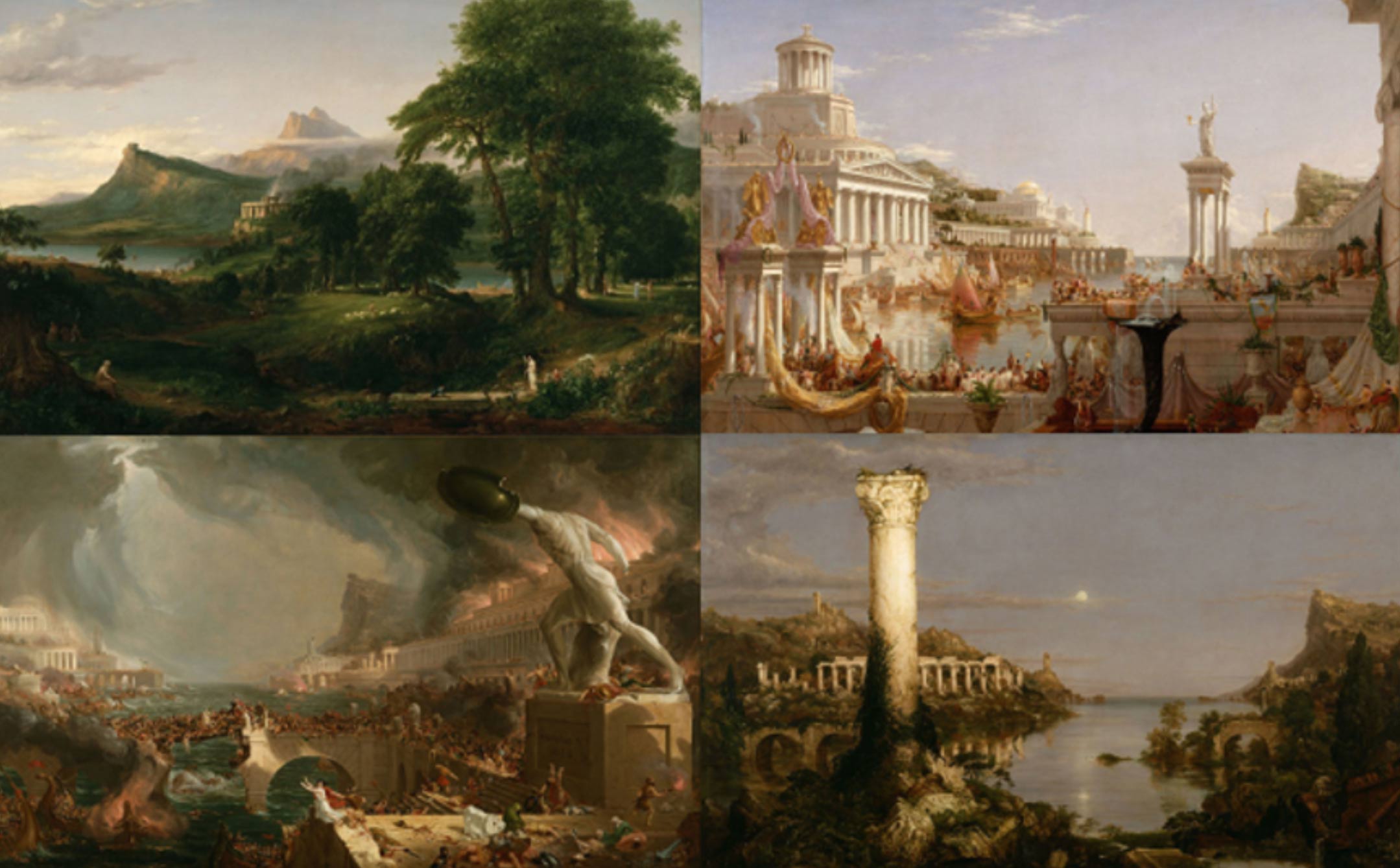
History is littered with "polite" leaders who oversaw the absolute disintegration of their societies because they followed every rule while the foundation rotted. Think of the late Roman Republic. The elite were obsessed with the mos maiorum—the ancestral custom. They clung to the "correct" way of doing things while the wealth gap widened and the military became a private tool for the wealthy. They weren't undone by a single loudmouthed populist; they were undone because the populist was the only one pointing at the fire.
The Nuance of Disruption
Let’s look at the data of institutional trust. According to Gallup, trust in the three branches of government has been on a downward slide for twenty years. This didn't start in 2016. It didn't start with a "civilizational threat" tweet. It started when the average person realized that the "civilization" the elites are so desperate to protect doesn't actually include them.
If you want to talk about a threat to civilization, talk about:
- The collapse of the middle-class purchasing power.
- The opioid crisis that has hollowed out the heartland while the coastlines debated syntax.
- A foreign policy that spends trillions on "nation-building" while the domestic infrastructure crumbles.
The noise you hear from the podium is a symptom, not the disease. Attempting to cure the disease by silencing the symptom is like trying to fix a fever by breaking the thermometer.
The High Cost of the "Moral" Removal
Imagine a scenario where the "protectors of civilization" succeed. They use a legal maneuver or an emergency decree to remove a leader they deem a threat. What happens the next morning?
Half the country—the half that felt the system finally "saw" them—now has objective proof that the system is rigged. You haven't restored order. You have created a permanent, radicalized underclass with zero incentive to play by the rules.
I’ve watched corporations try this. A "disruptive" executive gets fired for being "toxic" to the culture. The board breathes a sigh of relief. Then, six months later, half the engineering team has quit, the customers have migrated to a competitor, and the "toxic" executive has started a new firm that is eating the old company’s lunch. The board protected the culture of the office but destroyed the viability of the business.
The False Narrative of the "Unprecedented"
We are told this moment is "unprecedented." It’s a favorite word for people who don't read history.
The 1860s were unprecedented. The 1930s were unprecedented. The late 1960s featured assassinations, riots in every major city, and a literal war on the other side of the planet. Through all of it, the civilization survived because it eventually integrated the dissent, rather than just amputating it.
The current "threat" isn't a threat to the existence of the United States or Western civilization. It is a threat to a specific, narrow way of doing business in Washington D.C. It is a threat to the career paths of people who believe that a degree from a specific set of schools entitles them to a seat at the table.
Stop Trying to Fix the Leader (Fix the Vacuum)
The obsession with removal is a massive distraction. It’s an easy out for people who don't want to do the hard work of asking why someone who "threatens civilization" could get within a mile of the White House in the first place.
People don't vote for "civilizational collapse" for fun. They vote for it when the "civilization" on offer feels like a cage or a graveyard.
If you want to save the system, you have to make the system worth saving for the people you currently want to disenfranchise. That means:
- Economic Realignment: Stop prioritizing the "global civilization" over the local community.
- Institutional Humility: Admitting that the "experts" have been wrong about almost everything—from the Iraq War to the 2008 financial crisis—for two decades.
- Radical Transparency: Ending the backroom deals and the "civilized" norms that act as a shield for incompetence.
The Brutal Reality of Power
Power is not a moral reward for good behavior. It is a reflection of the energy of the people. When that energy turns toward a "civilizational threat," the threat isn't the person—it's the vacuum they are filling.
Removing the person leaves the vacuum. And physics tells us that a vacuum is never empty for long. Something else will rush in, and if you thought the first version was dangerous, wait until you see the version that comes after you've proven the ballot box is a decorative ornament.
You don't protect a house by locking the doors and ignoring the termite damage in the basement. You don't save a civilization by silencing the person shouting that the basement is falling apart. You fix the basement.
The "lazy consensus" wants a quick fix. They want a "return to normalcy." But normalcy is what got us here. Normalcy is the rot.
If you want to win, stop arguing for removal. Start arguing for a civilization that actually works for the people living in it. Otherwise, you’re just rearranging the deck chairs on the Titanic and calling it "leadership."
The elite are terrified of the "threat." They should be. But they are looking in the mirror, not the podium.
Stop asking how to remove a leader. Start asking why you are so easy to replace.