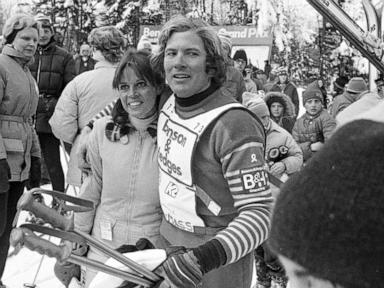
The standard obituary for Claudine Longet is a masterclass in soft-focus revisionism. You’ve seen the headlines. They paint a picture of a "French-born singer and actress" whose life was "overshadowed by tragedy." They frame the 1976 shooting of Olympic skier Spider Sabich as a murky, unfortunate accident that derailed a promising career.
Stop.
That narrative is a lie born of 1970s celebrity worship and a legal defense that wouldn't hold water in a modern courtroom. To look at Longet’s passing at 84 as the quiet end to a misunderstood life is to ignore how the machinery of fame actually works. We aren't mourning a lost talent; we are witnessing the final chapter of a case study in how wealth and a "waif-like" aesthetic can successfully mask a homicide.
The Aesthetic of Innocence as a Weapon
The media loves a certain archetype: the fragile, accented ingénue. Longet played this role to perfection. From her marriage to Andy Williams to her soft-pop covers of the Beatles, her entire brand was built on being non-threatening.
When she shot Spider Sabich in the abdomen in their Aspen home, that brand became her primary legal defense. The "lazy consensus" of the time—and the nostalgic coverage today—suggests that Longet was a victim of circumstance. The gun just "went off" while he was showing her how it worked.
Let’s dismantle that. Sabich was found shot in the back/side while he was preparing to take a shower. He was in his underwear. He was an elite athlete, a man whose entire life was predicated on physical precision and safety. The idea that he was casually "showing" a loaded .22 caliber pistol to his girlfriend while stripped down for a bath is a narrative so thin it’s transparent.
I’ve seen how the industry protects its own. I’ve watched publicists turn PR disasters into "personal journeys." Longet didn't have a "tragic" life. She had a protected one.
The Aspen Exception
To understand why Longet walked away with a mere 30-day "work-release" sentence, you have to understand the geography of justice. Aspen in 1976 wasn't just a ski town; it was a high-altitude playground for the untouchable.
The prosecution botched the case, certainly. Blood samples were taken without a warrant. Longet’s diary was seized illegally. But the real failure wasn't procedural; it was cultural. The jury didn't see a defendant; they saw a celebrity who looked like she might break if you spoke too loudly.
The "accidental discharge" defense is the oldest trick in the book for people who can afford the best lawyers. Even back then, firearms like the Savage .22 didn't just fire themselves because someone breathed on them. It takes a deliberate pull of the trigger.
The industry insiders who lived through that era know the truth that didn't make it into the court transcripts. The relationship was volatile. Sabich wanted out. Longet, whose career was already cooling, was facing the loss of her social standing in the Aspen elite. If this happened today, in the era of high-definition forensics and social media scrutiny, she wouldn't be remembered as a singer who had a "legal setback." She would be a pariah.
Why the "Tragedy" Label is Insulting
Calling Longet’s life a tragedy is an insult to Spider Sabich. A tragedy is a young athlete in his prime dying on a bathroom floor. A tragedy is a family losing a son and a brother because of a "lover's quarrel" that ended in gunfire.
Longet’s life after the trial wasn't tragic. She stayed in Aspen. She married her defense attorney—the very man who helped her avoid a prison sentence. She lived a long, private life in one of the most beautiful places on Earth, shielded by the millions she’d accumulated and the silence of a town that decided it was easier to forget than to judge.
We see this pattern repeat constantly in Hollywood. We celebrate the "comeback" or the "peaceful passing" of figures who, had they lacked a SAG card, would have spent their decades in a state penitentiary.
The Data of Disparity
Consider the statistics of the era. In the mid-70s, a non-celebrity woman in Colorado charged with reckless manslaughter or criminally negligent homicide faced years, not days, behind bars. Longet served her 30 days on her own terms, choosing which days she would report to jail so it wouldn't interfere with her personal life.
This isn't nuance. This is a tiered justice system.
Dismantling the "Promising Career" Myth
The obituaries mention her "successful" music career. Let’s be honest: Longet was a product of the easy-listening boom. She didn't have a powerhouse voice; she had a whisper. She was a stylist of the "vocal fry" before we had a name for it.
Her career didn't end because of the trial. Her career ended because the 1960s were over. The soft, breathy French girl trope had been replaced by the raw power of the disco and rock eras. The trial simply provided her with a convenient exit strategy—a way to transition from a fading star into a "notorious recluse."
People ask: "Could she have made a comeback?"
The answer is a brutal no. Her talent was tied to a specific aesthetic of vulnerability. Once that vulnerability was associated with a smoking gun, the illusion was shattered. You can’t sell "Love is Blue" when the public knows you’re capable of pulling a trigger.
The Danger of Nostalgia
The problem with these sanitized retrospectives is that they teach us to prioritize the "vibe" of a celebrity over the reality of their actions. We look at the black-and-white photos of Longet with her children or on the set of The Party and we feel a sense of loss.
We shouldn't.
We should look at the Longet case as a warning. It’s a reminder that the entertainment industry functions as a giant machine designed to manufacture empathy for the least deserving people. It uses beauty as a shield and talent—even mediocre talent—as a get-out-of-jail-free card.
If you want to honor the truth, stop calling her a "singer at the center of a trial." Call her what the evidence suggested before the lawyers got to work: a woman who escaped the consequences of her actions because she was famous enough to make a jury feel like fans.
The "mystery" of what happened that night in Aspen isn't a mystery at all. It’s a closed book that we keep trying to rewrite because the ending makes us uncomfortable. Spider Sabich didn't die because of a faulty gun. He died because he was involved with a woman who knew that in the eyes of the public, a pretty face is the best alibi.
Longet lived to 84. She got her sunset. Sabich never got his. That’s the only reality that matters.
Don't let the soft-focus obituaries tell you otherwise.