The water in a flooded limestone cave does not look like the water in a swimming pool. It is not blue. It is a thick, churning soup the color of iced coffee, heavy with silt that strips away a diver’s vision the moment their mask breaks the surface. In the subterranean dark of southern Laos, that water is also deafening. It roars through narrow stone conduits with the force of an open fire hydrant, carrying debris that can slice through a wetsuit or crack a regulator faceplate in seconds.
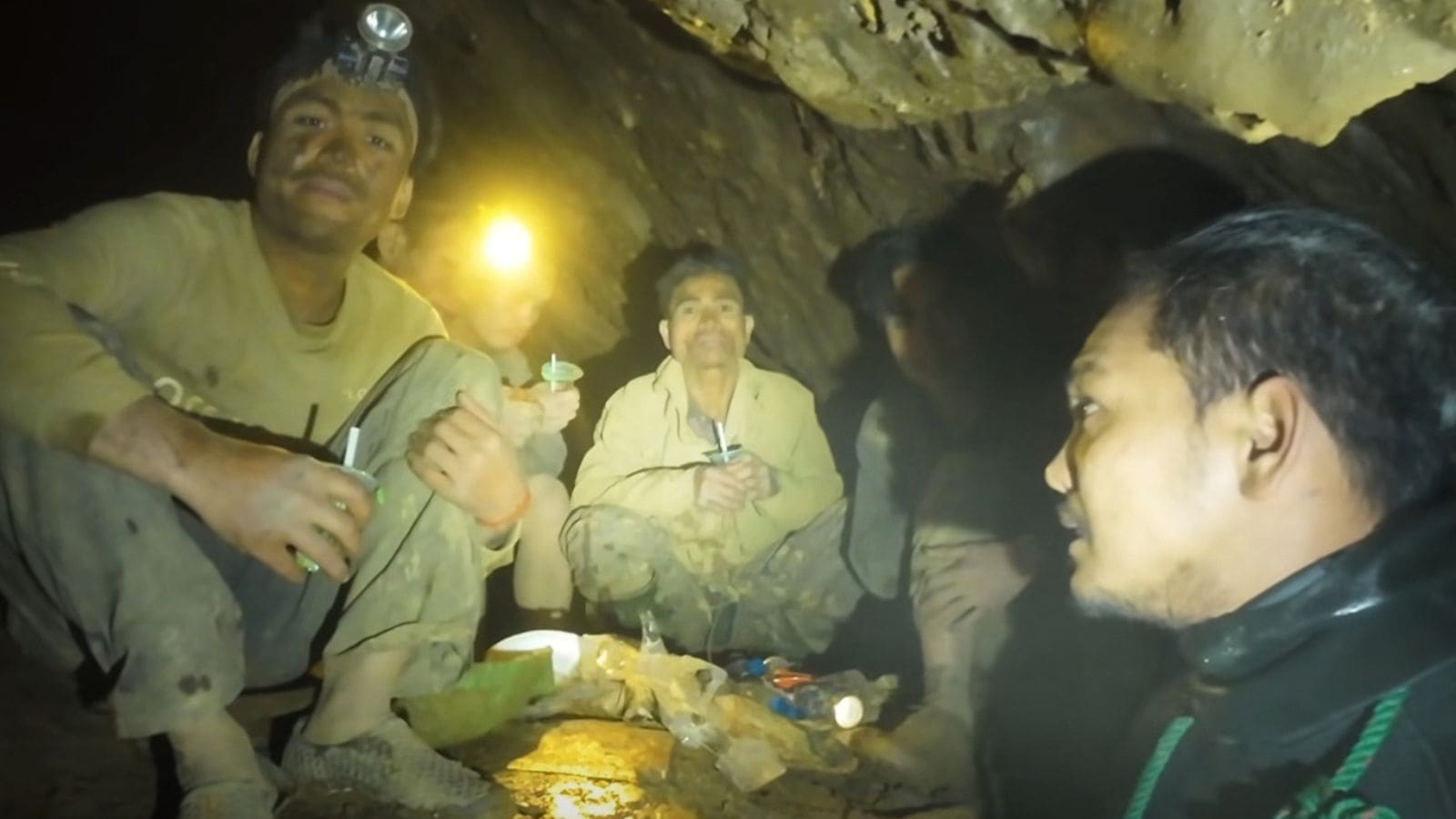
Five men are sitting on a muddy ledge deep within that dark. They are alive. They can hear the water, but they cannot see it. They have been breathing the same trapped pocket of air for days, watching the invisible line of the oxygen level drop while the humidity swells to a suffocating ninety-nine percent.
Outside, on the surface, a crowd is gathering under the brutal Southeast Asian sun. There are heavy trucks, tangled webs of nylon climbing ropes, generators that rattle the teeth in your skull, and families staring at a black hole in the hillside. The news reports framing this crisis focus on the numbers: seven missing, five located, two unaccounted for. But numbers are a comfort for people who are dry. Numbers imply control. They imply that this is a math problem waiting to be solved.
It is not a math problem. It is a slow-motion confrontation between human bone and millions of tons of ancient, unforgiving rock.
The Geography of Nightmare
To understand what is happening right now in Laos, you have to understand the specific malice of karst topography. Limestone looks solid from the outside, but it is fundamentally porous. Over millennia, slightly acidic rainwater dissolves the stone, carving out vast, labyrinthine networks of tunnels, shafts, and chambers. When the monsoon rains arrive ahead of schedule, these networks act like the plumbing of a giant, subterranean skyscraper. The drains clog. The basements fill first.
Imagine walking down a long, unfamiliar hallway in total pitch blackness. Now, tilt that hallway downward at a thirty-degree angle. Coat the floor in slick, greasy clay. Finally, turn on a fire hose at the far end and let the water rise until it touches the ceiling.
That is the environment British and local rescue divers pushed through to find those five men.
Navigating a flooded cave is an exercise in deliberate, managed panic. A diver cannot simply swim upward if something goes wrong. The ceiling is solid stone, sometimes hundreds of feet thick. Every movement must be calculated to conserve oxygen. If a diver agitates the silt on the floor, visibility drops to zero instantly. They call it a "silt-out." It is like being wrapped in a thick, wet woolen blanket. You cannot see your own hand wrapped around your dive light. You can only rely on the thin nylon guideline you laid on the way in. If that line snaps, or if you lose your grip on it, you are dead.
The international team of divers who braved these conditions knew the odds were terrible. Yet, against the baseline cruelty of the cave, they found them. Five figures huddled on a ledge above the waterline, illuminated by the sudden, blinding beam of a rescuer’s torch.
But finding them is the easy part.
The Cruel Illusion of Discovery
There is a distinct psychological trap that occurs in the wake of a discovery like this. The headlines flash the word Found, and the world takes a collective breath. We want the story to end there. We want the triumphant exit, the blankets wrapped around shivering shoulders, the tears of reunion.
The reality inside the cave is far more grim.
Consider what happens next: The divers who located the survivors cannot simply pick them up and swim back out. A rescue in a flooded cave requires an agonizingly complex set of variables to align perfectly.
First, there is the physical condition of the survivors. They have been trapped in cold, damp darkness without food. Hypothermia is a silent thief; it slows the cognitive functions, saps the muscles of strength, and induces a profound, leaden fatigue. To get these men out, they must navigate the same flooded, high-flow tunnels that nearly killed the world’s most experienced technical divers.
Ask yourself how a person who may not even know how to swim handles being fitted with a heavy rubber full-face mask, plunged into pitch-black, rushing water, and told to breathe normally while being dragged through gaps in the rock barely wide enough for a human torso. Panic is the real killer down there. A single hyperventilating breath can exhaust a scuba tank in minutes. A frantic flail of the arms can dislodge a mask or tear a lifeline.
The alternative is to wait.
The rescue team is currently weighing the possibility of pumping water out of the cave system to create dry pathways, or drilling a shaft down from the jungle surface above. But both options are gambles against a ticking clock. Pumping water out of a limestone sieve during a period of active rain is like trying to empty an ocean with a thimble. The water often pours back in through undisclosed fissures faster than the diesel pumps can groan it out.
Drilling is no simpler. The cave system has not been mapped with modern GPS precision. A drill rig operating on a muddy, unstable hillside hundreds of feet above could easily miss the chamber by ten yards, or worse, cause a catastrophic cave-in that crushes the very men they are trying to save.
The Two Who Remain in the Dark
While the logistics of the five survivors are being debated in muddy tents on the surface, a heavier shadow hangs over the operation. Two people are still missing.
In a disaster like this, silence is a physical weight. The divers who found the five survivors had to ask the question that everyone dreaded: Where are the others? The answer is rarely clean. They may have been separated during the initial rush of the floodwaters. They may be trapped in a different air pocket, miles away through unexplored passageways. Or they may be gone, claimed by the current before the rescue team even assembled at the airport.
Searching for the remaining two means sending divers back into the worst sections of the cave—the narrowest bottlenecks where the water pressure is highest. It means pushing into areas where no human has ever been, with no guarantee that the rock walls are stable.
This is where the ethics of rescue become brutal. How much risk do you ask a volunteer diver to accept to find someone who may no longer be alive? Every minute spent searching for the missing two is a minute not spent stabilizing and preparing the five who are confirmed alive. It is a terrible, utilitarian arithmetic that commanders on the surface must calculate while looking into the eyes of the families waiting by the perimeter ropes.
The Human Core of the Stone
We tend to view these events as spectacles, freak accidents that happen to people in far-off places. We read the updates on our phones during a morning commute, feeling a brief shudder of claustrophobia before moving on to the next notification.
But for the people on that muddy ledge, time has stopped. There are no days or nights, only the rhythm of their own breathing and the steady, rhythmic drip-drip-drip of water filtering through the limestone ceiling. They are living in the absolute sensory deprivation of the deep earth. In that kind of dark, your mind begins to play tricks on you. You hear voices in the sound of the rushing water. You see shapes moving in the shadows where no light exists. You hold the hand of the person next to you just to remind yourself that you still exist in three dimensions.
Outside, the international rescue apparatus is a marvel of human solidarity. Thai cave experts, British dive specialists, local Laotian volunteers, and military personnel are sharing cigarettes and schematics in the rain. They do not speak the same language, but they understand the language of the line. They know that as long as there is air in those lungs down below, the world outside has an obligation to keep pulling at the thread.
The pumps will continue to roar. The divers will check their regulators, spit into their masks, and submerge once more into the brown, churning dark. They will crawl through the mud and the stone, feeling their way forward inch by agonizing inch, driven by nothing more than the stubborn, beautiful refusal to leave those five men alone in the dark.
The rain is starting to fall again on the hillsides of Laos, heavy and relentless, slicking the red clay and filling the hidden veins of the mountain. Below, in the quiet, five men wait for the sound of a cylinder tank knocking against the stone.