The blue light of a smartphone doesn’t just illuminate a face; it carves it out of the darkness, isolating a human being from the very room they inhabit. It is 2:00 AM in a generic suburban bedroom. Let’s call the person holding the phone Sarah. She is scrolling through a curated gallery of Italian sunsets, marble kitchens, and high-cheekboned strangers laughing over espresso.
Sarah is objectively safe, fed, and housed. Yet, a gnawing hollow resides in her chest. She is experiencing a modern, digital erosion of the self. While she watches the stylized lives of others, her own dopamine receptors are being hijacked by an algorithm designed to keep her staring until her eyes ache. She is part of a global statistic, though she doesn't know it yet. She is the reason the latest World Happiness Report reads less like a victory lap for human progress and more like a medical chart for a feverish civilization. Also making waves recently: The NIH CDC Merger is a Management Shell Game That Guarantees the Next Public Health Failure.
The Geography of Contentment
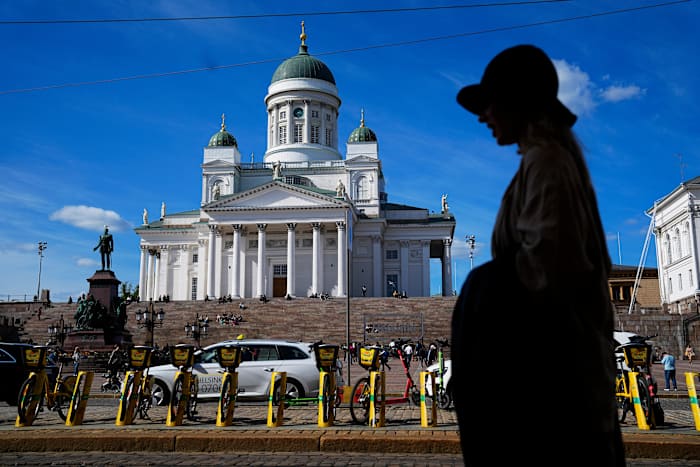
Thousands of miles away from Sarah’s glowing screen, a man named Pekka walks through a slushy, grey Helsinki afternoon. The sky is the color of a wet sidewalk. The wind bites. By any superficial metric of "fun," Pekka should be miserable.
Yet, for the seventh year in a row, Finland has been named the happiest country on Earth. Further details into this topic are explored by Psychology Today.
The word "happiness" is a bit of a trap in the English language. It implies a fleeting spike of joy, a yellow smiley face, a winning lottery ticket. In the Nordic context, it is closer to tyytyväisyys—a deep-seated sense of being satisfied with the basic scaffolding of life.
The World Happiness Report doesn't measure how many times a citizen laughs in a day. It measures trust. When Pekka loses his wallet in a park, he expects to get it back with the cash still inside. When he gets sick, he knows the bill won't bankrupt his family. When he sees a politician on the news, he might disagree with them, but he doesn't fundamentally believe the entire system is rigged to destroy him.
This is the baseline. It is the invisible floor that prevents a human life from crashing into the basement. In the United States and several other Western G7 nations, that floor is starting to rot. For the first time since the report’s inception, the U.S. has tumbled out of the top twenty. The reason isn't a lack of wealth. It’s a lack of "we."
The Digital Ghost in the Machine
The data is whispering a terrifying truth: we are the first generation to outsource our social validation to a machine.
The World Happiness Report highlighted a jarring disparity in this year’s findings. While the elderly—those who grew up with rotary phones and physical newspapers—remain relatively stable in their life satisfaction, the youth are cratering. In North America, the happiness of the young has dropped so precipitously that they are now less happy than the old.
Consider the mechanics of a "like."
When Sarah posts a photo and waits for the engagement, she is participating in a variable-ratio reinforcement schedule. It is the same psychological trick used by slot machines. If the likes come, she feels a fleeting sense of belonging. If they don't, the silence feels like social rejection.
But it’s worse than that. The report points to the "negative impact of social media" not just as a distraction, but as a distorting lens. It creates a perpetual state of upward social comparison. In the past, you only had to worry about being as successful as the person next door. Now, you are competing with the top 0.1% of the world’s most beautiful, wealthy, and lucky individuals, all filtered to perfection.
The "invisible stakes" here are our children’s neurological developments. We are witnessing a rise in clinical anxiety and depression that mirrors the exact timeline of the smartphone’s ubiquity. We traded the messy, unpredictable warmth of a community center for the frictionless, freezing vacuum of a newsfeed.
The Trust Deficit
Why does Finland win? Why do Denmark, Iceland, and Sweden follow so closely behind?
It isn't the saunas, though they help. It is the social contract.
In these high-trust societies, happiness is a collective byproduct. In low-trust societies, happiness is an individual pursuit—a race where you have to run faster just to stay in the same place.
The report uses six key variables to explain these scores: GDP per capita, social support, healthy life expectancy, freedom, generosity, and low corruption.
Notice that only one of those is about money.
The rest are about how we treat each other. They are about whether you feel you have someone to count on in times of trouble. In the digital age, we have 5,000 "friends" but no one to help us move a couch. We have infinite "connections" but a profound lack of intimacy.
The "social support" metric in the U.S. and the UK has been flickering like a dying lightbulb. When we spend five hours a day on TikTok, we are not spending those five hours volunteering, talking to neighbors, or even sitting in silence with our own thoughts. We are consuming "content" instead of creating "connection."
The Architecture of a Satisfied Life
If we want to fix the "Sarahs" of the world, we cannot simply tell them to "be more Finnish." We have to look at the architecture of our environments.
The Finnish model works because it reduces the "cost of failure." If you lose your job in Helsinki, your identity is bruised, but your survival isn't threatened. This creates a psychological "buffer" that allows for a more relaxed existence.
In contrast, the hyper-competitive, digitally-saturated culture of the West creates a "high-stakes" environment where every mistake feels catastrophic. Social media amplifies this by making every mistake permanent and public.
We have built a world that is technologically miraculous but psychologically uninhabitable.
The report suggests that the surge in negative emotions—worry, sadness, anger—is particularly acute in areas where social media use is highest among the young. It’s a feedback loop. We feel lonely, so we go online to find connection. The online world makes us feel more lonely and inadequate, so we scroll further, hoping for a cure that is actually the poison.
The Great Rebalancing
There is a way out, but it requires a radical act of reclamation.
We must acknowledge that our attention is the most valuable commodity we own, and we are currently giving it away to companies that profit from our outrage and our envy.
The Finnish "secret" isn't a secret at all. It is the boring, unsexy work of building institutions that people trust. It is the decision to fund libraries instead of just more police. It is the cultural habit of "everyman’s right," the law that says everyone has the right to walk in nature, regardless of who owns the land.
Nature is the ultimate antidote to the screen. It doesn't ask for a like. It doesn't track your data. It simply exists, and in its presence, we remember that we are biological creatures, not digital profiles.
Sarah finally puts her phone down. The room is silent. The blue light fades from her retinas, and for a moment, the world feels terrifyingly empty. That emptiness is where the work begins. It’s where the phone call to a real friend happens. It’s where the walk in the actual, non-filtered park starts.
We are not victims of a happiness ranking. We are participants in a massive, unplanned experiment in human psychology. The data is in. The machines are winning, and we are losing our grip on the things that actually make a life worth living: the safety of a community, the trust in a neighbor, and the quiet dignity of enough.
The sun begins to rise, not over a Mediterranean villa on a screen, but over the houses on Sarah’s street. It isn't perfect. It isn't "content." But it is real. And in a world of digital ghosts, reality is the only thing that can actually keep us warm.
Would you like me to find more specific data on how different age groups in your specific region compared in the latest report?