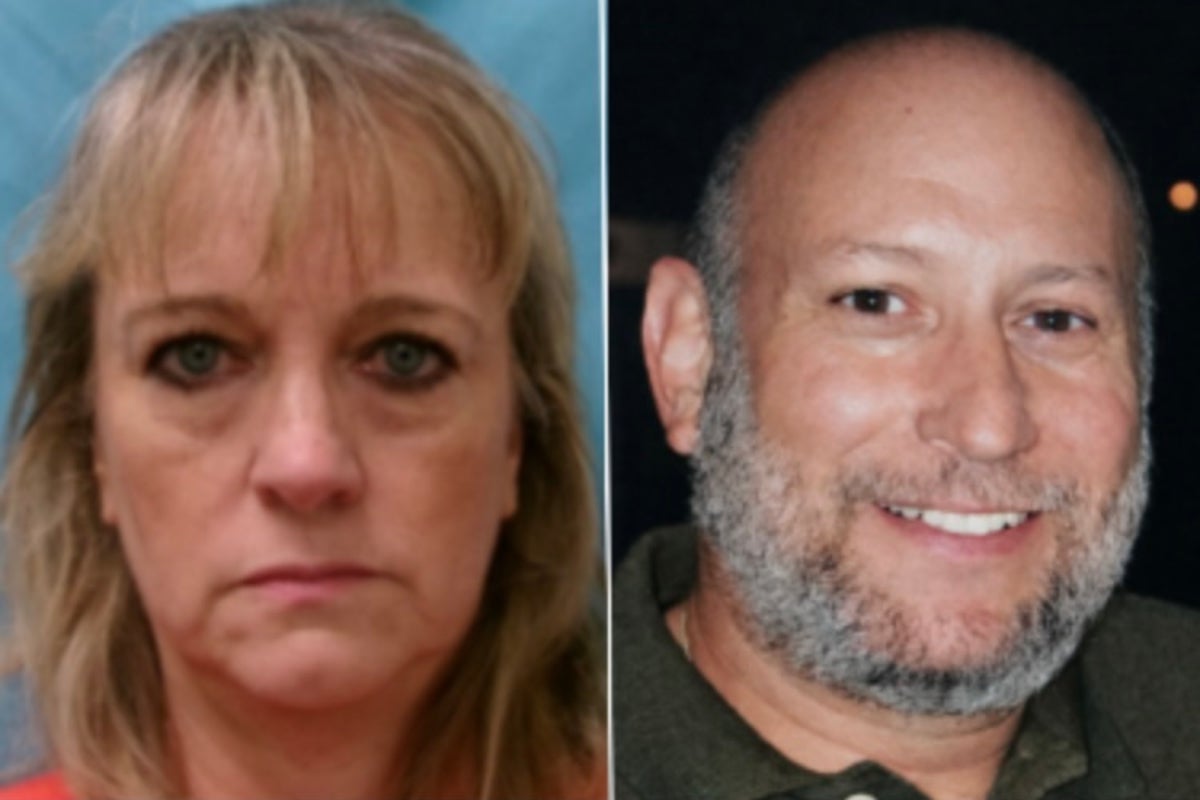
Justice often moves at a crawl, but in the case of Sandra Jean Rivera, it effectively stood still for twenty-three years. In April 2026, the silence finally broke. Authorities in Smith County, Texas, arrested the 49-year-old woman in connection with the 2003 death of her husband, Cruz Rivera. This was not a sudden discovery of a smoking gun or a cinematic DNA match from a stray hair. Instead, it was the result of a grueling, decades-long grind by cold case investigators who refused to let a body found by a lake remain an unsolved statistic.
The body of Cruz Rivera was discovered in August 2003 near Lake Tyler, a popular recreational spot that became a grim crime scene overnight. At the time, the investigation hit a wall. Forensic technology in the early 2000s, while advancing, lacked the granular data-crunching capabilities we see today. Witnesses moved, memories blurred, and the trail went cold enough to be shelved. The arrest of Sandra Rivera serves as a stark reminder that time does not actually heal all wounds; sometimes, it just lets the evidence settle until someone has the patience to sift through it again.
The Anatomy of a Decades Old Investigation
When a case goes cold for over twenty years, the difficulty of securing a conviction increases exponentially. Investigators aren't just looking for physical evidence; they are looking for shifts in human relationships. Over twenty-three years, loyalties change. People who were once afraid to speak may no longer feel that pressure. Spouses divorce, friends have falling outs, and the social structures that protected a suspect in 2003 often crumble by 2026.
The Smith County Sheriff’s Office hasn't yet released the specific catalyst for the arrest, but the pattern of cold case breakthroughs usually follows two paths. The first is the "new set of eyes" phenomenon. A fresh detective reviews thousands of pages of notes and spots a contradiction that was missed in the initial heat of the moment. The second is the advancement of forensic biology. Even if DNA was collected in 2003, the ability to extract profiles from degraded samples has improved to a degree that would have seemed like science fiction when Cruz Rivera was killed.
Why Texas Cold Cases Are Finally Thawing
Texas has been particularly aggressive in funding cold case units over the last five years. The state's Department of Public Safety has funneled resources into regional sheriff's offices to ensure that "unsolved" doesn't mean "forgotten." In the Tyler area, the community has lived with the ghost of this case for a generation. For twenty-three years, Sandra Rivera lived a life that, on the surface, appeared disconnected from the violence of that August day.
The psychological weight of a cold case arrest ripples through a small community. Neighbors who knew the couple in 2003 are forced to reconcile their memories of a grieving widow with the reality of a murder suspect. This tension is where investigative journalism finds the truth. It isn't just about the handcuffs; it's about the decades of normalcy that preceded them.
The Problem With Long Term Evidence Preservation
One of the biggest hurdles in a case this old is the physical state of the evidence. Evidence lockers in the early 2000s weren't always the climate-controlled vaults they are today. Paper trails vanish. Digital records from 2003 might exist on obsolete zip drives or floppy disks that require specialized hardware just to read.
However, the prosecution has one major advantage in 2026: digital footprints. While we think of 2003 as a low-tech era, the dawn of the mobile phone and early internet usage left trails that investigators are now more adept at recovering. Cell tower pings that were ignored or misunderstood two decades ago can now be mapped with terrifying precision.
The Burden of Proof in a Ghost Story
A trial held twenty-three years after the fact is essentially a battle of shadows. The defense will undoubtedly point to the "faded memory" argument. How can a witness accurately describe what they saw by Lake Tyler in 2003? Human memory is notoriously malleable. Over time, we tend to fill in the gaps of our stories with things we've heard or imagined.
The prosecution must counter this by relying on "hard" facts that don't age. This includes:
- Ballistics reports that remain static regardless of the year.
- Geological data from the crime scene that hasn't changed.
- Prior statements taken in 2003 that can be used to impeach or support current testimony.
If the evidence against Sandra Rivera relies heavily on new witness testimony, the case becomes a high-stakes gamble on credibility. If it relies on physical evidence that was recently re-tested, the defense faces a much steeper climb.
The Victim Left Behind
Amidst the legal maneuvering and the shock of the arrest, the life of Cruz Rivera often gets buried. He wasn't just a body by a lake; he was a man whose life ended abruptly in his twenties. For his surviving family, this arrest isn't a "closure" event—a word that journalists use too often to simplify complex grief. It is a reopening of a wound that had barely scarred over.
The twenty-three-year gap means that children may have grown up without a father, parents may have passed away without knowing who killed their son, and a suspect may have enjoyed decades of freedom. This imbalance is the core of the tragedy. Every year that passed without an arrest was a year where the system failed to provide an answer.
The Role of Local Law Enforcement Persistence
Sheriff Larry Smith of Smith County has built a reputation for not letting these cases die. His office has pushed for specialized training in behavioral analysis and cold case management. This arrest didn't happen in a vacuum. it happened because a specific budget was allocated and specific man-hours were dedicated to looking at a box of files that had been gathering dust since the George W. Bush administration.
This isn't just a Texas story. It's a blueprint for how mid-sized law enforcement agencies can tackle their backlog. It requires a rejection of the idea that a case is "too old" to solve. In the world of modern forensics, there is no such thing as a truly cold case, only cases waiting for the right technology or the right confession to surface.
The Mechanics of a Cold Case Arrest
When police finally move in on a suspect like Sandra Rivera, it is usually the result of a "pocketing" strategy. They wait until they have more than just a suspicion. They wait until they have a piece of evidence that is essentially undeniable. Because once they make the arrest, the clock starts ticking on a speedy trial. They only get one shot at this. If she is acquitted, double jeopardy prevents them from ever trying her again, no matter what new evidence might surface in 2030 or 2040.
The risk of waiting twenty-three years is that the suspect might flee or die. The reward is that the case is often ironclad by the time the handcuffs click. The arrest of Sandra Rivera suggests that the Smith County investigators believe they finally have that "undeniable" link.
Public Perception and the Court of History
In 2003, the news cycle was dominated by the Iraq War and the early days of social media. A murder in East Texas might have made the local headlines for a week before being pushed aside. In 2026, the internet ensures that this story reaches a global audience instantly. This creates a different kind of pressure on the judicial system.
The public's appetite for "True Crime" has turned every citizen into an armchair detective. This can be a double-edged sword. While it keeps the pressure on police to solve cases, it also risks tainting jury pools with speculation and rumors that have fermented for two decades.
The Silence of Lake Tyler
Lake Tyler remains a serene location, but for the families involved, it will always be the site of a profound mystery. The arrest of Sandra Rivera doesn't put the ghost of Cruz Rivera to rest yet. It merely begins the next chapter of a story that should have been told in 2003.
The legal proceedings will likely drag on for months or years. There will be motions to dismiss based on the statute of limitations for certain lesser charges, though murder has no such expiration date in Texas. There will be arguments about the admissibility of decades-old evidence. There will be tears in a courtroom that wasn't even built when the crime occurred.
The most chilling aspect of this case isn't the murder itself, but the twenty-three years of ordinary life that followed it. It raises the question of how many other people are walking among us, carrying secrets from another lifetime, assuming that because the clock has ticked long enough, they are safe. They are not. The arrest in Smith County proves that the past is never truly buried; it’s just waiting for someone to dig it up.
Investigators are currently holding Rivera on a high bond, reflecting the severity of the charge and the flight risk inherent in someone who has spent half their life avoiding this moment. As the trial approaches, the focus will shift from "who did it" to "how they got away with it for so long." That answer might be more disturbing than the crime itself.
The pursuit of Cruz Rivera’s killer survived four different presidential administrations, multiple shifts in forensic science, and the total digital transformation of the world. It is a testament to the fact that while a life can be taken in an instant, the accountability for that act can be pursued for a lifetime.
Justice didn't forget Cruz Rivera. It just took twenty-three years to find its way back to the lake.