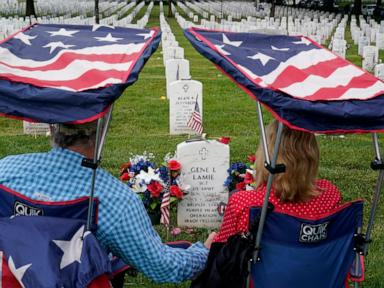
Memorial Day has transformed from a radical, localized ritual of grief and civil rights into America’s ultimate three-day weekend. What began in 1865 as a solemn commemoration by formerly enslaved Black Americans to honor fallen Union soldiers has been systematically sanitized. Today, the holiday is defined by mattress sales, backyard barbecues, and a generalized, non-offensive nod to "the troops." This shift represents more than just the commercialization of a holiday. It reflects a deliberate, century-long effort to strip the day of its political weight, replacing historical accountability with a vague, consumer-friendly version of patriotism.
Understanding this evolution requires looking past the standard textbook narrative of Decoration Day. The true story of Memorial Day is a narrative of political amnesia, where the brutal realities of the Civil War were buried to pave the way for national reconciliation and, eventually, corporate profit.
The First Decoration Day Was a Act of Liberation
For decades, Northern and Southern towns bickered over who hosted the first official Memorial Day. Waterloo, New York, holds the official federal designation, while Columbus, Mississippi, and Boalsburg, Pennsylvania, have long made their own claims.
Historian David Blight uncovered the actual, documented origin of the holiday, and it did not happen in a quiet Northern village. It took place on May 1, 1865, in Charleston, South Carolina, at a former racetrack that Confederate forces had converted into a brutal open-air prison. At least 257 Union soldiers died there of disease and exposure, buried hastily in unmarked mass graves.
As soon as the city fell, a group of roughly ten thousand freed enslaved people, led by Black missionaries and teachers, took action. They spent two weeks exhuming the bodies, giving them proper burials, and building a fence around the cemetery. On May 1, they gathered to dedicate the site. Three thousand Black children marched through the streets carrying armfuls of roses and singing Union marching songs. They were followed by Black adults, clergymen, and Union regiments.
This was not a passive act of mourning. It was a massive, public declaration of what the war had been about. By honoring the Union dead, the newly freed population was explicitly tying the sacrifice of these soldiers to their own emancipation and the birth of a new republic. It was an inherently political event that linked the cost of the war directly to the destruction of slavery.
The Great Amnesia and the Politics of Reconciliation
The radical nature of this early commemoration did not last. As the federal government abandoned Reconstruction in the 1870s, the political landscape shifted. The urgent priority for white politicians, both North and South, became national reunion.
To heal the rift between the states, a new narrative was forged. This narrative required stripping the war of its ideological causes. The conflict was reframed not as a battle over human bondage and the survival of the union, but as a tragic misunderstanding between equally honorable white men.
John Logan, the commander-in-chief of the Grand Army of the Republic, issued General Order No. 11 in 1868, designating May 30 as Decoration Day. While Logan’s intent was to honor Union veterans, the holiday quickly became a tool for regional appeasement. By the late 19th century, ceremonies across the country began honoring both Union and Confederate dead under a banner of shared valor.
This reconciliation required a profound collective forgetting. To make peace with the white South, the nation agreed to forget why the South had fought. The Black Americans who created the holiday were pushed out of the national consciousness, and the focus shifted from the cause for which the soldiers died to the simple fact of their bravery. Decoration Day became a mechanism for national healing at the expense of historical truth.
From Mourning to Marketing
The transformation of Decoration Day into the modern Memorial Day was finalized by law, not by culture.
For the first half of the 20th century, the holiday remained a solemn occasion tied to May 30, regardless of the day of the week. Stores closed. Communities held parades that focused heavily on veterans and the families of the deceased. The mood was somber, dictated by the immediate memories of the World Wars.
Everything changed with the Uniform Monday Holiday Act, passed by Congress in 1968 and implemented in 1971.
[1865: First Decoration Day] ──> [1868: General Order No. 11] ──> [1971: Uniform Monday Holiday Act]
      (Radical/Emancipation)            (National/Reconciliation)             (Commercial/Three-Day Weekend)
The Act moved Memorial Day, along with several other federal holidays, from its traditional date to a designated Monday to create three-day weekends for federal employees. The explicit goal was to boost the economy, stimulate travel, and increase retail sales.
The strategy worked perfectly. By decoupling the holiday from a specific historical date and anchoring it to a long weekend, Congress fundamentally altered the psychology of the day. Memorial Day was no longer a pause in the national routine for reflection. It became the unofficial start of summer.
The consequences of this legislative shift were immediate. The solemnity of the day was swallowed by the logistics of leisure. The public focus shifted from the cemetery to the highway, from honoring the dead to booking a campsite. Corporate America seized the opportunity, turning a day of national grief into one of the biggest shopping events of the calendar year.
The Conflation of Sacrifice
As the original meaning faded, the rhetoric surrounding the day became increasingly vague. Today, the most common critique from veterans' organizations is the constant confusion between Memorial Day and Veterans Day.
Veterans Day, celebrated in November, honors all who served in the military. Memorial Day is reserved exclusively for those who died while serving.
Yet, the modern cultural practice blurs these lines constantly. Well-meaning citizens use the weekend to thank living veterans for their service, or to celebrate the military as an abstract institution. This confusion is not accidental. It is the logical result of a culture that prefers generalized patriotism over the uncomfortable realities of wartime casualties.
When a holiday becomes about everything, it ends up being about nothing. Celebrating generic "service" is much easier than confronting the specific, brutal losses of military campaigns. It avoids the difficult political questions surrounding why those soldiers died, whether the conflicts were justified, and how the nation treats the families left behind.
The True Cost of Comfort
The evolution of Memorial Day is a case study in how a society manages uncomfortable history.
By turning a day of deep political and personal reckoning into a consumer holiday, the United States achieved a comfortable consensus. The South was appeased, the business community got a profitable weekend, and the general public received a vacation.
The casualty of this compromise was the truth. The radical origins of the day—rooted in the liberation of enslaved people and the defense of the Union—have been largely erased from public awareness. The holiday has been successfully sanitized for mass consumption.
We are left with a ritual that demands nothing from the citizen. It requires no reflection on the cost of war, no engagement with history, and no acknowledgement of the ideological battles that still fracture the country. It asks only that you buy, travel, and relax.
The original organizers of the 1865 commemoration did not march to kick off a shopping season. They marched to honor men who died to break the chains of chattel slavery. Reclaiming that memory requires looking past the sales pitches and confronting the raw, political reality of American history.