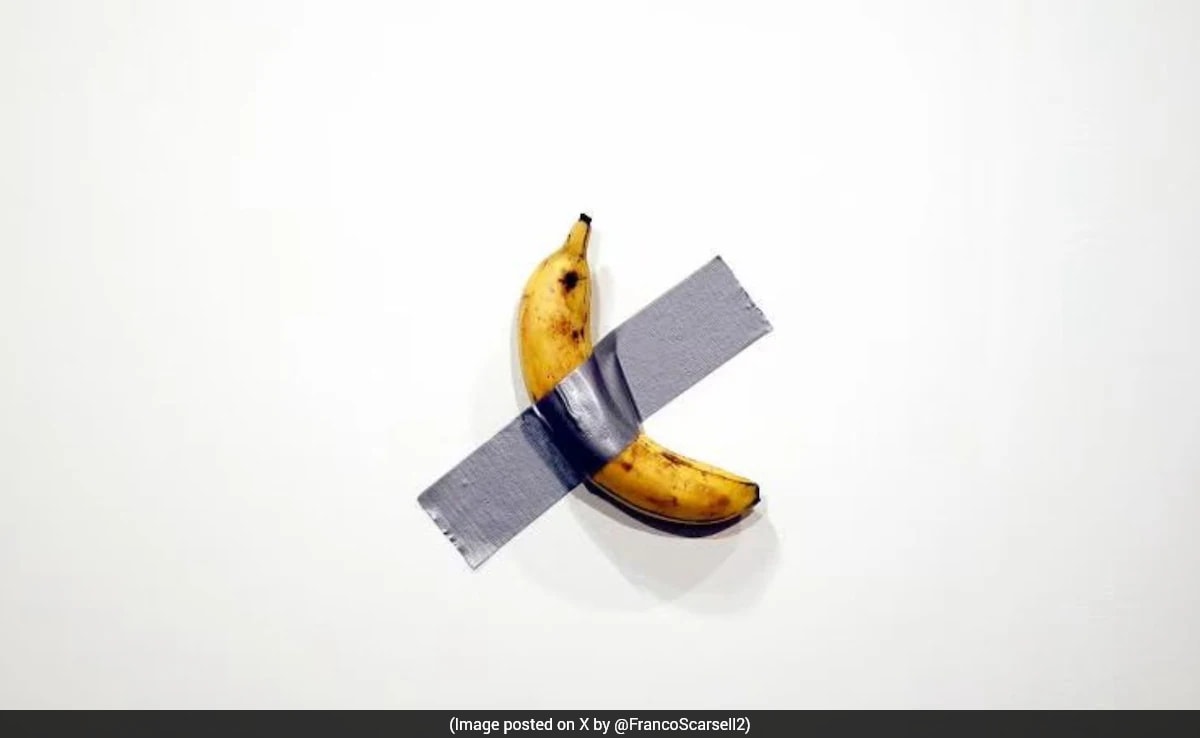
Maurizio Cattelan loves to make people uncomfortable. The Italian artist shocked the art world years ago when he duct-taped a fresh banana to a gallery wall, called it Comedian, and sold it for $120,000. It was brilliant satire to some, and a absolute scam to others. But nobody expected the artwork to become a recurring target for literal hunger and bizarre criminal behavior.
The infamous conceptual piece recently faced its double dose of chaos. First, a hungry student ate the artwork off the wall. Then, just days after a replacement was put up, a thief walked right out of the museum with the new banana.
This isn't just a funny news headline. It points to a massive, systemic failure in how modern institutions handle security and value. When an artwork consists of a piece of fruit you can buy at a grocery store for fifty cents, the traditional rules of museum security fall completely apart.
The Ridiculous History of the Eaten Conceptual Art Banana
You can't talk about the recent theft without understanding what happened right before it. During an exhibition at the Leeum Museum of Art, a Seoul National University student named Noh Huyn-soo calmly walked up to Cattelan’s piece, peeled the banana, and ate it. He then taped the empty peel back to the wall.
When the museum staff asked why he did it, his response was hilariously blunt. He said he skipped breakfast and was simply hungry. Later, he admitted to media outlets that he viewed his actions as a rebellion against the establishment, a form of art against the art itself.
The museum didn't sue him. They didn't even call the police. They just went to a local supermarket, bought a fresh banana, and replaced it. That lack of institutional concern created a dangerous precedent. It signaled that the physical object on display held absolutely zero value.
That mindset directly invited the next disaster. Within forty-eight hours of the eating incident, the replacement banana was stolen. A visitor unpeeled the tape, pocketed the fruit, and vanished into the crowd.
Why Traditional Museum Security Fails Modern Installations
Most art museums are built like fortresses. They have laser grids, pressure sensors, and bulletproof glass to protect multi-million dollar oil paintings. If you try to touch a Rembrandt, three security guards will tackle you before you can blink.
But those systems don't work for a fresh piece of fruit. Security guards are trained to watch for vandalism, not grocery shopping. Here is why the system broke down so spectacularly.
- The proximity problem: Conceptual art requires people to get close. There are no frames or glass barriers separating the viewer from the banana.
- The psychological disconnect: Human brains are wired to respect historical artifacts. We don't instinctively respect a yellow fruit that rots in a week.
- The low-stakes perception: Visitors know the museum replaces the fruit every few days anyway. Taking it doesn't feel like stealing a masterpiece; it feels like taking a free mint from a restaurant lobby.
The art world relies heavily on a social contract. We agree to look and not touch. But when artists push boundaries by using ordinary household items, they break that social contract. They invite the audience to interact with the piece using everyday logic. If a banana is hungry-looking, someone will eat it. If it looks easy to grab, someone will take it home.
The Real Value Isn't the Fruit It's the Certificate
Here is the secret that most casual observers miss. The thief who stole the banana from the exhibition didn't actually steal a $120,000 artwork. They stole fifty cents worth of potassium.
When a collector buys Comedian by Maurizio Cattelan, they aren't buying the physical banana. They are buying a fourteen-page instruction manual and a signed certificate of authenticity. The certificate is the actual artwork. The document grants the owner the exclusive legal right to tape a banana to a wall and call it a Cattelan.
Without that piece of paper, the stolen object is just lunch. The thief can't sell it at Christie's. They can't display it in their living room and convince anyone it's fine art. It will turn black and mushy in a few days, ending up in a trash can.
This creates a weird paradox for law enforcement. How do you charge someone with a major art heist when the stolen item is completely worthless and perishable? The legal system handles property damage and theft based on the financial value of the physical item taken. Replacing the banana costs the museum almost nothing, which makes prosecuting these incidents an absolute nightmare for local authorities.
How Museums Must Protect Vulnerable Installations Moving Forward
The era of trusting the public to respect conceptual art is officially over. If institutions want to display controversial, interactive, or everyday-object installations, they must change their operational strategies immediately. Relying on passive gallery monitors isn't working anymore.
First, museums need to implement physical barriers that don't ruin the aesthetic of the piece. Low-profile stanchions or subtle floor markings can create a psychological boundary that deters impulsive visitors. If a guest has to step over a physical line to reach the art, security has time to intervene.
Second, the staff training needs a complete overhaul. Gallery attendants should be trained to recognize the specific risks associated with conceptual pieces. They need to watch for sudden movements and handle crowd control tightly around high-profile, viral installations.
Finally, institutions must stop treating these incidents as harmless PR stunts. When the museum laughed off the student eating the artwork, they invited the subsequent theft. Museums need to enforce strict ban policies for visitors who touch, deface, or steal components of any installation, regardless of how cheap those components are to replace. Protecting the integrity of the exhibition space matters more than getting a viral moment on social media.