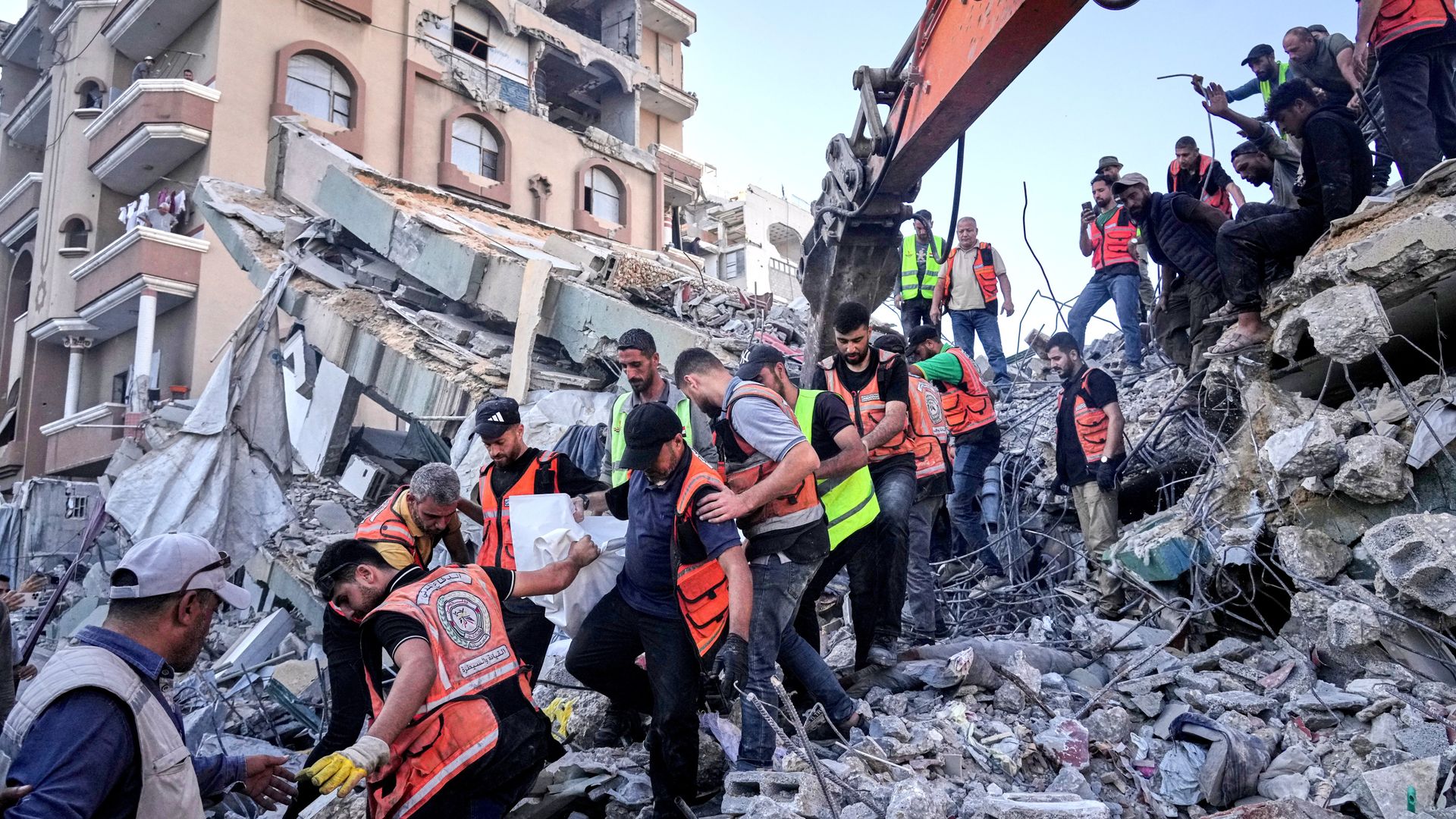
The dust never really settles in Gaza. Long before a structure gives way, it has already endured months or years of structural fatigue, shrapnel damage, and violent shockwaves. When a residential building finally pancakes onto the street below, the headlines flash across international screens for a few hours. Then the news cycle moves on. But the people left digging through concrete rubble with their bare hands don't have that luxury.
Recent tragedies, including catastrophic collapses that leave dozens trapped and scores dead, expose a grim reality. The danger doesn't end when the airstrikes pause. The invisible wounds carried by aging concrete and overloaded rebar make daily life an ongoing game of structural roulette. If you enjoyed this article, you should read: this related article.
The Invisible Decay of War Damaged Infrastructure
Think about what happens to a multi-story apartment block when heavy ordnance detonates nearby. The blast wave doesn't just shatter windows. It sends micro-fractures rippling through load-bearing columns. Steel reinforcement bars twist, stretch, and lose their bond with the surrounding concrete.
Most people assume that if a building is still standing after an explosion, it's safe. That is a dangerous myth. For another look on this development, refer to the latest update from The Washington Post.
Engineers call this progressive damage accumulation. Day after day, weakened walls absorb the vibrations of heavy machinery, nearby traffic, and shifting rubble. Without professional structural assessments—which are virtually impossible to conduct thoroughly given the lack of specialized equipment and supplies entering the region—these buildings become vertical time bombs.
Why Temporary Repairs Fall Short
Families desperate for shelter naturally return to damaged homes. They patch up blown-out walls with plastic sheeting, stack concrete blocks to shore up sagging ceilings, and move back in. You can't blame them. Options are non-existent.
Yet, these improvised fixes add dead weight to compromised frames. A roof already holding microscopic fractures can't handle the extra load of makeshift repairs, let alone the weight of multiple displaced families crammed into a single remaining apartment. When the foundation gives out, it happens with terrifying speed. There's no creaking warning, no time to evacuate. The whole stack simply drops straight down.
The Rescue Nightmare
When a multi-story structure collapses in a densely packed urban area, the emergency response looks less like a coordinated rescue operation and more like a desperate archaeological dig.
Heavy excavators are rare. Fuel is scarcer than water. First responders and local volunteers rely on hand tools, car batteries rigged to makeshift lights, and sheer adrenaline. Every minute spent moving a slab of concrete by hand lowers the survival rate for anyone trapped in air pockets below.
The logistical blockade makes bringing in heavy search-and-rescue gear nearly impossible. Specialized listening devices, thermal imaging cameras, and trained canine units are luxuries reserved for wealthier nations facing natural disasters. Here, neighbors become rescuers using kitchen utensils and garden trowels.
Beyond the Immediate Collapse
The tragedy doesn't stop with the initial death toll. Thousands of displaced survivors face the monsoon or winter cold without shelter, huddled near the skeletons of buildings that could go next. The psychological toll is staggering. Children grow up listening to every loud noise, wondering if their ceiling is about to fall.
Addressing this crisis requires more than momentary shock from the international community. It demands unrestricted access for structural engineers, heavy equipment, and building materials to properly stabilize or safely demolish hazardous structures before they fail.
Until the fundamental safety of the built environment can be addressed, the danger remains absolute. Every standing wall is a question mark. Every tremor of the earth brings a fresh wave of anxiety. The collapse isn't just an isolated accident. It's the slow-motion aftermath of a war that refuses to stop destroying from the inside out.