The sirens of regional instability have a specific sound. They carry the weight of decades of history, the sharp edge of modern drone tech, and the heavy thrum of geopolitical posturing. When news breaks of a new escalation between Iran and Israel, or a shift in the American military footprint in the Middle East, the world usually flinches. Investors reach for their phones. The "sell" button looks tempting.
But in the marble-clad lobbies of Dubai, the air feels different. It feels quiet.
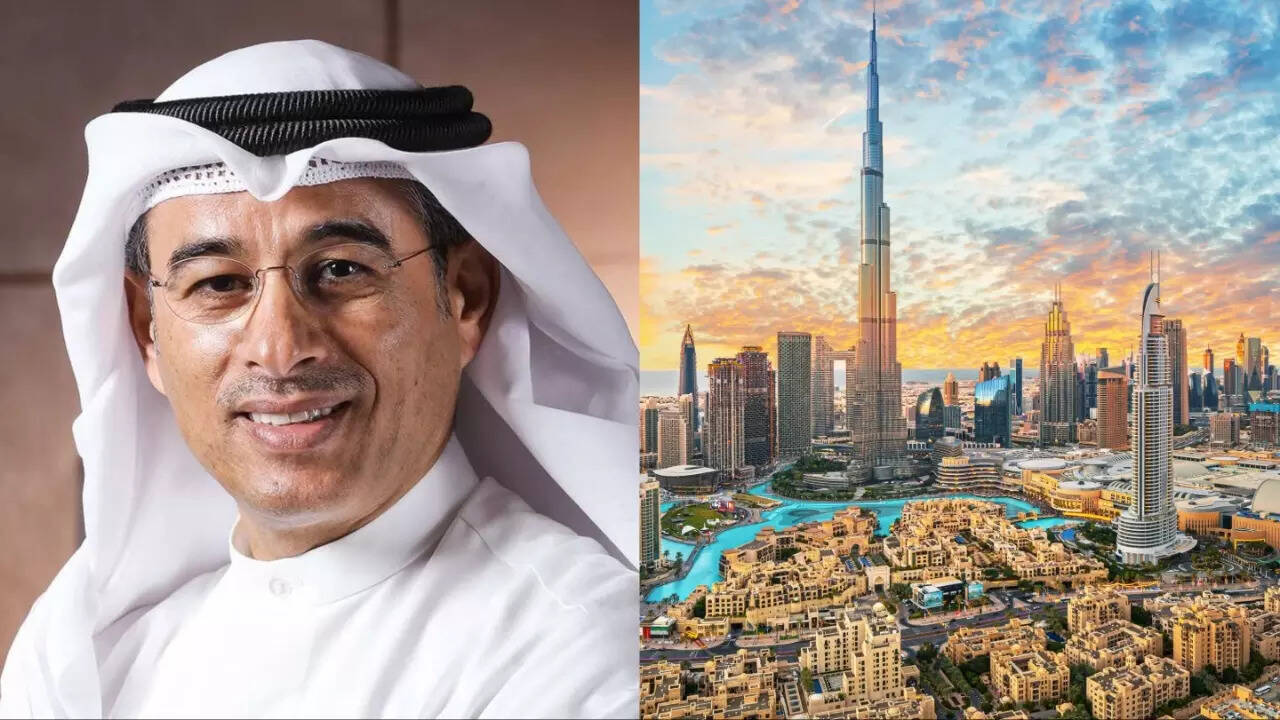
Mohamed Alabbar, the man who watched the Burj Khalifa rise from a patch of dust to scrape the heavens, isn't sweating. To understand why he looks at the looming shadow of war and sees a fortress instead of a ruin, you have to stop looking at maps of missile trajectories and start looking at the people who are actually moving their lives to the desert.
The Migrant with a Million Dollars
Consider a family in a volatile corner of Eastern Europe or a tech entrepreneur in a crowded, high-tax European capital. They aren't reading property brochures for the fun of it. They are looking for a "Plan B" that feels more like a "Plan A."
When the world gets loud, Dubai gets busy.
The standard economic theory suggests that proximity to conflict should devalue real estate. It’s a logical assumption. If a fire is burning in the house next door, you don’t usually bid over asking price for the one you’re standing in. Yet, Dubai has spent the last twenty years rewriting the physics of risk.
Alabbar’s perspective isn't rooted in blind optimism. It’s rooted in the cold reality of capital flight. Money is a coward; it runs from danger. But it doesn't just disappear into the ether. It looks for a vault. For a growing demographic of the global elite, the United Arab Emirates has become that vault. It is a neutral ground, a place where the passport you hold matters less than the vision you bring.
The Gravity of Stability
In the early 2000s, the skeptics were everywhere. They called Dubai a "bubble" before the first crane even arrived. They said a city built on the promise of luxury in a "dangerous neighborhood" was a house of cards. Then came 2008. Then came the Arab Spring. Then came a global pandemic.
Each time, the city didn't just survive; it recalibrated.
The reason the current tensions between Iran and the West don't rattle the foundations of Emaar's skyscrapers is that Dubai has decoupled itself from the traditional "Middle East" narrative. It has rebranded itself as a global city-state, functioning more like Singapore or Hong Kong than its immediate neighbors.
While the headlines scream about conflict, the data tells a story of construction. Demand for luxury villas and high-end apartments isn't coming from speculators looking to flip a unit in six months. It’s coming from people who want to put down roots. They are buying into an infrastructure that works—a place where the airports are efficient, the taxes are predictable, and the safety is absolute.
The Psychology of the Safe Haven
Conflict elsewhere acts as a catalyst for relocation. It sounds harsh, perhaps even predatory, to suggest that regional instability helps a property market. But it isn't about cheering for chaos; it’s about recognizing the human instinct for preservation.
When a businessman in a troubled region sees his local currency tanking or his security threatened, he looks for a place that offers the opposite. Dubai offers a pegged currency, a golden visa program that rewards investment with residency, and a legal system that has been aggressively modernized to mirror international standards.
Alabbar knows that his real product isn't square footage or Italian marble countertops. He is selling certainty in an uncertain world.
The Architecture of Resilience
Is there a limit? There has to be. No market moves upward forever in a straight line. Gravity eventually demands its due.
But the "crash" that doomsayers have been predicting for fifteen years keeps getting postponed. The reason lies in the shift from debt-fueled speculation to cash-heavy investment. In the previous cycles, much of the growth was built on shaky loans and "flipping" culture. Today, the buyers are different. They are institutional investors, family offices, and wealthy individuals who are paying in full.
When you own a property outright, a dip in the market is a footnote, not a catastrophe. You don't sell because the news is bad; you hold because you have nowhere better to go.
The "nothing to fear" mantra isn't a marketing slogan. It’s a reflection of the city’s role as the region’s balance sheet. If Dubai falls, it means the world has reached a point of volatility where no asset is safe anyway. In that scenario, your London townhouse or your New York condo is just as vulnerable.
The Invisible Stakes
Behind the glass facades and the record-breaking sales figures, there is a human element that often gets lost in the business sections of the newspaper. It’s the feeling of a parent taking their child to a park at 10:00 PM without looking over their shoulder. It’s the ease of starting a business in forty-eight hours.
The "war" narrative is a macro-economic distraction. For the person moving their life to the UAE, the macro doesn't matter as much as the micro. Can I live here? Can I grow here? Is my wealth protected?
As long as the answer to those questions remains "yes," the cranes will keep moving. The founder of Emaar isn't ignoring the geopolitical reality; he is betting on the fact that the world's desire for a sanctuary will always outweigh its fear of the headlines.
The sun sets over the Arabian Gulf, casting long, golden shadows across the face of the Burj Khalifa. Down on the street, the traffic is thick with people from two hundred different countries, all chasing a version of the future that feels secure. They aren't looking at the horizon for smoke. They are looking at the ground beneath their feet, feeling the solid, unyielding weight of the concrete.
The desert used to be a place people passed through. Now, it’s where they go to stay when the rest of the world feels like it’s shifting beneath them.