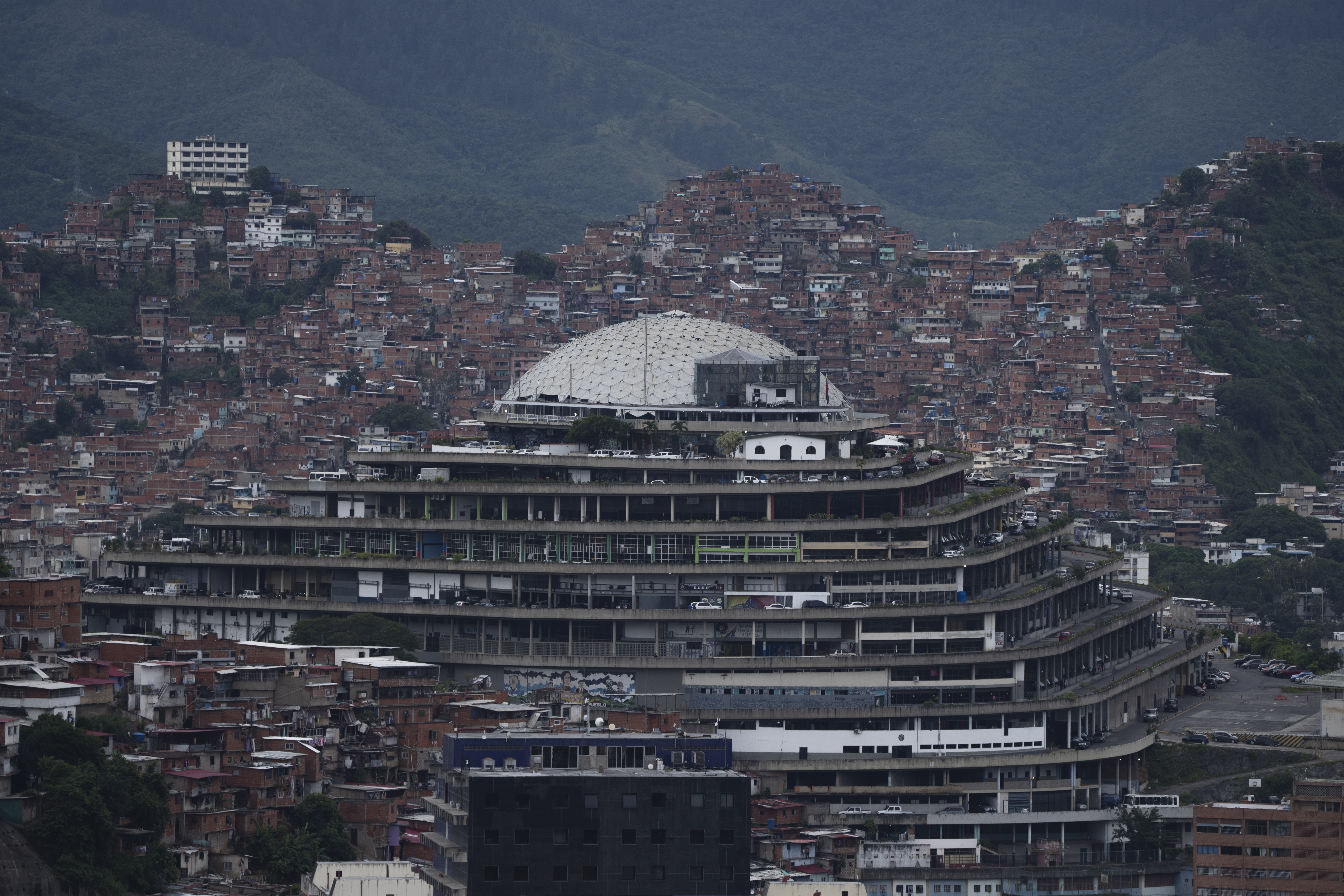
Caracas is a city of architectural ghosts, but none haunt the skyline quite like El Helicoide. What began in the 1950s as a futuristic monument to consumerism—a drive-in shopping mall designed to be the crown jewel of Venezuelan modernity—now stands as the most notorious detention center in the Western Hemisphere. The spiraling ramps that were supposed to carry Cadillacs to luxury boutiques now lead to overcrowded cells and interrogation rooms.
This transformation is not a fluke of urban planning. It is the physical manifestation of a state that traded the promise of progress for the mechanics of social control. Today, the debate over the building’s future is stuck between those who want to reclaim the space for the community and those who believe its walls are too saturated with blood to ever be anything other than a monument to state terror.
A Monument to Failed Ambition
To understand the crisis within El Helicoide, you have to look at the bones of the structure. It was designed by architects Pedro Neuberger, Dirk Bornhorst, and Jorge Romero Gutiérrez during the dictatorship of Marcos Pérez Jiménez. The intent was pure mid-century bravado: a double-helix ramp that allowed shoppers to drive their cars directly to the storefront of their choice. It was touted at the 1958 Brussels World’s Fair as a masterpiece. Salvador Dalí reportedly offered to decorate the interior.
Then the money stopped.
When Pérez Jiménez was overthrown in 1958, the new democratic government viewed the project as a vanity relic of the old regime. Litigation stalled construction for decades. Squatters moved into the unfinished shells. By the time the intelligence services—then known as DISIP, now SEBIN—took over the lower levels in the 1980s, the dream of a retail utopia was dead. The state didn't just inherit a building; it inherited a labyrinth.
The geometry of the building makes it a perfect, accidental panopticon. Its curved halls and subterranean levels create a space where sound carries in unpredictable ways and exits are easily controlled. For a secret police force, it was a gift. They didn't have to build a fortress; they just had to occupy one.
The Architecture of Fear
The reports leaking out of El Helicoide over the last decade are consistent, harrowing, and documented by international human rights bodies. While the government maintains that the facility is a standard operational hub for the Bolivarian National Intelligence Service, the testimony of former detainees suggests a different reality.
Detainees aren't just high-profile political figures. They are students, protestors, and sometimes bystanders caught in the dragnet of "Operation Liberation of the People." Inside, the "mall" layout has been repurposed with grim efficiency. Former storage units and office spaces serve as makeshift cells.
The psychological toll of the building is unique. In a traditional prison, you are separated from the world by bars and distance. In El Helicoide, prisoners are held in the heart of the capital. They can hear the traffic of the city. They can see the lights of the surrounding barrios. The proximity to normal life acts as a form of sensory torture. You are centimeters away from the world, yet utterly erased from it.
The Mechanics of Deniability
One of the most effective tactics of the Venezuelan state is the use of "legal limbo." People are often brought to El Helicoide without warrants or formal charges. They disappear into the spiral for days, weeks, or months. Because it is technically an intelligence headquarters and not a formal penitentiary under the Ministry of Prisons, the standard rules of oversight are frequently ignored.
This lack of transparency is the building's greatest defense. When international observers ask for access, they are met with a wall of bureaucracy. The state argues that it is a secure site necessary for national stability. This creates a feedback loop where the building's reputation for horror actually serves the state's interests by acting as a deterrent to dissent. If you know what happens in the spiral, you stay off the street.
The Gentrification of Trauma
There is a growing movement among urbanists and human rights activists to discuss what happens "after." If the current political structure in Venezuela were to shift, what becomes of the 100,000 square meters of concrete?
- The Museum Proposal: Similar to the ESMA in Argentina or the Stasi Museum in Berlin, proponents argue that the site must be preserved exactly as it is. They believe that to "reclaim" it or paint over the cells would be an act of state-sponsored amnesia.
- The Social Center: Others argue that the surrounding communities, specifically the residents of San Agustín and Santa Rosalía, deserve to finally have the resources the building originally promised. They suggest converting the ramps into libraries, clinics, and technical schools.
- The Demolition Option: A smaller, more radical faction believes the building is cursed. They argue that the only way to heal the collective psyche of Caracas is to raze the structure and turn the hillside back into a park.
The problem with the "Social Center" approach is that it risks sanitizing the site. How do you teach a child to read in a room where, five years earlier, a political prisoner was being hung by their wrists? The ethical weight of the concrete is too heavy to be ignored. You cannot simply swap out the interrogators for teachers and expect the ghosts to leave.
The Economic Engine of the Spiral
We often think of detention centers as drains on the state, but El Helicoide operates as a perverse micro-economy. Multiple reports indicate that a system of "taxes" exists within the walls. Families pay for food to be delivered to their loved ones. They pay for the "privilege" of a mattress or for the right to use a bathroom.
This isn't just corruption; it's a decentralized funding model. By allowing guards to extract wealth from the families of the detained, the state reduces the cost of maintaining the facility. This creates a vested interest among the lower levels of the security apparatus to keep the cells full. The building isn't just a cage; it’s a marketplace where the commodity is human misery.
International Complicity and the Search for Accountability
The debate over El Helicoide isn't just a Venezuelan domestic issue. It is a failure of the inter-American system. Despite numerous condemnations from the OAS and the UN Human Rights Council, the facility remains operational.
The international community has largely focused on sanctions against individual officials. While these measures are necessary, they do nothing to address the physical infrastructure of repression. There is no "sanction" for a building. As long as the structure stands and remains under the control of the SEBIN, the potential for abuse remains at 100%.
The real reason the debate over the building’s future feels so stagnant is that the building is still very much in use. We are trying to write an autopsy for a body that is still breathing.
The Risk of Re-Branding
In recent years, the government has attempted to soften the building’s image. They occasionally release footage of "humanitarian" conditions or hold staged events in the more presentable areas of the facility. This is a classic tactic of authoritarian regimes: the use of architecture as a prop for legitimacy.
By showing the "mall" side of the building—the wide ramps and the impressive views—they attempt to gaslight the public. They want to decouple the architecture from the actions taking place inside it. We must resist the urge to see El Helicoide as a "cool retro-future building" that happens to have a prison in it. It is a prison that happens to look like a mall. The distinction is vital.
The Price of Silence
If Venezuela is to ever find a path toward reconciliation, the spiral must be dealt with. It cannot be left to rot, and it cannot be quietly converted into a government office building.
The danger is that as time passes, the horror becomes normalized. The residents of Caracas drive past the hill every day. The building is a landmark, as familiar as the Avila mountain. When a site of torture becomes a standard part of the commute, the battle for the soul of the city is halfway lost.
The building stands as a reminder that progress is not a straight line. Sometimes, it’s a spiral that leads straight into the ground.
You can advocate for the closure of El Helicoide by supporting organizations like Foro Penal or the World Organization Against Torture, which document the cases of those currently held within its walls.