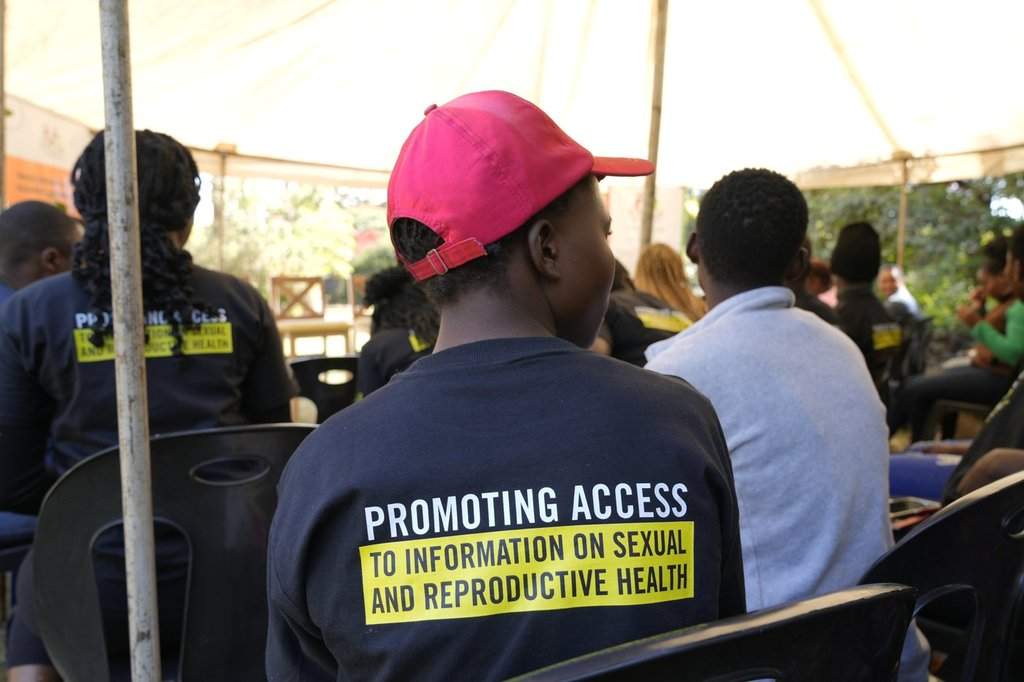
The waiting room smells of damp concrete and industrial bleach. It is 6:00 AM in a clinic on the outskirts of Nairobi, Kenya, and the morning chill still hangs in the air. A young woman named Amani—a hypothetical composite of the thousands of women who walk through these doors every year—sits on a vinyl chair, twisting the hem of her cardigan. She is nineteen. She is terrified.
Behind the intake desk sits a nurse who has spent twenty years providing family planning, maternal care, and HIV testing to this community. Today, the nurse is staring at a stack of federal compliance paperwork sent from an ocean away. She has a choice to make. If she mentions the word "abortion" to Amani—even to explain where to find a safe, legal facility down the road—her clinic will lose every penny of its funding from the United States government. For a different perspective, read: this related article.
The money stops. The supply of contraceptives runs dry. The HIV screening kits disappear.
This is not a bureaucratic hypothetical. It is the immediate, suffocating reality of the Mexico City Policy, known colloquially across the globe as the "global gag rule." Related analysis on the subject has been published by Al Jazeera.
When the political pendulum swings in Washington, the tremors are felt most violently in the poorest zip codes on earth. For decades, this policy has been flipped on by Republican administrations and repealed by Democratic ones. But when Donald Trump reinstated it, he didn’t just turn the switch. He expanded it into a sprawling net that caught billions of dollars in global health aid, paralyzing organizations that had nothing to do with abortion, but everything to do with keeping women alive.
Now, the pressure is mounting on leaders outside the United States to fill the void. Activists, lawmakers, and human rights organizations are turning their eyes toward powerful figures like Mark Carney, urging them to mobilize the financial and political capital needed to counter this ideological chokehold. Because while politicians argue in marbled halls, women in clinics like Amani’s are paying with their lives.
The Geography of an Echo Chamber
To understand how a pen stroke in Washington cuts off a lifeline in East Africa, you have to look at the mechanics of global health aid. The United States is the world's largest donor to global health. That gives it immense leverage.
The global gag rule dictates that any foreign non-governmental organization receiving US global health assistance cannot provide, counsel, refer, or lobby for abortion services. It does not matter if they use their own, non-US funds to do so. The mere mention of the procedure is enough to trigger financial excommunication.
Imagine a local health system as a finely tuned engine. You cannot remove the fuel pump and expect the headlights to keep working. When a clinic loses funding because it refuses to sign the pledge, it doesn't just stop talking about abortion. It closes its doors entirely.
Consider what happens next.
When those doors close, women lose access to modern contraceptives. When contraceptives disappear, unintended pregnancies spike. When unintended pregnancies spike in regions with fragile healthcare infrastructure, unsafe abortions skyrocket.
The data backs up this grim irony. Stanford University researchers studied the impacts of the policy during previous implementations and found a definitive pattern: in countries highly exposed to the restriction, the use of modern contraceptives dropped, and the rate of unsafe abortions actually increased. The policy achieves the exact opposite of its stated moral goal. It doesn't prevent abortion. It just makes it deadly.
The Invisible Stakes
The debate around this policy is often framed in the bloodless vocabulary of geopolitics and budget allocations. We talk about "funding streams," "diplomatic pressure," and "NGO compliance."
Let us translate those words into human terms.
Compliance means a midwife standing over a hemorrhaging patient, knowing exactly which hospital has the equipment to save her, but hesitating because a referral might violate the terms of a grant.
Funding streams mean a cardboard box in the back of a supply closet. Inside that box are cycles of birth control pills that will never be distributed. Without those pills, a mother of four who can barely afford to feed her current children will face another pregnancy that her body, and her wallet, cannot sustain.
It is a form of structural violence that relies on distance. If the lawmakers who draft these policies had to sit in that Nairobi clinic for a single afternoon, if they had to look into the eyes of a father whose wife died from a botched back-alley procedure because the local clinic was shuttered, the rhetoric would crumble. But distance breeds indifference. The Atlantic Ocean acts as a massive acoustic dampener, muffling the cries of those affected until they are nothing but background noise in the American political theater.
The Call for a New Architect
This is why the international community is no longer waiting for Washington to grow a conscience. The strategy has shifted from pleading with the United States to bypassing them entirely.
This is where figures like Mark Carney enter the frame. As a heavyweight in global finance and governance, Carney represents a class of leaders who possess the network and the credibility to build alternative financial structures. Activists are not just asking for charity; they are asking for systemic resilience. They are urging leaders to create a firewall that protects global health organizations from the volatile swings of American partisan politics.
The argument is simple: health security is economic security. You cannot build a thriving, sustainable economy in a developing nation if half the population is sidelined by a lack of basic bodily autonomy and reproductive healthcare. When women have access to family planning, child mortality drops, maternal health improves, girls stay in school longer, and communities stabilize.
To allow an ideological litmus test to dismantle decades of progress is not just a humanitarian failure; it is economic malpractice.
The money exists to fill this gap. The wealth locked in private equity, philanthropic foundations, and European state budgets could easily offset the losses imposed by the gag rule. What is missing is the architectural will to channel those resources into a permanent, independent fund that cannot be dissolved by an executive order signed half a world away.
The Legacy of the Unseen
Back in the clinic, the sun has risen high enough to burn off the morning mist. Amani leaves through the front door, clutching a small paper bag of vitamins. The nurse watches her go, then returns to her desk to look at the compliance form again.
The silence required by the policy is heavy. It fills the room, sitting between the provider and the patient like an uninvited ghost. It forces good doctors to lie by omission and turns vital community hubs into deserts of information.
The true cost of the gag rule is not measured in the dollars withheld, but in the silences enforced. It is measured in the whispered conversations in village markets, the hidden statistics of rural hospitals, and the quiet, preventable tragedies that never make the evening news. The world cannot afford to keep its ears closed to that silence. Every day that global leaders delay in building a permanent solution, another clinic door locks, another supply chain breaks, and another young woman walks out into the heat, entirely on her own.