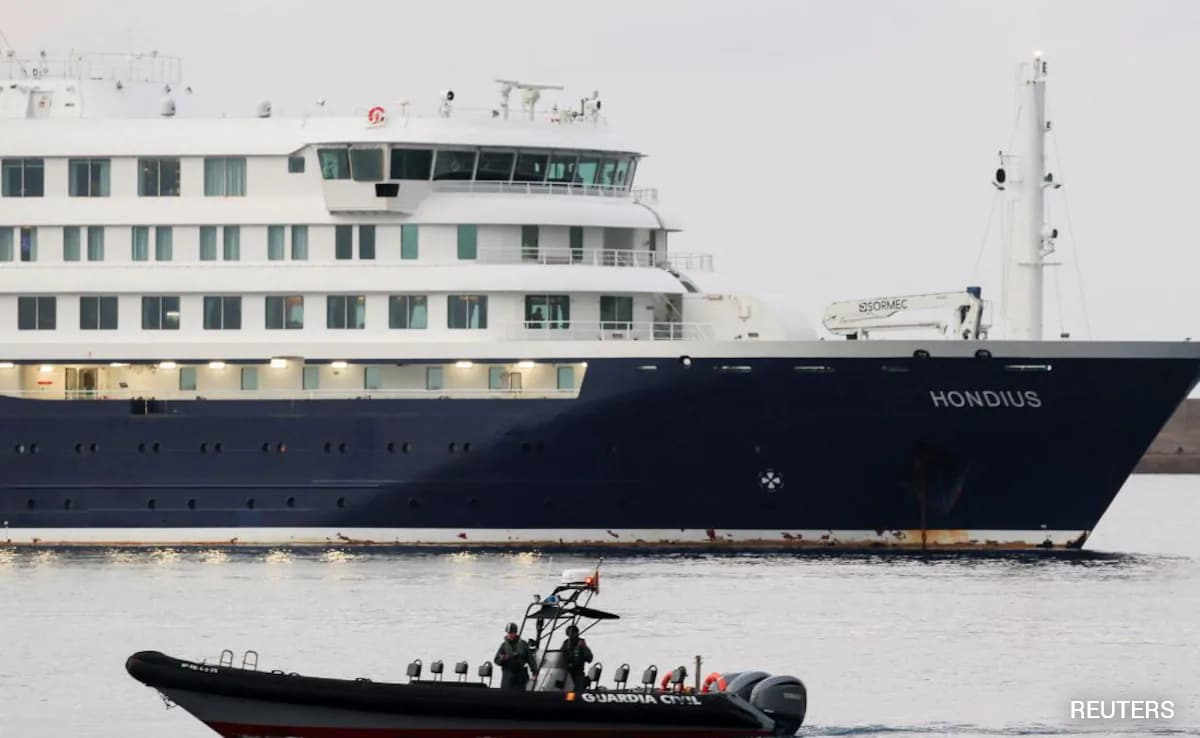
The MV Hondius has finally docked in Rotterdam, ending a harrowing journey across the Atlantic Ocean that triggered panic buttons inside global public health agencies. It sounds like the setup for a dystopian thriller. A luxury expedition vessel, isolated at sea, carrying a mysterious pathogen that causes rapid, fatal respiratory failure. By the time the ship arrived in the Netherlands on Monday morning, three passengers were dead, and international health protocols had forced a chaotic evacuation across multiple continents.
But let's look at the facts before anyone spins this into the next global lockdown scenario.
This is the first time a hantavirus outbreak has ever been documented on a cruise ship. This specific incident involved a highly dangerous pathogen called the Andes virus. While the phrase "hantavirus outbreak" understandably sounds terrifying, you don't need to stock up on toilet paper. The mechanics of this virus make a wider pandemic almost impossible, even though the situation on the ship itself was undeniably tragic.
The Anatomy of the MV Hondius Disaster
The trouble started quietly in April 2026. A Dutch male passenger boarded the vessel on April 1 after spending more than three months traveling through Argentina, Chile, and Uruguay. He became the index case. On April 6, he developed a fever, a bad headache, and mild diarrhea. Within five days, his lungs gave out, and he died right there on the ship.
Because the vessel was navigating remote waters, no immediate microbiological testing happened. His body was dropped off at the isolated British territory of Saint Helena on April 24. His wife, who was already showing gastrointestinal symptoms, went ashore with him.
The virus kept moving silently through the cabins. By late April, a British man caught it, developed severe pneumonia, and had to be airlifted from Ascension Island to an intensive care unit in South Africa. That's where laboratory testing finally blew the whistle on May 2. It wasn't Covid, flu, or a typical maritime norovirus. It was hantavirus.
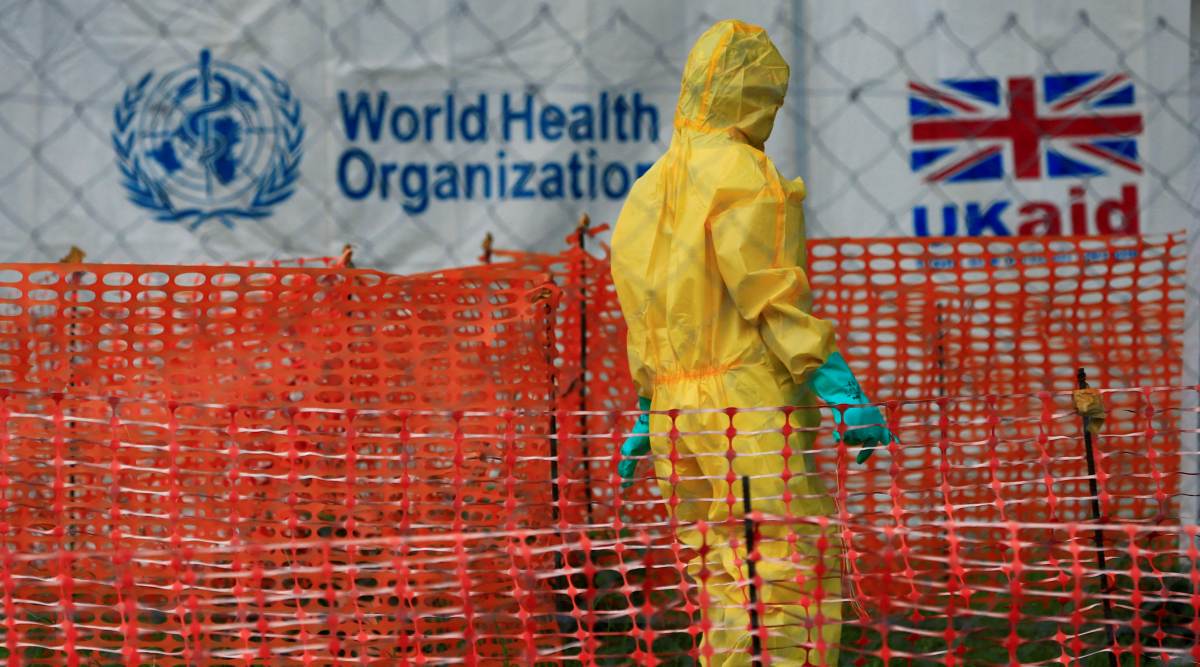
By the time the World Health Organization and the European Union intervened, a third passenger—a German national—had died. Cape Verde panicked and refused to let the ship dock or let anyone disembark. The ship was effectively stranded until Spain stepped up, allowing the MV Hondius to drop anchor in the Canary Islands so passengers could be evacuated by teams wearing full-body protective gear.
Why the Andes Virus Changes the Rules
If you know anything about classic hantaviruses, you know they're zoonotic. You usually catch them by inhaling dust contaminated with the urine, droppings, or saliva of infected rodents. You sweep out an old, rat-infested cabin, breathe in the particles, and get sick. You don't give it to your spouse, and you certainly don't start a cluster on a cruise liner.
The Andes virus variant changes that dynamic.
This specific strain, endemic to parts of South America, is the only hantavirus known to occasionally spread directly between humans. The European Centre for Disease Prevention and Control noted that because a cruise ship is a tightly closed ecosystem with shared social areas and dining rooms, every single person on board became a close contact. The virus likely jumped from the index patient to other passengers via close respiratory contact before anyone realized what they were dealing with.
The clinical progression of Hantavirus Pulmonary Syndrome is brutal. It starts with generic symptoms:
- High fever
- Muscle aches and fatigue
- Nausea, vomiting, or abdominal pain
Then comes the sudden turn. The virus attacks the endothelial cells lining the tiny blood vessels in your lungs. Fluid leaks directly into the air sacs. Within days, patients experience severe respiratory distress, acute shock, and a total collapse of blood pressure. The case fatality rate for this specific cruise outbreak sits at roughly 38%. It kills fast, and there is no cure, no specific antiviral pill, and no vaccine. Doctors can only offer supportive care like mechanical ventilation to keep you alive while your body fights.
Why a Global Lockdown Isn't Happening
A virus with a 38% kill rate that spreads between humans sounds like a worst-case scenario. However, epidemiologists aren't losing sleep over a global spread for several reasons.
First, human-to-human transmission of the Andes virus is incredibly inefficient. It requires prolonged, intimate contact in confined spaces to make the jump. It doesn't hang in the air for hours or spread through casual passing contact in a supermarket like Covid-19 or measles.
Second, the virus relies on a highly specific natural reservoir to sustain itself in the wild.
"The natural reservoir for the Andes virus is the long-tailed pygmy rice rat, a rodent native only to South America," health authorities confirmed.
Since these rats aren't running around European ports or North American cities, the virus cannot establish a permanent foothold outside its native habitat. Once the infected individuals are isolated and monitored, the chain of transmission stops completely.
Right now, a massive international dragnet is wrapping up. The remaining 100-plus passengers who left the ship in the Canary Islands have been flown to more than 20 countries under strict isolation protocols. In the United States, 18 Americans are being monitored at specialized high-containment biocontainment facilities, including the National Quarantine Unit in Nebraska and Emory University Hospital in Atlanta.
Because the incubation period can last anywhere from two to six weeks, the WHO mandated a strict 42-day quarantine for everyone exposed. We might see one or two more positive cases pop up from people who were already infected on the ship—like the Canadian passenger who tested positive just this weekend—but the boundaries are locked tight.
What Happens to the Ship Now
The MV Hondius is currently sitting at a secure dock in Rotterdam with just 25 crew members and two brave medical staff on board. None of the crew are currently showing symptoms, but they're headed straight into local quarantine facilities.
The next step is an aggressive, chemical decontamination of the entire vessel. Specialized cleaning crews are executing a deep-clean protocol based on Dutch public health directives. They'll avoid dry sweeping or vacuuming, which can kick viral particles back into the air, opting instead for heavy-duty liquid disinfectants and specialized personal protective equipment.
The ship’s owner, Oceanwide Expeditions, isn't backing down. They've already announced that they don't expect any long-term changes to their schedule. In fact, the vessel is currently booked to sail for an Arctic cruise out of Iceland on May 29, assuming public health officials clear the ship after inspection.
If you have travel plans or enjoy eco-tourism, you don't need to cancel your trips. But you do need to understand where you are going. If you are trekking through rural areas in South America where hantavirus is endemic, avoid sleeping on floors, keep food sealed in rodent-proof containers, and never disturb rodent nests. If you develop a sudden, unexplained fever after visiting these regions, skip the over-the-counter flu meds and get to an emergency room immediately. Inform the triage nurse exactly where you traveled. Early supportive care is the only thing that stands between survival and a very grim statistic.