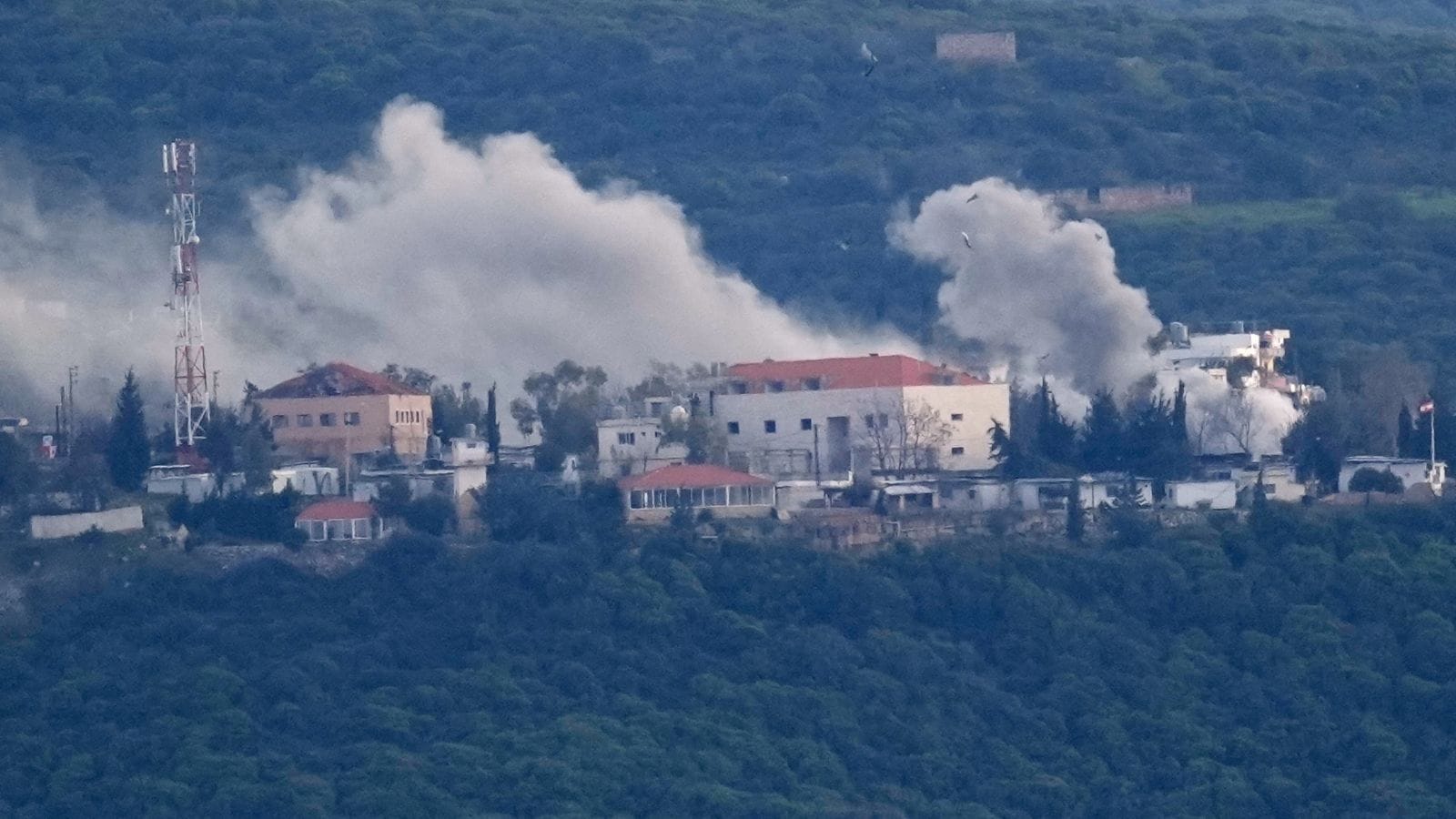
After four weeks of sustained kinetic exchange, the conflict between Washington and Tehran has reached a chillingly familiar state of paralysis. While the White House broadcasts signals of diplomatic movement, the reality on the ground in the Persian Gulf suggests a far more dangerous trajectory. We are witnessing a collision between an administration that views chaos as a precursor to a "deal" and a revolutionary regime that views any public concession as a death sentence.
The current standoff is defined by a massive gap between rhetoric and ballistic reality. Donald Trump remains convinced that the "maximum pressure" campaign—now escalated into active combat—will eventually force the Supreme Leader to the table. Tehran, meanwhile, has doubled down on its strategy of active resistance, calculated defiance, and the outright denial of any back-channel communications. This is not just a diplomatic disagreement. It is a fundamental misreading of how the other side survives.
The Mirage of Progress
The administration recently suggested that "significant progress" is being made behind the scenes. In the world of high-stakes intelligence, this usually means a third party—often Switzerland or Oman—has passed a message that wasn't immediately rejected with a middle finger. But to translate a lack of rejection into "progress" is a dangerous leap of logic that ignores the internal mechanics of the Iranian state.
For the Iranian leadership, the optics of negotiation under fire are radioactive. The Revolutionary Guard (IRGC) thrives on the narrative of the "Great Satan" at the gates. If they were to sit down now, on day 29 of a hot conflict, it would signal to their domestic base and their regional proxies in Lebanon, Iraq, and Yemen that the regime is brittle. Tehran’s denial of negotiations isn't just a PR move; it is a structural necessity for their survival.
Hard Power and Soft Signals
The technical reality of this conflict involves more than just aircraft carriers and drone swarms. It involves the intricate dance of proportionality. Both sides are currently trying to find the "sweet spot" of aggression—hitting hard enough to deter the other, but not so hard that it triggers a total regional conflagration.
However, the margin for error has vanished. When a missile hits a logistics hub or an oil facility, the sender might intend it as a "signal." The receiver, however, sees dead personnel and charred infrastructure. They respond not to the intent, but to the damage. This feedback loop is how "limited" conflicts turn into generational wars.
We are currently seeing a shift in Iranian tactics toward asymmetric maritime disruption. They cannot win a blue-water naval battle against the U.S. Navy. They can, however, make the Strait of Hormuz so expensive to insure that the global economy begins to scream. This is their primary lever, and they are pulling it with increasing frequency.
The Proxy Problem
A major factor being ignored by the broader commentary is the autonomy of regional actors. The U.S. often treats the Middle East as a chessboard where every piece is moved by Tehran. This is a mistake. Groups like the Houthis or various PMF factions in Iraq have their own local agendas. If a local commander decides to take a shot at a U.S. base, it can trigger a retaliatory strike that neither Washington nor Tehran actually wanted that day.
- Command and Control: The IRGC provides the hardware, but they don't always provide the "go" signal for every skirmish.
- The Escalation Ladder: Each proxy strike forces a U.S. response, which then forces Tehran to "defend" its partners, creating a staircase to nowhere.
- Intelligence Gaps: The fog of war is thickest when dealing with non-state actors who benefit from the very chaos the two superpowers are trying to manage.
Economic Warfare as a Kinetic Tool
We must stop viewing sanctions as a "peaceful" alternative to war. In the eyes of the Iranian civilian population and the ruling elite, the total blockade of their oil exports is an act of war. When the U.S. tightened the noose on the Central Bank of Iran, they essentially declared that the Iranian economy was a legitimate military target.
The current military strikes are simply the physical manifestation of an economic policy that has been in place for years. The "Day 29" we are seeing now is actually Year Six of a sustained campaign to collapse the Iranian state. The mistake the West makes is assuming that a collapsing state will choose a peaceful exit. History suggests they are more likely to lash out, hoping to make the cost of the siege unbearable for the besieger.
The Failed Logic of Maximum Pressure
The core premise of the current U.S. strategy is that an adversary will eventually trade its core identity for economic relief. This has rarely worked in the history of modern geopolitics. From North Korea to Cuba, regimes that view themselves as being in an existential struggle do not trade their "swords" for "plowshares" just because the currency is devaluing.
In fact, the pressure often empowers the most radical elements within the target country. In Tehran, the "reformist" factions have been utterly sidelined. Why would anyone argue for diplomacy when the U.S. is actively hitting targets on Iranian soil? The hardliners now have all the evidence they need to claim that the West is only interested in regime change, not regional stability.
Tactical Reality vs. Political Theater
The White House needs a win. With an election cycle always looming or in progress, the "Great Dealmaker" persona requires a breakthrough. This leads to the inflation of minor diplomatic echoes into "signals of progress." But a signal is not a treaty.
Tehran, conversely, needs to maintain its dignity. Their culture of "Moharram"—of sacrifice and standing against overwhelming odds—is the bedrock of their political legitimacy. They would rather preside over a starving, besieged nation that stands tall than a prosperous one that bent the knee to Washington. This is the fundamental disconnect that no amount of "deal-making" rhetoric can bridge.
Assessing the Military Balance
If this escalates into a full-scale invasion, the math changes significantly. A ground war in Iran would make the occupation of Iraq look like a training exercise. The geography alone is a nightmare for an invading force.
- Mountainous Terrain: Iran is a natural fortress.
- Strategic Depth: Unlike smaller nations, Iran has the space to retreat, regroup, and conduct a long-term insurgency.
- Population Density: Urban warfare in cities like Tehran or Isfahan would result in casualties that the American public is not prepared to accept.
The U.S. military knows this. The "veteran" voices in the Pentagon are the ones currently acting as the brakes on the more hawkish elements in the administration. They understand that while they can win every "battle," they might lose the war before it even begins.
The Role of Global Energy Markets
The world is watching the price of Brent Crude with bated breath. Every time a tanker is harassed or a refinery is struck, the global economy takes a hit. The irony is that the very people the U.S. is trying to protect—the global consumer—are the ones paying the "tax" for this conflict at the pump.
If the Strait of Hormuz is even partially blocked, we are looking at a global recession. This gives Tehran a "nuclear option" that doesn't involve actual nuclear weapons. They know that the U.S. appetite for war disappears the moment the domestic economy starts to crater. This is their ultimate insurance policy, and they are prepared to use it if they feel the regime is truly at risk of falling.
The Information Vacuum
In any conflict, truth is the first casualty, but in the U.S.-Iran standoff, truth was buried years ago. We are operating in an environment of total disinformation. The U.S. releases "declassified" imagery that is often ambiguous. Iran releases heavily edited footage of its own "victories."
Sifting through this requires looking at what the players do, not what they say.
- Movements: Are the carriers moving toward or away from the coast?
- Cyber: Is there a spike in digital infrastructure attacks? (This is often the most accurate barometer of real-world tension).
- Insurance: What are the Lloyd's of London rates for Gulf shipping?
These metrics tell a story of a conflict that is expanding, not contracting. The talk of "negotiations" is a smoke screen designed to keep the markets calm and the domestic opposition quiet.
The Strategic Miscalculation
The greatest risk right now is not a planned invasion, but a mistake. A nervous radar operator, a misidentified drone, or a stray missile hitting a high-value target could trigger the "automatic" response protocols that both sides have in place. Once those gears start turning, it becomes almost impossible for political leaders to stop them without looking weak.
We have seen this before. In 1988, the U.S. accidentally shot down an Iranian civilian airliner. In 2020, Iran did the same to a Ukrainian jet during a period of high tension. These are the "black swan" events that turn Day 29 into Day 1,000.
The administration’s "signals" of progress are likely an attempt to create a rhetorical off-ramp, but for an off-ramp to work, the other side has to want to take it. Right now, Tehran sees the off-ramp as a trap. They see a U.S. president who withdrew from the JCPOA (the nuclear deal) and wonder why they should trust any new signature.
Why the Crisis Persists
The conflict persists because it serves the internal political needs of both sets of leaders. For Trump, a "foreign threat" is a classic tool for national unity and a way to project strength. For the Supreme Leader, the "American threat" is the glue that holds a fractured domestic population together.
When both sides benefit more from the existence of the conflict than from its resolution, the war doesn't end. it just changes shape. We are no longer in a phase of traditional diplomacy. We are in a phase of competitive endurance. The question is no longer "who is winning?" but "who can bleed longer?"
The white noise of "progress" and "denial" will continue. It is a scripted part of the dance. To find the reality of the situation, look past the headlines and toward the buildup of logistics in the region. Look at the increasing frequency of "unclaimed" cyberattacks on critical infrastructure.
The stalemate is the strategy. Until one side experiences a systemic failure—either an economic collapse in Tehran or a political shift in Washington—the missiles will keep flying, and the diplomats will keep talking to empty rooms.
Review your own supply chains and energy dependencies now. The "Day 29" headline is a distraction from the fact that we are entering a semi-permanent state of low-intensity regional war. Prepare for the long haul, as the rhetoric of "deals" is merely the soundtrack to a much darker reality on the water.