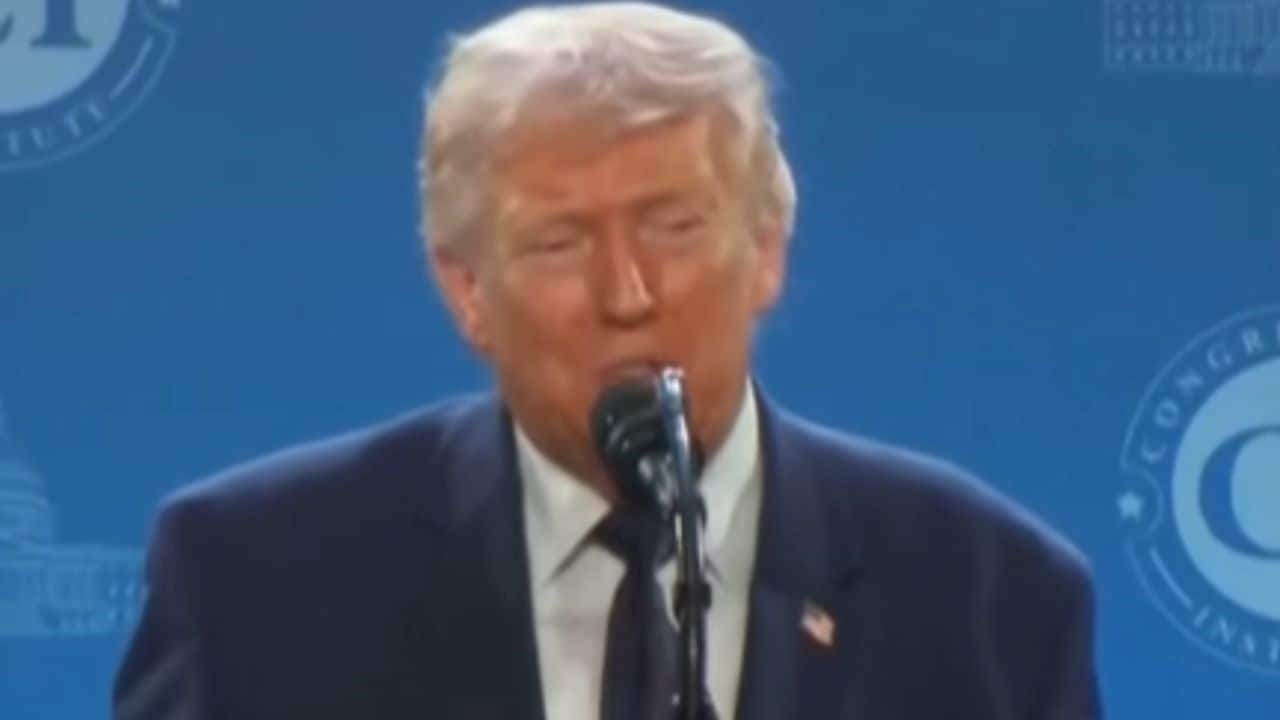
Pundits are currently hyperventilating over a 37% approval rating. They look at the spike in gas prices from the Iran conflict and the 62% disapproval ceiling and conclude that the GOP is walking into a November meat grinder. It is a comforting narrative for those who crave a return to "normalcy." It is also completely wrong.
The mistake is treating a 2026 approval rating like it’s 1994 or 2010. We are no longer in an era where "approval" translates to "voter intent." In a hyper-polarized, post-consensus America, approval is a measure of affection, not a predictor of behavior. Trump is effectively "losing" the polls to win the only thing that matters: the floor, not the ceiling.
The Approval Trap and the Myth of the Swing Voter
The "lazy consensus" says that low approval ratings among independents—currently sitting at a dismal 25%—guarantee a Democratic landslide. This assumes the existence of a rational "swing voter" who weighs the president's performance and switches sides based on the price of milk.
That voter is a ghost.
In reality, the 2026 midterms will be a "turnout floor" battle. High disapproval among Democrats doesn't mean they will vote; it often means they are exhausted. Meanwhile, Trump’s 85% hold on the GOP base, even amid a war and 7% inflation, suggests a hardened core that doesn't care about "performance." They care about "alignment."
I have watched political consultants burn through $100 million trying to move "approval" numbers by three points. It is a vanity metric. If you want to know who wins in November, stop looking at who "approves" of Trump. Look at who hates the alternative more. Negative partisanship is the only high-octane fuel left in American politics.
The Volatility Discount
The media treats the Iran conflict and the subsequent oil spike as a death knell for the incumbent. They cite the 76% disapproval of Trump’s handling of the cost of living.
Here is the counter-intuitive reality: Crisis creates a vacuum that only a strongman persona fills.
While the "polite" majority disapproves of the chaos, a significant portion of the electorate views that same chaos as proof that the "system" is finally being dismantled. To a Trump voter, a high disapproval rating from the "establishment" is a feature, not a bug. It’s a KPI (Key Performance Indicator) that he is actually doing what he was sent to do: break things.
Imagine a scenario where gas hits $6.00 a gallon. The traditional logic says the incumbent dies. The 2026 logic says the incumbent blames "globalist sabotage" and "green energy extremists," turning a policy failure into a cultural mobilization.
Why Geographic Sorting Renders National Polls Obsolete
National polls are a statistical hallucination. We don't have a national election in November; we have 435 micro-elections, most of which are rigged by geography and gerrymandering.
The Brookings Institution notes that 84% of House seats were won by more than 10 points in the last cycle. This "safety margin" means that a 5-point dip in national approval is mathematically irrelevant in the vast majority of districts.
- The "Big Sort" is complete. Republicans live with Republicans. Democrats live with Democrats.
- Turnout is the only variable. High disapproval often leads to "doom-scrolling" and apathy for the opposition, while "persecution narratives" drive the incumbent's base to the booths.
- The Senate Map. The 2026 Senate map is a nightmare for Democrats, regardless of Trump's popularity. They are defending "toss-up" seats in states where the "disapproval" of Trump doesn't outweigh the "distrust" of the federal bureaucracy.
The Institutional Failure of Polling
We have to admit the downside of this contrarian view: it relies on the idea that the electorate is no longer moved by material reality. This is a grim prospect for democracy, but a necessary one to accept for accurate analysis.
Polling failed in 2016 because it couldn't find the "hidden" voter. It failed in 2020 because it overestimated the "blue wave." In 2026, it is failing because it asks the wrong question.
Instead of asking "Do you approve of the President's job performance?", pollsters should be asking "Is there any circumstance under which you would vote for the other party?" For 90% of the country, the answer is a flat "No."
The Bottom Line
Trump’s 37% approval rating is not a sign of weakness; it is a sign of a fully leveraged political brand. He has shed the "soft" supporters who were never going to show up in a midterm anyway. He is left with a concentrated, high-potency base that thrives on being in the minority.
The midterms won't be decided by the people who "disapprove" of Trump in a phone survey while they’re buying groceries. They will be decided by the people who feel that their entire way of life is under siege.
Stop looking at the dip. Watch the floor. The floor isn't moving.