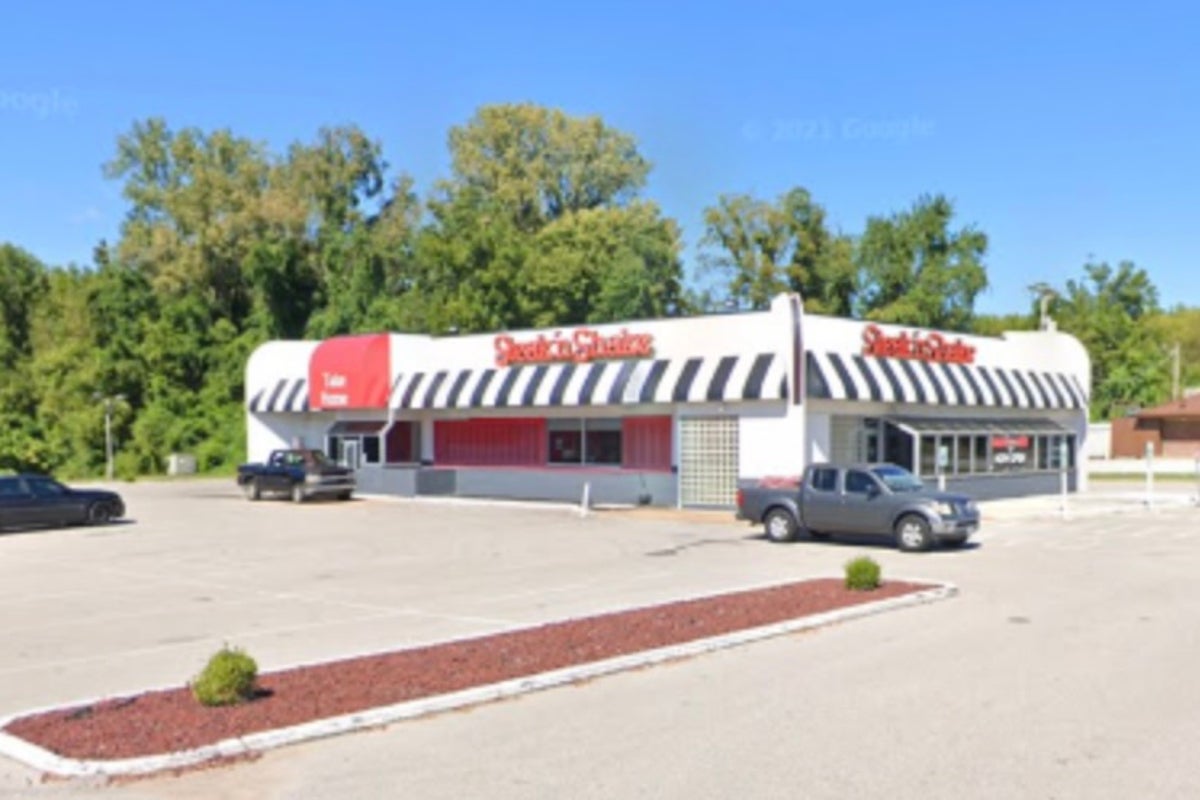
The fatal shooting of a 22-year-old woman at a St. Louis Steak ‘n Shake drive-thru began with a dispute over an order of onion rings. It ended with a life extinguished and a community grappling with the reality that mundane service friction now carries a potential death sentence. This is no longer an isolated tragedy or a "freak occurrence." It is the latest data point in a terrifying trend where the American fast-food window has become a high-conflict zone.
In April 2026, the details of the St. Louis incident remain a grim blueprint for modern service industry violence. What should have been a minor correction of a food order escalated with shocking speed. Words were exchanged. Tensions spiked. A firearm was produced. Within seconds, a routine interaction centered on a $4 side dish transformed into a homicide investigation. While the immediate focus remains on the shooter and the victim, the broader investigation reveals a systemic collapse of conflict resolution in public spaces and a service model that is increasingly incompatible with an armed, agitated public.
The Friction Point of the Modern Drive-Thru
Drive-thrus are designed for maximum throughput and minimum human connection. This "efficiency at all costs" model creates a pressure cooker environment. When a mistake occurs—like missing onion rings—the physical barrier of the car and the window creates a strange psychological disconnect. Customers feel emboldened by the anonymity of their vehicles, while overworked employees, often earning minimum wage, are pushed to their breaking point by demanding metrics and skeletal staffing.
The St. Louis tragedy highlights the "friction point"—that specific moment where a customer’s dissatisfaction meets an employee’s exhaustion. In decades past, this might have resulted in a shouted insult or a demand for a manager. Today, the ubiquity of concealed carry and the erosion of social filters mean that the "correction" for a cold burger or a missing item is increasingly lethal. We are witnessing the total disappearance of the middle ground in public disputes.
The Architecture of Impatience
Fast food corporations have spent billions optimizing the "seconds-to-service" ratio. AI-driven menu boards, predictive ordering, and dual-lane drive-thrus are all calibrated to shave seconds off the wait time. However, this obsession with speed has a dark side. It conditions the consumer to expect perfection at an impossible pace. When the system fails, the psychological snap is more violent because the expectation of instant gratification was so high.
The physical design of the drive-thru itself contributes to the danger. Unlike a sit-down restaurant where a manager can pull a disgruntled patron aside to a quiet corner, the drive-thru is a narrow, high-stakes funnel. There is no "back out" option once you are in the queue. You are trapped between the car in front and the car behind. This "trapped" sensation can trigger a fight-or-flight response during an argument, escalating a verbal spat into a physical confrontation before anyone has a chance to breathe.
Training for a War Zone
Service industry workers are now being asked to act as amateur de-escalation experts, security guards, and mental health first responders. Yet, the training they receive rarely goes beyond how to operate the POS system or ensure the fries stay crispy. At the St. Louis Steak ‘n Shake, like so many other chains, the staff found themselves at the center of a situation they were never equipped to handle.
Traditional "customer is always right" mantras are not just outdated; they are dangerous. When a customer becomes aggressive over a minor order error, telling an employee to "kill them with kindness" is an invitation to victimization. The industry needs a radical shift in how it protects its front-line workers. Some franchises have begun installing bullet-resistant glass at drive-thru windows, a move that signals a chilling acceptance of the current climate. But glass only protects the person behind it; it doesn’t address the person in the parking lot or the bystander in the next car.
The Missing Onion Ring as a Proxy for Rage
It is easy to mock the idea of someone dying over onion rings. The absurdity of the motive is what makes the headline stick. But the onion rings are never really the point. They are merely the catalyst for a reservoir of untapped rage that many people are carrying into their daily interactions. Economic anxiety, social isolation, and a general sense of powerlessness find a convenient, vulnerable target in the person behind the service counter.
Investigators in the St. Louis case are looking into whether there were prior stressors involved, but the reality is often simpler. A person who is already on the edge sees a missing item as a personal affront—a final straw in a day or a life full of perceived slights. When you combine that volatility with easy access to firearms, the drive-thru becomes one of the most dangerous places in the American landscape.
Corporate Liability and the Duty of Care
The legal fallout from these incidents is shifting. Historically, corporations have been shielded from liability for the criminal acts of third parties. However, as these shootings become more frequent, the "unforeseeable" defense is crumbling. If a drive-thru is a known site for frequent conflict, the parent company may have a legal obligation to provide security or alter its service model.
Wait-time metrics are now being scrutinized in civil litigation. Attorneys are arguing that by incentivizing extreme speed and creating high-pressure environments, companies are contributing to the volatility of the workplace. If a manager berates a worker for a slow "window time," and that worker then snaps at a frustrated customer, the corporate policy becomes a link in the chain of violence.
The Erosion of the Third Place
Sociologists often talk about the "Third Place"—social environments separate from the two usual social environments of home and the workplace. Fast food outlets used to function as a version of this, especially in lower-income neighborhoods. They were community hubs. The move toward drive-thru-only or "dark kitchen" models has stripped away the last remnants of social cohesion in these spaces.
When you remove the dining room, you remove the witnesses. You remove the "public" from the public house. What remains is a purely transactional, sterile exchange that is easily dehumanized. It is much harder to shoot someone when you have been sitting in the same room with them for twenty minutes. It is much easier when they are just a voice through a crackling speaker and a hand reaching out of a window.
A Failed Social Contract
The St. Louis shooting isn't just a story about a crime; it’s a story about the collapse of the American social contract. We have reached a point where we can no longer guarantee that a trip to a restaurant won't result in a casualty count. The "St. Louis Steak ‘n Shake" incident is a mirror held up to a society that has prioritized the right to be angry over the right to be safe.
Solving this requires more than just "better training." It requires a fundamental reassessment of how we value service work and how we regulate the presence of weapons in everyday spaces. Until then, every drive-thru lane remains a gamble. The next time an order is wrong, the stakes aren't just a refund or a replacement. They are life and death.
The industry is currently at a crossroads. Some brands are doubling down on automation, replacing human window workers with AI voices and conveyor belts to remove the human element entirely. This might stop the arguments, but it doesn't solve the underlying rage; it just moves it to the next available target. The "de-humanization" of the service industry is a band-aid on a bullet wound.
The 22-year-old woman in St. Louis didn't die because of onion rings. She died because we have built a world where convenience is king, anger is a primary currency, and a mistake at a drive-thru is considered a capital offense.
Stop looking at the menu and start looking at the person in the window.



