The media is currently hyperventilating over a "declaration of war" following the hypothetical removal of Ayatollah Ali Khamenei. They want you to believe we are on the precipice of a global reset. They are wrong. Headlines are screaming about escalation, regional firestorms, and the collapse of the Islamic Republic. This is a fundamental misunderstanding of how modern theological autocracies function.
Removing a figurehead—even one as entrenched as the Supreme Leader—is not a "declaration of war" in the traditional sense; it is a stress test for a system specifically designed to survive it. If you think the disappearance of one 80-year-old man triggers the immediate demise of a forty-year-old revolutionary apparatus, you haven't been paying attention to how power actually aggregates in the Middle East.
The Succession Myth: Why the Vacuum is Already Filled
The "lazy consensus" suggests that Khamenei’s death creates a power vacuum. This is a Western projection. In reality, the Office of the Supreme Leader (the Beyt-e Rahbari) is a massive bureaucratic organism. It doesn't rely on charisma; it relies on a complex web of patronage, intelligence, and the Islamic Revolutionary Guard Corps (IRGC).
Succession isn't a chaotic scramble in the streets. It is a calculated, cold-blooded boardroom negotiation. The Assembly of Experts has already vetted the shortlist. Whether the seat is filled by Ebrahim Raisi’s successor or Mojtaba Khamenei, the policy remains identical: survival through regional friction.
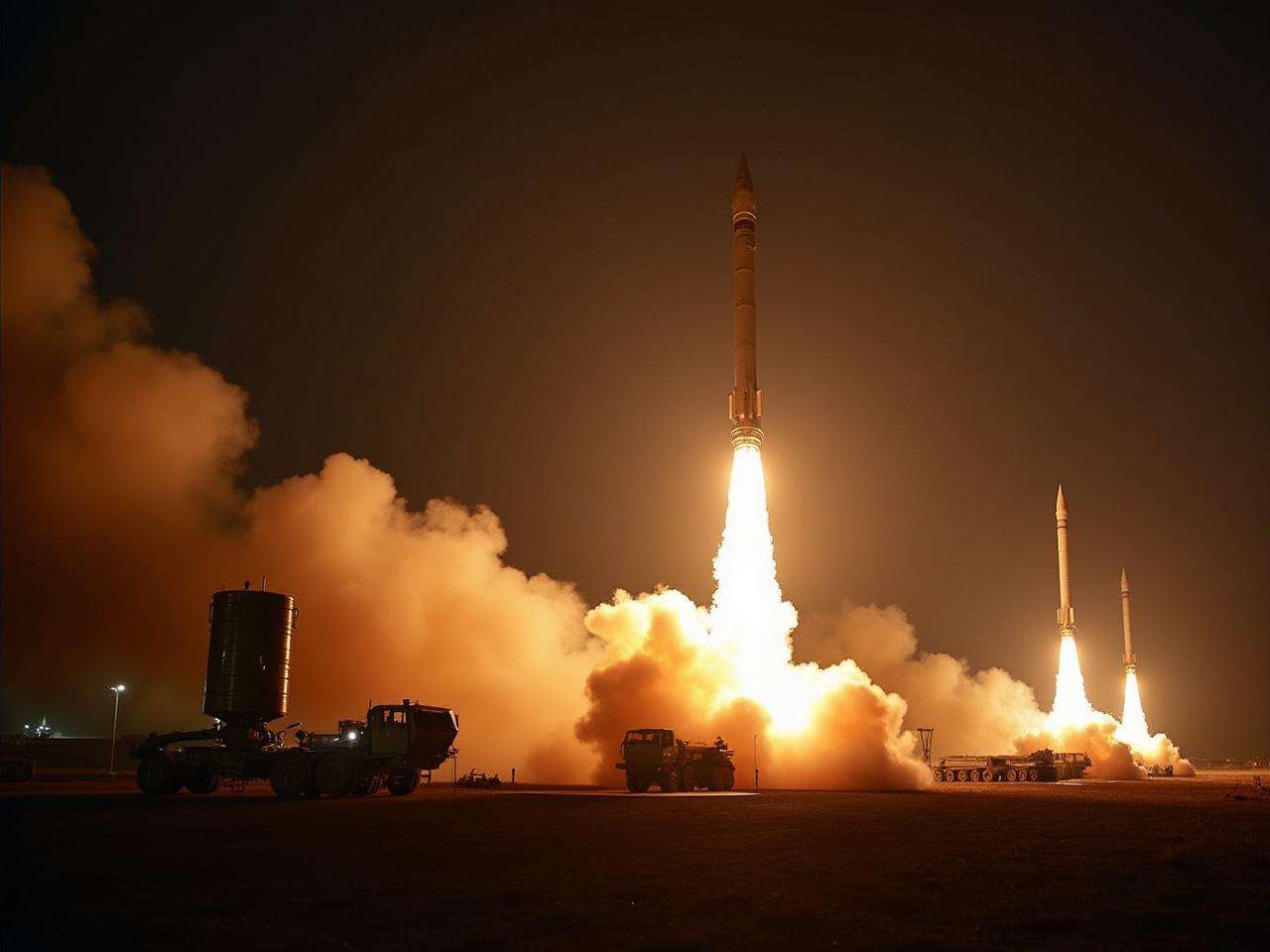
We often ask "Who is next?" when the real question is "What stays the same?" The answer is everything. The IRGC does not care who sits on the throne as long as the budget for the Quds Force remains untouched and the ballistic missile program continues to iterate.
The Logic of Professional Paranoia
I have watched analysts make the same mistake with the Soviet Union, with Iraq, and with North Korea. They assume that top-down systems are fragile. The opposite is true. These systems are "antifragile" in the sense defined by Nassim Taleb. They thrive on the very shocks that would dismantle a disorganized democracy.
The Iranian state has spent decades preparing for this exact moment. They have built a redundant command structure where the "clerical" leadership provides the ideological veneer, while the "praetorian" guard (the IRGC) handles the actual mechanics of the state.
- Fact Check: The Supreme Leader does not command the military in the way a US President does. He sets the "direction."
- The Reality: The IRGC owns roughly 30% to 50% of Iran’s GDP through various front companies and engineering firms (Khatam-al Anbiya). They aren't going to let a "declaration of war" or a dead leader disrupt their balance sheet.
Why "Declaration of War" is a Meaningless Term
The competitor article claims that killing a leader is a declaration of war. That's a 20th-century mindset. We have been in a state of "gray zone" warfare with Tehran for years. Cyberattacks, maritime sabotage, and proxy skirmishes are the new baseline.
A formal declaration of war requires two defined sides willing to commit to total kinetic engagement. Neither side wants that. Iran knows a total war ends with the total destruction of its energy infrastructure. The West knows a total war ends with a global oil shock that makes 1973 look like a minor inconvenience.
If you want to understand the stakes, stop looking at the religious rhetoric and start looking at the flow of crude through the Strait of Hormuz. Roughly 21 million barrels of oil pass through that chokepoint every day. That is the only statistic that matters. Everything else is theater for the domestic audience.
The Failure of "Decapitation" Strategy
The West has a strange obsession with "decapitation" strikes. We think if we cut off the head, the body dies. We tried this with Qasem Soleimani. The result? The Quds Force didn't vanish; it simply decentralized.
When you kill a leader in a revolutionary system, you don't kill the revolution. You sanctify it. You provide the regime with the one thing it needs to suppress internal dissent: a martyr.
The "People Also Ask" sections on search engines are flooded with queries like "Will Iran collapse if Khamenei dies?" The honest, brutal answer is: No. Internal collapse requires a viable, organized alternative with its own security apparatus. Currently, the only people in Iran with guns and radios are the ones who benefit from the current system.
The High Cost of the "Status Quo"
The real danger isn't war. The real danger is the continuation of the current stalemate under a more aggressive, younger leadership that feels it has something to prove.
The downside of my contrarian view? It’s boring. It doesn’t sell newspapers. It suggests that instead of a climactic explosion, we face another thirty years of grinding sanctions, proxy deaths, and nuclear brinkmanship.
Forget the Riots, Watch the Banks
If you want to know if the regime is actually in trouble after a leader falls, don't look at the protests in Tehran. Look at the capital flight.
- Are the families of the IRGC elite moving money to Dubai or Istanbul?
- Is the rial devaluing faster than its usual abysmal rate?
- Are the internal security forces (Basij) hesitating to use force?
Until those three things happen simultaneously, the "declaration of war" is just noise. The Iranian state is a corporate entity wrapped in a flag and a prayer rug. It is focused on institutional preservation, not suicidal escalation.
Stop waiting for the big explosion. The transition will be quiet, clinical, and devastatingly effective. The king is dead; long live the system.
Move your focus away from the person and onto the infrastructure. The next Supreme Leader is already a ghost in the machine.