Every conventional foreign policy analyst and media outlet is currently hyperventilating over a map posted on social media. The commentary treats the declaration of a critical global energy chokepoint as a piece of geopolitical performance art or a literal cartographic expansion. Critics call it aggressive madness. Supporters call it masterclass trolling.
Both sides are missing the plot entirely. Don't forget to check out our previous article on this related article.
Focusing on whether a stretch of water can be rebranded as domestic property ignores the structural mechanics of modern maritime economics and energy security. I have watched markets panic over symbolic lines on maps for decades while the actual infrastructure underneath rots or gets bypassed entirely. The lazy consensus assumes that political posturing determines the flow of global crude. It does not. Flow is dictated by insurance rates, physical security, and alternative logistical routing.
Let us dismantle the core premise driving this entire media circus. If you want more about the context here, Reuters offers an in-depth breakdown.
The Myth of Cartographic Sovereignty in Energy Markets
The lazy narrative states that if a superpower claims a maritime route, traffic resumes and stability returns. History proves the exact opposite. Sovereignty without functional insurance and cleared shipping lanes is just a colored pixel on a screen.
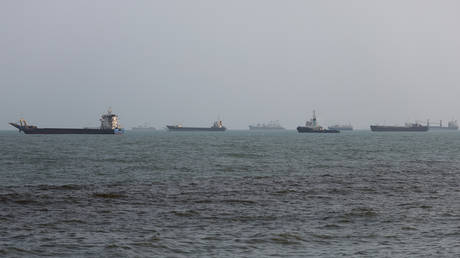
Data from maritime tracking firms demonstrates that commercial throughput through this vital corridor remains severely depressed compared to pre-conflict baselines. You cannot decree your way past physical risks. Tanker captains do not care about social media posts; they care about whether their hulls will absorb a mine or a drone strike.
When political leaders argue about who owns a bottleneck, they distract from the reality that the global energy supply chain has already adapted around the friction. Importers are forced into expensive, long-term structural workarounds. By the time a political ego is satisfied with a new label on a map, the economic damage to downstream refiners and consumers is already locked in.
The Real Numbers Nobody Is Talking About
Let us look at the actual mechanics of the blockade and the subsequent economic fallout.
- Throughput Collapse: Daily vessel transits have plummeted to a fraction of their normal volume.
- Cost Absorption: The financial burden is not borne by politicians or diplomats. It is absorbed by end-users paying inflated premiums for refined products.
- Alternative Routing: Land-based pipelines bypassing the chokepoint entirely have seen utilization surge, proving that the market's primary goal is avoidance, not conquest.
Imagine a scenario where a corporate CEO tries to solve a severe supply chain blockage by renaming the loading dock on company letterhead while security guards lock the gates from the inside. Wall Street would eviscerate that leadership team within hours. Yet when governments apply this exact logic to international straits, pundits treat it as profound strategy. It is not strategy. It is a distraction from operational failure.
The Dangerous Flaw in People Also Ask Queries
When observers ask whether a nation can legally annex an international waterway, they are asking the wrong question. The question implies that legality or ownership is the primary constraint on global trade.
The correct question is: How long can modern industrial economies absorb a permanent tax on energy transit before structural inflation permanently alters manufacturing viability?
The answer is terrifyingly brief. Energy markets do not care about flags. They care about flow rates. Every week that a crucial transit corridor remains constrained by military standoffs, industrial capacity shifts permanently toward higher-cost alternatives.
The Unspoken Downside of Strong-Arm Logistics
My contrarian stance comes with a stark admission. Relying purely on naval power projection to force open trade routes creates a permanent state of high-cost volatility. It transforms temporary geopolitical disputes into permanent structural inflation.
When you rely on military escorts and blockades rather than diplomatic normalization and secure maritime agreements, you institutionalize risk. Refiners price that risk into every barrel. The consumer pays the tax. Claiming a territory does not lower insurance premiums; it raises them because it signals an indefinite state of hostility.
Stop looking at the maps. Stop analyzing the rhetoric. Look at the balance sheets of the shipping conglomerates and the insurance syndicates refusing to underwrite the passage. That is where the truth lives.