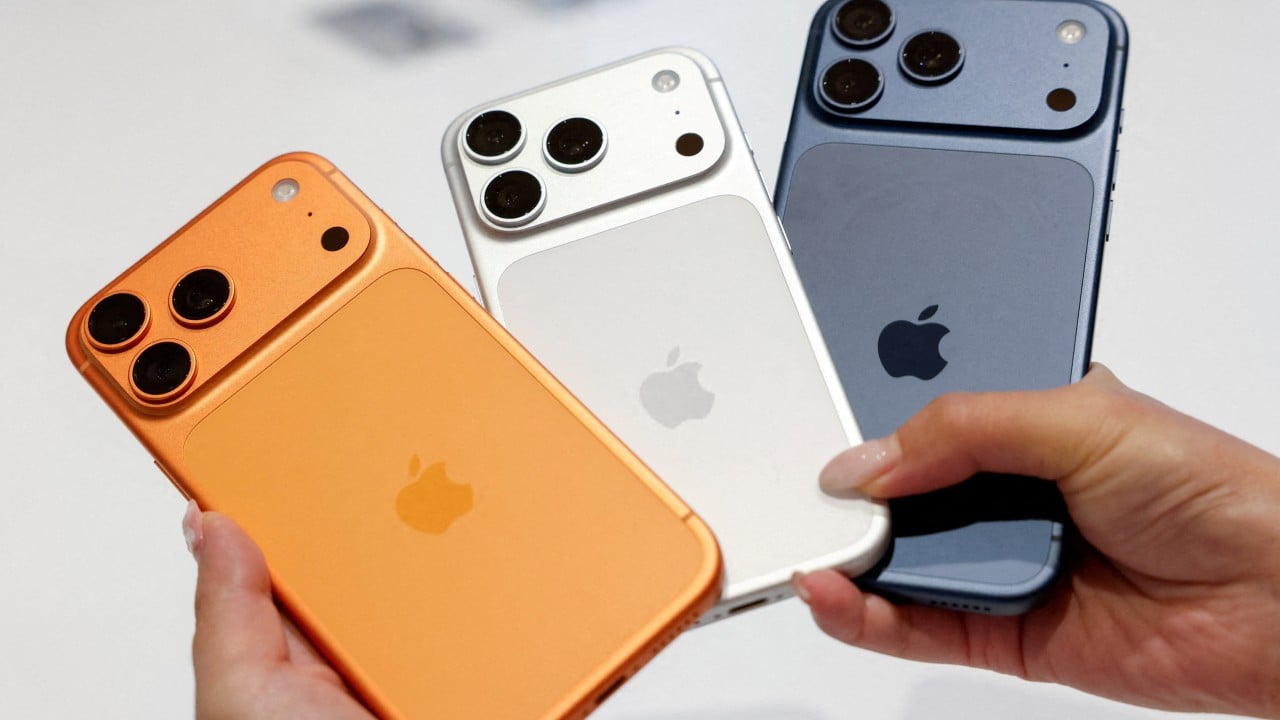
The coffee in Bangsar is always better when you aren't looking over your shoulder. But for a specific group of activists, journalists, and high-ranking officials in Malaysia’s bustling capital, the simple act of placing a smartphone on a cafe table has become an exercise in quiet anxiety. They are not worried about a common thief snatching the device. They are worried about what is already inside it.
His name—for the sake of this story—is Adam. He is a mid-level civil servant with a penchant for transparency and a habit of keeping detailed notes on his iPhone. Adam represents the silent target of a new breed of invisible warfare. He didn't click a suspicious link. He didn't download a pirated movie. Yet, his entire life—his encrypted messages, his daughter’s school schedule, the very microphone in his pocket—has been exported to a server he will never see.
This is the reality of DarkSword.
The technical reports call it "sophisticated spyware." They describe it as a suite of tools designed to exploit the vaulted security of iOS. But to Adam, those are just words. The reality is the chilling realization that his "secure" device has been turned into a 24-hour informant. DarkSword isn't just a piece of code; it is a ghost in the machine that has found a particularly welcoming home in the Malaysian digital ecosystem.
The Mechanics of an Invisible Intrusion
Most people view their phones as digital vaults. We trust the biometrics, the end-to-end encryption, and the heavy-handed security updates from Cupertino. DarkSword relies on that trust. It thrives in the gaps we assume don't exist. Unlike the clumsy phishing attempts of the last decade, this tool often utilizes "zero-click" or "one-click" vectors.
Imagine receiving a message that looks like a standard system notification or a blurred image from a known contact. By the time you’ve even wondered why the message appeared, the exploit has already run. It seeks out vulnerabilities in the WebKit engine or the kernel—the very brain of the operating system. Once it finds a crack, it doesn't just peek inside. It moves in.
The spyware gains what developers call "root" access. In plain English, the software now has more authority over the phone than the person holding it. It can bypass the encryption of apps like WhatsApp and Signal not by breaking the encryption itself, but by grabbing the messages before they are even scrambled, or after they are decrypted for the user to read. It sees what you see. It hears what you hear.
Why Malaysia?
The spread of DarkSword across Malaysia isn't a random occurrence. Geopolitics and the commercialization of surveillance have created a perfect storm. For years, the trade of "lawful intercept" tools was a shadowy business conducted in the backrooms of defense conventions. Now, it’s a booming global industry. Companies across Europe, Israel, and Asia are selling these capabilities to anyone with a large enough budget and a plausible reason to track "threats."
In Malaysia, the definition of a threat can be fluid. As the country navigates a complex era of political transition and social reform, the demand for information has never been higher. Information is the ultimate currency in a landscape where power shifts like sand. When a tool like DarkSword becomes available on the gray market, it doesn't stay in the hands of "the good guys" for long. It trickles down. It spreads.
Consider the cost. A single license for high-end spyware can run into the hundreds of thousands of dollars. When such an investment is made, it isn't used on common criminals. It is used on the people who shape the narrative of a nation. This is targeted surveillance, surgically precise and devastatingly effective.
The Emotional Weight of a Compromised Life
For the victims, the discovery is rarely a "eureka" moment. It is a slow, agonizing crawl of suspicion. Adam noticed his battery was draining faster than usual. His phone felt warm to the touch while sitting idle. Then came the social consequences. A private conversation he had about a sensitive policy proposal was suddenly mirrored in an anonymous blog post. A meeting he planned in secret was attended by people who shouldn't have known he was there.
The psychological toll is profound. When your most intimate space—your pocket—is violated, the world begins to shrink. You stop leaving your phone in the room during important talks. You stop typing things you wouldn't want shouted from a rooftop. You begin to self-censor.
This is the true victory of spyware. It doesn't need to arrest you to silence you. It just needs to make you afraid of your own shadow.
The Myth of the Perfect Patch
Whenever a report surfaces about DarkSword or its cousins, the standard response is a software update. "Apple has released a patch," the headlines proclaim. And while updates are vital, they are a reactive shield against a proactive sword.
The developers of DarkSword are not teenagers in a basement. They are highly paid engineers, often with backgrounds in national intelligence agencies. They spend their days hunting for "Zero-Days"—vulnerabilities that the manufacturer doesn't even know exist yet. When one hole is plugged, they have three more ready to go. It is a digital arms race where the defense is always one step behind the offense.
We are living in an era where the hardware we rely on for our livelihoods is fundamentally untrustworthy under enough pressure. For the average user, the risk of a DarkSword infection is low. But for the pillars of a functioning democracy—the press, the judiciary, the opposition—the risk is a constant, humming frequency in the background of their lives.
Reclaiming the Digital Ground
How does one fight an invisible enemy? It starts with a shift in mindset. We have to stop viewing our devices as invincible.
Security is not a product you buy; it’s a practice you live. For those in high-risk categories in Malaysia, this means adopting "Lockdown Mode" on iOS, a scorched-earth security setting that strips away features to reduce the attack surface. It means using hardware security keys. It means, occasionally, leaving the phone in a signal-blocking pouch or another room entirely.
But individual action is a band-aid on a systemic wound. The proliferation of DarkSword in Malaysia highlights a desperate need for international regulation of the surveillance trade. As long as these tools can be sold with zero transparency and no accountability, the digital sovereignty of every citizen is at risk.
Adam still goes to that cafe in Bangsar. He still drinks his coffee and he still works for a better version of his country. But his iPhone now stays in his bag, powered down, a silent black slab of glass and metal. He realized that the most important conversations are the ones that can't be intercepted because they happen face-to-face, heart-to-heart, far away from the prying eyes of a digital sword.
The ghost is still in the machine. But it only has power if we pretend it isn't there.
The screen flickers. A notification arrives. You reach for your pocket. Before you touch the glass, you pause. You wonder if you are truly the only person reading this.
Would you like me to analyze the specific technical indicators of DarkSword or help you draft a digital security protocol for high-risk environments?
-copy.jpeg?width=1200&auto=webp&trim=0%2C0%2C0%2C0)
