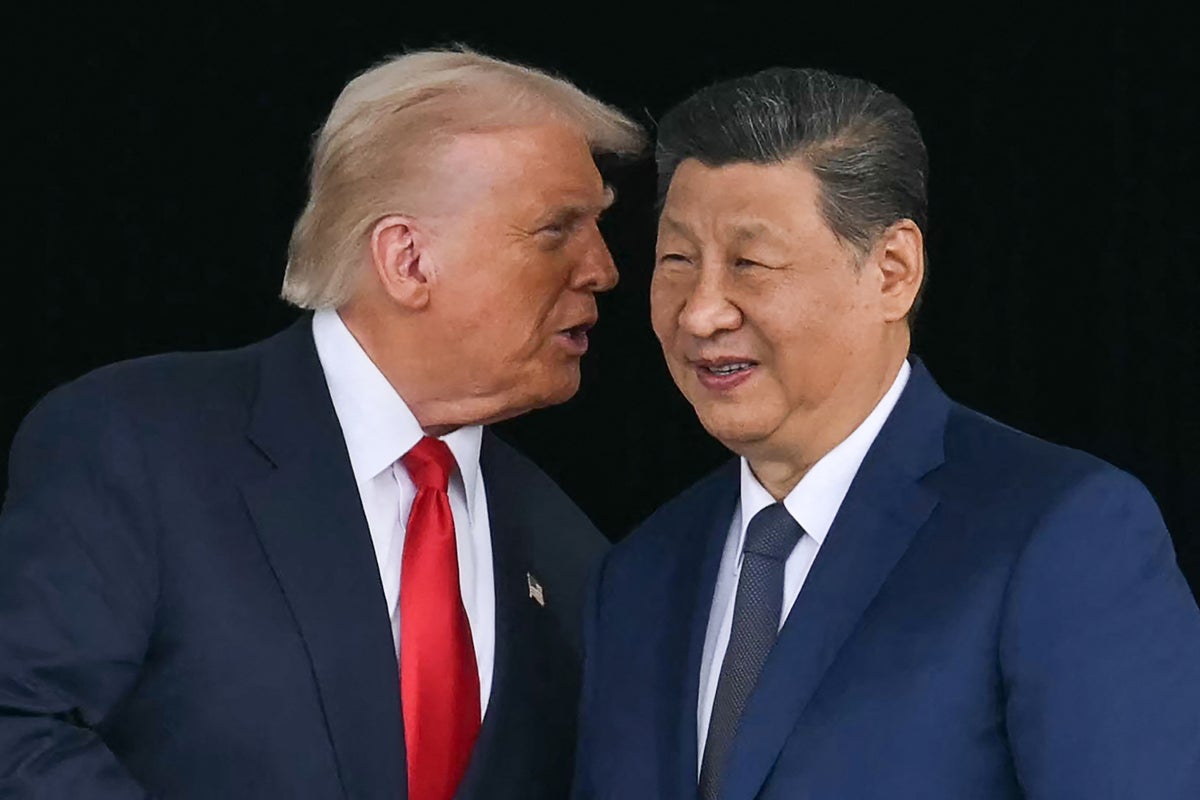
The media obsession with Bob Iger’s "tightrope walk" regarding the Trump administration is a hallucination. Pundits love a narrative of fragile corporate diplomacy, painting Disney as a wounded giant that must grovel to avoid regulatory execution. They are wrong.
The "lazy consensus" suggests that a Disney CEO is a diplomat first and a businessman second. It posits that if Iger doesn't play nice with the White House, the Justice Department will shred their mergers and the tax code will become a weapon of war. This view ignores the reality of how late-stage media conglomerates actually function. Disney’s biggest threats aren't coming from a desk in Washington; they are coming from a server farm in Los Gatos and a hardware lab in Cupertino.
The Myth of the Regulatory Guillotine
The standard argument is that Trump’s administration will use antitrust laws to punish "woke" Disney. I’ve sat in rooms where executives sweat over these possibilities, but the math rarely supports the panic. Antitrust action is a slow, grinding machine. It takes years—often longer than a presidential term—to move from a filing to a forced divestiture.
If the administration tries to block a hypothetical Disney acquisition or force a sell-off of ESPN, they have to prove consumer harm. In a world where TikTok and YouTube dominate attention spans, proving Disney is a monopoly is an uphill battle that most career DOJ lawyers aren't interested in fighting for a headline.
Disney isn't a fragile startup. It is a massive, diversified engine. If one valve is pinched by policy, the pressure simply moves to another. When the Florida government went after Disney’s special tax district, the "experts" predicted a catastrophic collapse of their Orlando operations. Instead, Disney flexed its capital expenditure muscle, pivoted its legal strategy, and the theme parks continued to print money.
Culture War is a Distraction From Unit Economics
The loudest voices claim Disney’s "politics" are killing the brand. This is a fundamental misunderstanding of why Disney had a rough couple of years. It wasn't about a diverse cast or a public statement on legislation. It was about bad movies and a broken streaming model.
- The Content Problem: The Marvels didn't underperform because of a political agenda. It underperformed because the script was weak and the audience was exhausted by "homework" viewing.
- The Streaming Trap: Disney+ lost billions because the industry prioritized subscriber growth over Average Revenue Per User (ARPU).
Bob Iger’s real test isn't whether he can get a Christmas card from the Oval Office. It’s whether he can make Disney+ profitable enough to offset the death of linear television. The "Trump Factor" is a rounding error compared to the terrifying reality that the cable bundle—Disney's former golden goose—is being incinerated.
Stop Asking if Disney is "Woke" and Start Asking if it’s Efficient
People also ask: "Will Disney change its content to please the new administration?"
The question is flawed. Disney shouldn't change its content to please a politician; it should change its content to please its customers. If a story feels like a lecture, audiences tune out. That isn't a political failure; it’s a failure of storytelling.
The unconventional advice Iger needs to follow? Stop apologizing.
Every time a corporate leader tries to "bridge the gap" with a hostile administration, they look weak to their employees and disingenuous to their critics. Disney’s strength lies in its ability to create universal mythology. Mythology doesn't need a lobbyist.
The Strategy of Strategic Silence
The most effective way for a CEO to handle a polarizing political climate is to become boring. Not safe—boring.
- Kill the Press Release: Stop weighing in on every cultural flashpoint that doesn't directly impact the bottom line.
- Focus on the Flywheel: Reinvest in the parks. The parks are the only part of the business with a true moat. You can't download a ride on Space Mountain.
- Aggressive Consolidation: If the administration wants to talk antitrust, let them. In the meantime, Disney should be stripping away the bloat of its middle management and refocusing on high-margin IP.
The Mirage of Federal Retaliation
There is a fear that the administration will target Disney’s intellectual property, specifically by messing with copyright extensions.
Let's be clear: Steamboat Willie is already in the public domain. The "Mickey Mouse Protection Act" era is over. Disney has already transitioned to a brand-based protection strategy rather than a pure copyright one. They protect the character of Mickey as a trademark, which doesn't expire.
Washington can bark at Disney's heels all day. They can tweet about their movies and complain about their "values." But as long as Disney controls the most valuable IP library in human history and maintains a physical presence in Florida that is "too big to fail" for the state's economy, the CEO's relationship with the President is a theatrical performance, not a business necessity.
The Cost of the "Peace"
If Iger spends his remaining tenure trying to appease a populist movement, he will alienate the creative talent that actually builds the company’s value. Creative people don't want to work for a company that checks its scripts with a government censor—whether that censor is official or self-imposed out of fear.
The downside to my contrarian approach? Short-term stock volatility. The market hates a feud. When a President attacks a company by name, the algorithms sell first and ask questions later. But for the long-term investor, this is noise.
Disney is a 100-year-old institution that has survived world wars, depressions, and multiple technological shifts that were supposed to kill it. A four-year or eight-year administration is a blink of an eye in the life of a brand that owns the childhoods of three generations.
The real "test" for Disney's boss isn't navigating a political administration. It is surviving the irrelevance of the movie theater and the cannibalization of the television. If Iger solves the math of the 21st-century media consumer, the occupant of the White House is irrelevant.
Stop looking at the polls. Start looking at the ARPU.
Disney doesn't need a peace treaty. It needs a hit.