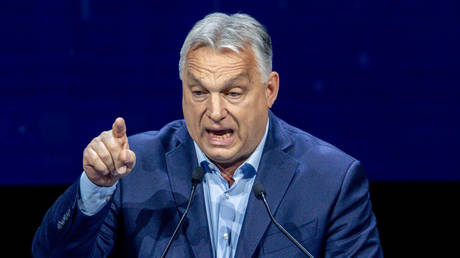
Viktor Orban is playing a game of 1970s geopolitics in a 2026 world that has already moved on. His recent demands that Ukraine "stop making excuses" and restart the flow of Russian crude through the Druzhba pipeline aren't just provocative—they are economically illiterate. The Hungarian Prime Minister clings to the southern branch of the Druzhba as if it’s a lifeline, when in reality, it’s a leash.
The "lazy consensus" in Central European energy circles is that Druzhba is irreplaceable because of its specific chemical compatibility with regional refineries. That’s a convenient lie used to mask a lack of capital investment and a fear of genuine market competition. Orban argues that there is "no excuse" for the stoppage. I’ll give him three: structural obsolescence, the death of the "Urals discount," and the total failure of the Hungarian energy model to adapt to a high-volatility era.
The Myth of the Technical Moat
For years, MOL (the Hungarian oil and gas giant) and its regional peers have hid behind the "technical impossibility" of switching away from Russian Urals crude. They claim the metallurgy of their refineries is calibrated specifically for the sulfur-heavy Russian blend.
This is a choice, not a law of physics.
Refineries are modular. I have seen midstream operators in the North Sea and the Gulf Coast retool for entirely different grades of crude in eighteen months when the price signals were strong enough. Orban’s "no excuse" rhetoric ignores the fact that Hungary has had since 2014—and certainly since 2022—to finalize the Adria pipeline expansion from Croatia. They didn't do it because Druzhba was cheap and easy. They mistook a temporary subsidy for a permanent strategic advantage.
The real technical hurdle isn't the sulfur content; it's the lack of will to pay the CAPEX required for desulfurization units and metallurgical upgrades. By demanding Ukraine flip the switch, Orban is essentially asking a sovereign nation under siege to subsidize Hungary’s refusal to modernize its industrial base.
The Urals Discount is a Ghost
The primary argument for the Druzhba pipeline has always been the price. Historically, Urals crude traded at a significant discount to Brent. This "Urals-Brent spread" allowed Hungarian and Slovakian refineries to print money while the rest of Europe paid market rates.
That math is broken.
- Transit Taxes: Ukraine has hiked transit fees, and rightfully so. The cost of maintaining infrastructure under constant bombardment is astronomical.
- Middleman Premiums: Sanction-skirting and complex insurance maneuvers have added layers of "friction costs" to Russian oil.
- Alternative Efficiency: Western European refineries, forced to pivot to North Sea, West African, and American light sweet crude, have found that higher-quality oil yields more high-value products (like jet fuel and low-sulfur diesel) with less waste.
When you factor in the geopolitical risk premium, Druzhba oil isn't "cheap." It’s an unhedged liability. Orban is screaming for a return to a pricing model that the market has already priced into oblivion.
The Sovereignty Paradox
Orban loves to talk about Hungarian sovereignty. Yet, he is fighting tooth and nail to remain dependent on a single point of failure.
True energy sovereignty in 2026 is defined by diversity of supply and interconnectivity. If your entire national economy shutters because a valve gets turned in a neighboring country, you aren't sovereign; you're a hostage. The Adria pipeline from the Croatian port of Omišalj is the obvious solution. Croatia has already signaled readiness to increase capacity.
The bottleneck isn't Ukraine. The bottleneck is Budapest’s refusal to sign the long-term off-take agreements required to fund the Croatian expansion. Orban wants the security of a long-term partner with the flexibility of a spot-market buyer, and he’s getting neither.
Ukraine’s Strategic Necessity
Let’s dismantle the "People Also Ask" nonsense about whether Ukraine is being "unfair."
Question: Is Ukraine violating its transit contracts?
Answer: Contracts are not suicide pacts. When a country is in a state of total war against the supplier of the commodity, the "sanctity of contract" becomes secondary to national survival.
Ukraine isn't "making excuses." They are executing a strategic decoupling. Every barrel of oil that flows through Druzhba provides a sliver of revenue to the Kremlin and a point of leverage against Kyiv. Expecting Ukraine to maintain the very infrastructure that funds its own destruction is the height of diplomatic delusion.
The Hard Truth for Investors
If you are holding positions in Central European energy firms reliant on Druzhba, you are betting on a ghost. The pipeline is a legacy asset in a terminal decline. The future of the region’s energy security lies in:
- Reversible Interconnectors: Building pipes that can move gas and oil in both directions, breaking the East-to-West monopoly.
- Refinery Reconfiguration: Investing the billions in profits made during the "cheap Russian oil" era back into units that can process WTI (West Texas Intermediate) or Nigerian Bonny Light.
- Storage Aggression: Building out strategic reserves that allow for six months of autonomy, rather than the sixty-day buffers currently favored.
Orban’s complaints are the death rattle of a failed procurement strategy. He spent a decade betting on a "special relationship" that provided a few points of GDP growth at the cost of total systemic vulnerability. Now that the bill has come due, he's looking for a scapegoat in Kyiv.
The Druzhba pipeline will never return to its former glory. Even if the pumps start humming tomorrow, the trust is gone, the insurance markets have moved on, and the technical debt of the refineries has become too high to ignore.
Stop looking at the pipeline map. Look at the port capacities in the Adriatic and the North Sea. That is where the power is.
Instead of demanding a restart to a broken system, the smart move—the only move—is to treat the Druzhba as if it’s already empty. Build for the world that exists, not the one Orban remembers.
Rip out the old desulfurization units. Sign the Croatian contracts. Pay the market rate for freedom. Anything else is just noise from a leader who realized too late he’s on the wrong side of the ledger.
Stop waiting for the flow. It’s over.