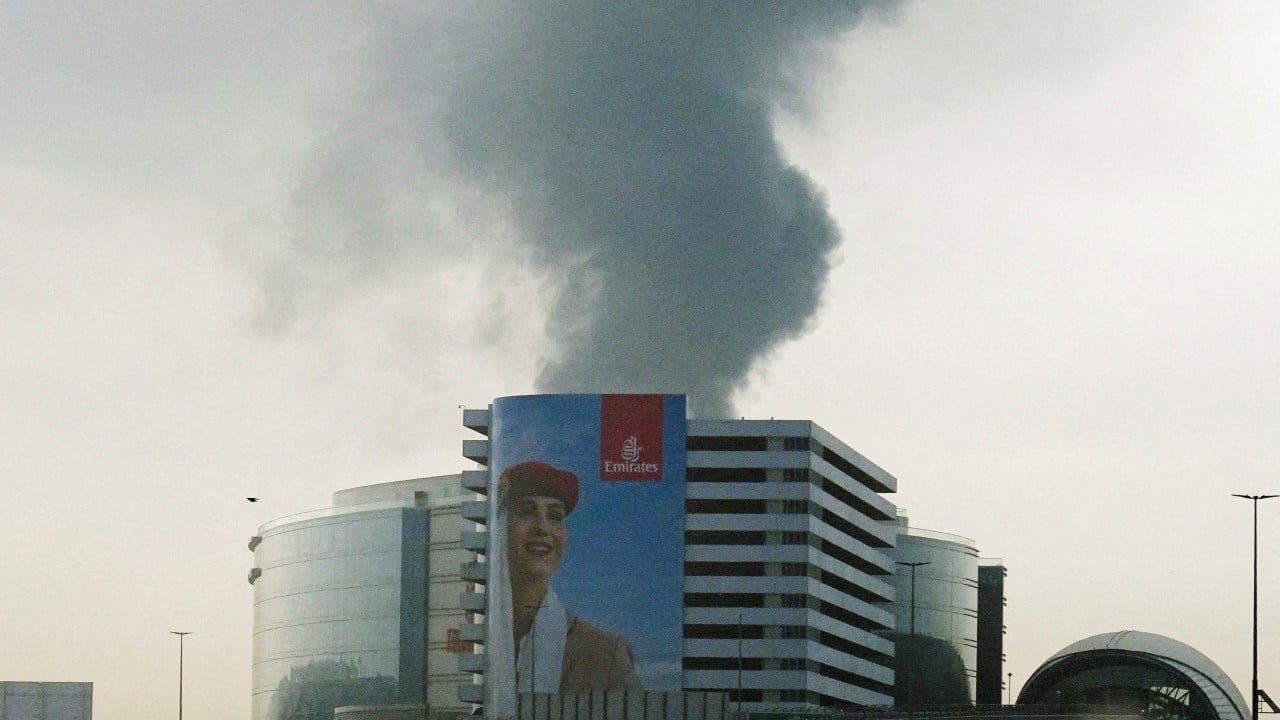
For years, the marketing pitch for Dubai was simple and effective. It was the neutral ground of the world, a gleaming city-state where capital from Singapore, Hong Kong, and Tokyo could sit safely while the rest of the Middle East dealt with its historical baggage. That illusion of total insulation has finally cracked. As regional tensions escalate into a sustained cycle of kinetic warfare and maritime disruption, Asian investors are discovering that "neutrality" is a luxury that geography might no longer permit.
The shift is not about a single event but a fundamental change in how risk is priced. Institutional money from the East, traditionally more conservative and sensitive to geopolitical volatility than Western speculative capital, is re-evaluating the United Arab Emirates not as a safe harbor, but as a high-stakes hedge.
The Maritime Chokepoint Reality
Asian economies are built on the predictable flow of goods through narrow waterways. When missiles begin impacting commercial vessels in the Red Sea and the Gulf of Oman, the economic impact hits Seoul and Shanghai long before it touches London or New York. For an Asian family office or a sovereign wealth fund, a real estate play in Downtown Dubai is no longer just a property investment. It is a bet on the continued openness of the Strait of Hormuz.
The logistics of the region are its greatest strength and its most glaring vulnerability. If the maritime routes are compromised, the entire logic of Dubai as a global redistribution hub falters. Asian investors who once saw the city as a gateway to Africa and Europe are now looking at the insurance premiums for cargo and the soaring costs of freight. They are realizing that a physical asset in a conflict-adjacent zone carries a hidden "instability tax" that doesn't appear on a developer’s glossy brochure.
Capital Flight and the Neutrality Trap
The UAE has spent decades perfecting the art of walking a geopolitical tightrope. It maintains deep security ties with the West while expanding trade with China and keeping communication lines open with regional adversaries. This was the ultimate selling point for Asian businesses looking to avoid the binary "us vs. them" choices of modern diplomacy.
However, neutrality is becoming harder to maintain when the conflict moves from the shadows into the open. As the US and its allies ramp up sanctions and pressure on regional actors, the pressure on Dubai’s banking sector increases. For a Japanese bank or a Singaporean investment firm, the risk isn't just a physical strike on a building; it is the risk of "regulatory contagion." They fear a scenario where the UAE is forced to pick a side, potentially leaving Asian capital caught in the crossfire of international compliance wars.
The Real Estate Mirage
Dubai’s property market has historically been the primary vehicle for Asian retail and institutional investment. To the casual observer, the skyline suggests a boom that refuses to quit. Look closer at the data, and the story changes. While the headline prices remain high, the velocity of transactions from East Asian buyers has begun to stutter.
Investors are moving away from the "buy and hold" strategy that defined the last decade. Instead, we are seeing a shift toward liquid assets and short-term plays. The logic is clear. If the regional temperature rises another few degrees, you cannot pack a luxury villa into a suitcase and fly it back to Singapore. The move toward liquidity suggests a growing lack of confidence in the long-term stability of the regional status quo.
The Problem of the Single Engine
Most of the capital flowing into Dubai from Asia is seeking diversification. This is ironic, given that Dubai’s economy remains heavily tethered to regional peace. If the UAE's neighbors are in turmoil, the tourism, aviation, and retail sectors—the three pillars of the Dubai miracle—suffer almost instantly.
Consider a hypothetical scenario where an investor from Hong Kong puts $50 million into a commercial development project. They are not just betting on the UAE’s internal governance; they are betting that no regional actor will decide that disrupting Dubai’s aviation hub is a viable way to exert political pressure. That is a massive, unhedged bet on the rational behavior of actors who may not have economic stability as their primary goal.
The Competitive Rise of Safe Havens
While Dubai navigates this storm, other markets are aggressively courting the same Asian capital. Cities like Singapore and even parts of Southern Europe are positioning themselves as truly "boring" alternatives. In the world of high-finance, boring is beautiful.
The UAE is finding that its greatest competition isn't Riyadh or Doha, but the reality of a changing world order. Asian investors are increasingly focused on food security, energy transition, and supply chain resilience. While Dubai offers low taxes and high-end lifestyle amenities, it does not yet offer the strategic depth that some of its global competitors provide. The glitter of the Burj Khalifa is losing its luster when compared to the structural security of markets further removed from the world’s most volatile fault lines.
The Infrastructure Vulnerability
For an investigative eye, the most concerning factor is the hyper-concentration of infrastructure. Dubai’s economy relies on a few critical nodes: the DP World ports, the international airports, and the desalination plants. These are masterpieces of engineering, but they represent a concentrated risk profile that is hard to ignore in an era of drone warfare and cyber-sabotage.
Asian technical analysts are beginning to factor these "single points of failure" into their risk models. If a desalination plant is taken offline, a desert metropolis becomes uninhabitable within days. This isn't alarmism; it is basic contingency planning that large-scale investors perform before committing billions in long-term capital. The "what if" scenarios that used to be dismissed as extreme are now standard line items in due diligence reports.
The Currency Peg and Macro Risk
The UAE Dirham is pegged to the US Dollar. For Asian investors, this has traditionally provided a sense of stability. It removed the headache of currency fluctuations and provided a predictable anchor for their returns. But as the world moves toward a more fragmented financial system, this peg is becoming a double-edged sword.
If the US continues to weaponize the dollar through sanctions, and if the UAE remains tethered to that system, Asian investors—particularly those from China—face a unique set of risks. They are beginning to wonder if their assets in Dubai could be frozen or seized due to shifts in the Washington-Beijing relationship, regardless of what the UAE government wants. The peg, once a symbol of reliability, is now a tether to a superpower conflict that many in Asia are desperate to avoid.
A Change in the Guard
We are seeing a new profile of Asian investor entering the market. The old guard, looking for 20-year stability, is being replaced by "opportunity capital." These are players who thrive on volatility. They are not looking to build the next great landmark; they are looking to flip assets during the dips or provide high-interest bridge loans to developers who can no longer find traditional financing.
This shift changes the soul of the city. When a market becomes dominated by short-term speculators rather than long-term stakeholders, the quality of development and the stability of the social fabric begin to erode. The city becomes a casino rather than a hub.
The Cost of Staying Relevant
To keep Asian money flowing, the UAE is having to spend more on defense, diplomacy, and internal security. This increased overhead is rarely discussed in the business press, but it is a massive drain on the national treasury. Every dollar spent on a sophisticated missile defense system is a dollar not spent on the economic diversification that was supposed to make the country immune to the whims of the oil market.
The pressure is mounting. The Asian investor is no longer the naive outsider fascinated by the desert's transformation. They are sophisticated, battle-hardened, and increasingly skeptical. They see the construction cranes, but they also see the shadows of the regional conflict getting longer as the sun sets over the Gulf.
Stop looking at the skyline and start looking at the insurance certificates. If you want to know the future of Asian investment in Dubai, ignore the government press releases and look at the cost of insuring a tanker entering the Gulf. That number tells you everything you need to know about the real price of doing business in a paradise that is finally being forced to acknowledge its neighbors.