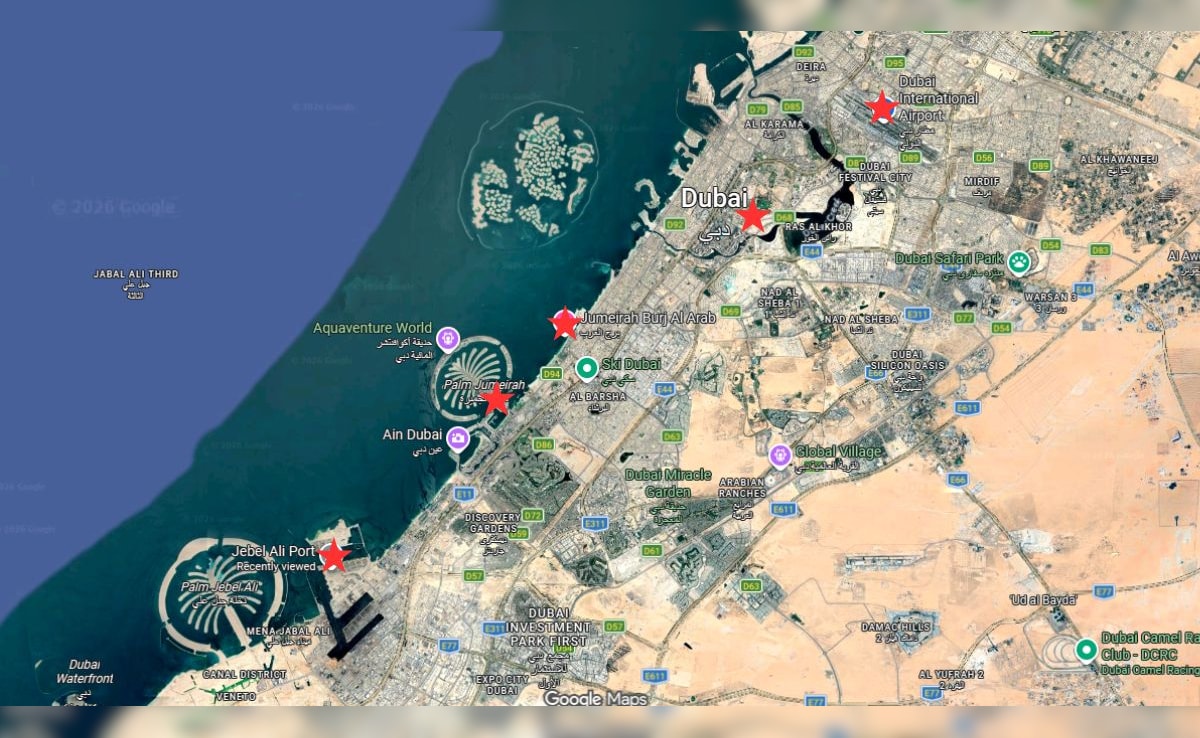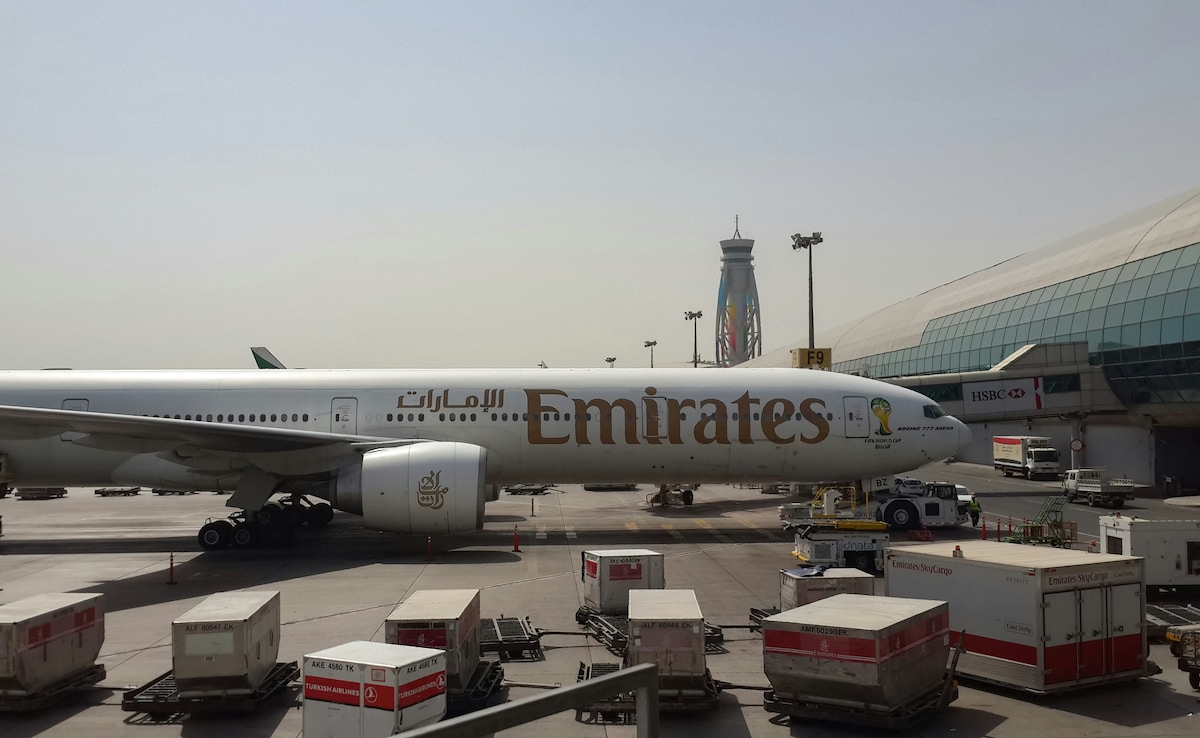
The official statement from Dubai Airports was clinical, brief, and designed to prevent a regional stock market sell-off. It confirmed four injuries following an "incident" during a period of heightened regional activity. But for those watching the radar feeds and the sudden, frantic diversions of long-haul flights from London and Singapore, the clinical tone didn't match the reality on the ground. Dubai International (DXB), the busiest international hub on the planet, saw its carefully managed clockwork grind to a halt as regional tensions spilled into its airspace. This wasn't just a technical glitch or a localized fire. It was a direct hit to the perceived invincibility of the United Arab Emirates’ infrastructure.
When a major hub like DXB sustains injuries and operational pauses during Iranian missile or drone strikes, the global aviation network doesn't just stutter. It breaks. The four injuries reported are the human cost of a geopolitical chess match where civil aviation is increasingly used as both a shield and a target. Travelers expected a routine layover; they received a front-row seat to the vulnerabilities of modern logistics. For an alternative look, see: this related article.
The Strategic Vulnerability of the Mega Hub
The UAE has spent decades branding itself as a neutral, safe harbor in a volatile neighborhood. This branding is the foundation of the Emirates and FlyDubai business models. If you remove the "safe" from "safe harbor," the entire economic engine of the region begins to seize.
Modern air defense systems, including the high-end Patriot batteries and the localized "Iron Dome" style interceptors employed across the Gulf, are designed for high-altitude ballistic threats or specific military assets. They are significantly less effective at managing the chaotic, low-altitude debris fields created when an interception occurs directly over a densely populated civilian airport. Similar insight on this matter has been published by Al Jazeera.
The injuries at DXB likely stemmed from this very phenomenon. Whether it was shrapnel from an intercepted drone or the kinetic impact of defensive measures, the result is the same. The airport is no longer a sanctuary. It is a focal point.
Beyond the Official Narrative
Investigators and industry analysts look at the "incident" through the lens of flight telemetry. During the strikes, dozens of aircraft were forced into holding patterns over the Gulf of Oman, burning through fuel reserves while pilots waited for a "green" status that felt increasingly unlikely.
The risk isn't just a direct strike on a terminal. The real danger lies in:
- GPS Spoofing and Electronic Warfare: In the hours surrounding the Iranian strikes, pilots reported significant navigation drift. This is a common byproduct of regional defense systems trying to blind incoming precision-guided munitions.
- Debris Fallout: When a projectile is neutralized at 10,000 feet, those pieces have to land somewhere. In a city as compact as Dubai, the "somewhere" is often a runway or a terminal roof.
- Psychological Flight: Once the insurance premiums for landing in the Gulf spike, the "Great Pivot" begins. Airlines will bypass DXB for Doha, Riyadh, or even back-track to Istanbul, stripping Dubai of its status as the world’s transit lounge.
The Technology of Interception vs. The Reality of Shrapnel
We are told that modern defense is "surgical." That is a lie.
When an interceptor missile meets a suicide drone, the physics are messy. You have two high-speed objects colliding, creating a cloud of burning titanium, lithium-ion battery fragments, and unspent fuel. If this happens over an open desert, it’s a non-event. If it happens over the DXB tarmac, where ground crews are fueling a Boeing 777, it’s a catastrophe.
The four injuries reported were likely ground staff or passengers in transit areas near glass facades. DXB is an architectural marvel of glass and steel, but glass is the enemy in a blast radius. Even a distant interception can shatter reinforced panes, turning a luxury terminal into a zone of secondary projectiles.
The Iranian Variable
Tehran knows that it doesn't need to level a building to win a PR war against the UAE. It only needs to make the insurance rates for a single Emirates Airbus A380 move from "standard" to "prohibitive." By forcing the closure of DXB, even for a few hours, Iran demonstrates its ability to choke the UAE's economy without firing a single shot at an oil refinery.
The UAE’s dilemma is one of "Passive Provocation." By hosting Western military interests while acting as a global trade hub, they have painted a target on their most profitable asset. The airport is the heart. If the heart skips a beat, the whole body shudders.
Global Logistics in the Crosshairs
The ripple effect of the DXB "incident" reached as far as New York and Tokyo. Logistics giants like DHL and FedEx rely on the belly cargo of passenger planes moving through Dubai. When the four injuries were confirmed and the runways went dark, the "just-in-time" supply chain for everything from semiconductors to pharmaceuticals was severed.
We often think of war as a front line with trenches. In 2026, the front line is the Duty-Free section of Terminal 3.
The Intelligence Gap
Why wasn't the airport cleared earlier? This is the question the Dubai Civil Aviation Authority (DCAA) is currently dodging.
Intelligence reports usually provide a window of warning before Iranian strikes launch. However, there is a massive commercial pressure to keep the runways open until the last possible second. Every hour DXB is closed costs the city millions in lost landing fees, fuel sales, and retail revenue.
The decision to keep flights landing while drones were in the air is a calculated gamble. This time, the gamble resulted in four people in the hospital and a permanent stain on the UAE's reputation for absolute security.
The Hard Truth About Regional Stability
The "incident" at Dubai International is a warning shot for the entire industry. For years, the Gulf has operated under the assumption that its economic importance rendered it bulletproof. The logic was that nobody would dare disrupt the world’s most important transit point.
That logic has expired.
As regional actors move from proxy wars to direct state-on-state confrontation, civilian infrastructure is no longer off-limits. It is the primary lever of influence. If you can't protect your passengers, you don't have an airline. If you don't have an airline, you don't have a city.
The UAE must now decide if it will continue to lean into its role as a global crossroads or if it will begin the painful process of retrenchment—scaling back its ambitions to match a much more dangerous reality. There is no middle ground when the shrapnel starts falling.
Airlines are already reassessing their risk profiles. Expect a quiet but steady shift in flight paths that avoid the Strait of Hormuz entirely, adding hours to travel times and millions to fuel bills. The cost of the "incident" isn't just the medical bills for four people; it’s the end of the era of cheap, easy, and safe transit through the Middle East.
Check your flight status, but more importantly, check the news. The destination hasn't changed, but the risks have become undeniable.