The heat in the Gourma region doesn't just sit on your skin; it vibrates. It is a thick, tactile presence that turns the horizon into a shimmering lie. For ten years, young men from towns like Clermont-Ferrand or Nancy stood in that heat, squinting through the dust of Mali, trying to distinguish a shepherd from a scout for an insurgent cell. They were told they were the shield. They were told they were the line between civilization and a dark, spreading stain of extremism.
Now, that line has been erased.
The withdrawal of French forces from Mali wasn't just a logistical maneuver or a change in foreign policy. It was a silent admission of a fundamental misunderstanding. For a decade, the narrative fed to the public was one of surgical precision, of "neutralizing" high-value targets, and of stabilizing a region. But if you talk to the people who watched the convoys leave, or the soldiers who spent their twenties chasing shadows in the scrubland, a different story emerges. It is a story of how an elite military machine, built for the wars of yesterday, found itself paralyzed by the sociology of today.
The Mirage of the Tactical Win
Military reports are often masterpieces of sterile language. They speak of "neutralized kinetic threats" and "degraded operational capacities." In Paris, these metrics looked like success. Every time a drone strike took out a mid-level commander in the Macina Delta, a box was checked.
But a box is not a country.
While the French military was winning the tactical war, it was losing the human one. Imagine a village elder in the Mopti region. He doesn't care about the sophisticated avionics of a Mirage jet. He cares about the fact that his cattle have been stolen by a rival ethnic group and the local government—supported by the French—is nowhere to be found. When the state provides no justice, the insurgents do. They offer a brutal, simplistic form of order.
The French army found itself in the impossible position of defending a Malian state that many of its own citizens had come to despise. You cannot kill an idea with a Hellfire missile, especially when that idea is feeding on the very resentment your presence helps to fuel. The "enemy" wasn't just a group of men with AK-47s; it was a complex web of tribal grievances, climate-driven resource scarcity, and a profound sense of abandonment.
The Weight of the Invisible
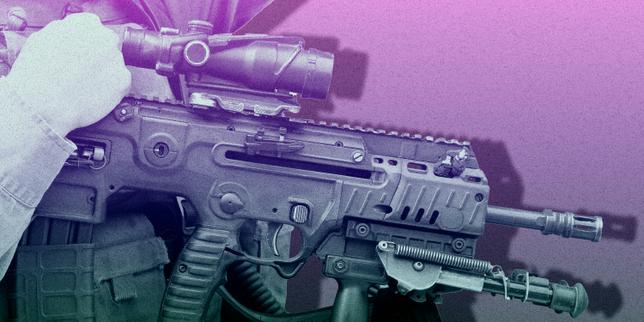
Consider the "Barkhane" soldier. Let’s call him Marc. Marc is twenty-four. He has spent three tours in the Sahel. He knows the weight of his body armor, the exact taste of lukewarm water from a plastic bladder, and the specific way the sand gets into the firing mechanism of his rifle. He has seen his friends die in IED explosions on roads that lead to nowhere.
Marc was told he was there to fight "terrorism." But on the ground, terrorism looks a lot like a neighbor settling a score over a well.
The failure in Mali was a failure of imagination. The French high command treated the Sahel like a chessboard, moving pieces to block the advance of a monolithic "jihadist" threat. They failed to see the tapestry—that word is too soft—they failed to see the jagged, blood-soaked map of local realities. By focusing on the global brand of Al-Qaeda or ISIS, they ignored the local realities of the Peul, the Tuareg, and the Dogon.
The military became a victim of its own competence. Because they could strike anywhere, they felt they were everywhere. They weren't. They were in fortified bases, separated from the population by layers of Kevlar and cultural misunderstanding. Every "successful" operation that resulted in collateral damage or disrupted local trade was a recruitment poster for the very groups they were trying to eradicate.
A Divorce in the Desert
The end didn't come with a bang, but with a series of cold, administrative snubs. The Malian coup leaders, sensing the shifting winds, realized they could trade an old, demanding partner for a new, transactional one. They traded Paris for Moscow. They traded a military that talked about human rights and democratic transitions for a mercenary outfit that promised results without the lectures.
The sight of Russian flags flying in Bamako was a visceral shock to the French establishment. It shouldn't have been.
When you spend a decade telling a population you are their only hope, and the security situation only worsens, they will eventually look for a different savior. It doesn't matter if that savior is worse; it only matters that they are different. The French exit was the culmination of a long, slow-motion car crash where the driver refused to look at the GPS.
The statistics tell a grim story. Despite thousands of troops and billions of euros, the number of violent incidents in the Sahel didn't decrease; it skyrocketed. The conflict didn't stay in Northern Mali; it bled into Burkina Faso and Niger. The "firewall" had become a conductor.
The Silence After the Engines Fade
There is a specific kind of silence that follows a departing army. It’s not a peaceful silence. It’s heavy. It’s the silence of a vacuum waiting to be filled.
For the families of the fifty-eight French soldiers who died in the Sahel, the question of "what was it for?" is no longer academic. It is a jagged hole in their lives. To say their sacrifice was in vain is a cruelty, but to say the mission was a success is a lie. They were lions led by bureaucrats who believed that military force could substitute for political legitimacy.
We are left with a haunting reality. The Sahel is more volatile now than it was in 2013. The extremist groups are more decentralized, more entrenched, and more capable. The French military, once seen as the preeminent power in the region, has been asked to leave, its influence evaporated like rain on a hot stone.
The lesson of Mali isn't about the limits of French power, but about the arrogance of thinking that a foreign military can ever be the primary solution to a domestic soul-sickness. You can hold a territory with tanks, but you can only hold a country with trust.
In the end, the desert didn't just swallow the tracks of the French VBCIs. It swallowed the assumption that the West could still dictate the terms of order in a world that has learned to move on without it.
The dust has settled, but the air is still thick with the scent of what was lost.
The map in the operations room in Paris is now blank where Mali used to be. But for the people living in the shadow of the dunes, the war hasn't ended. It has only changed its face, becoming something more intimate, more desperate, and entirely their own. The greatest tragedy of the French intervention isn't that it failed, but that it stayed long enough to make itself the only thing worth hating, leaving nothing behind but a memory of boots in the sand and a sky that refused to offer any answers.