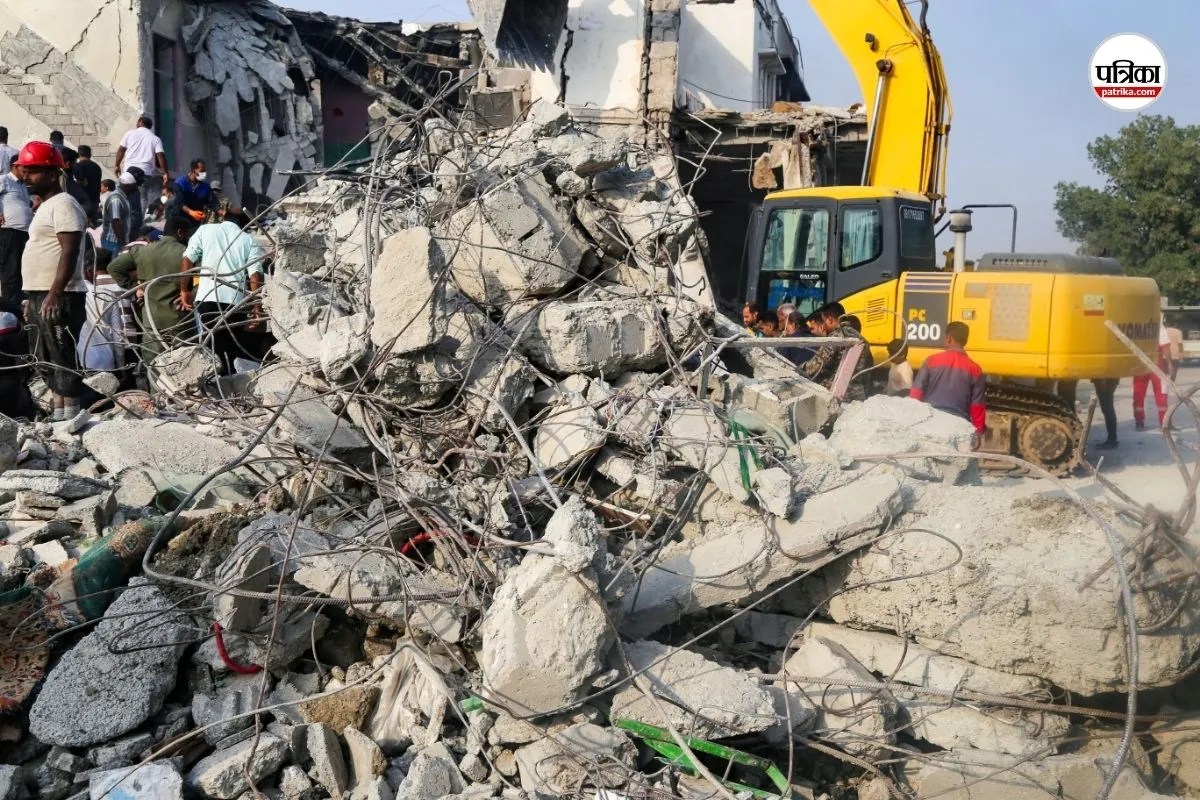
Iran just can't catch a break. While the world watches the high-stakes military chess match between Tehran and Jerusalem, nature decided to remind everyone who's really in charge. A significant earthquake recently rattled Iran, and the timing couldn't be worse. It isn't just a geological event. It's a massive logistical and political headache for a regime already stretched thin by regional proxy wars and direct exchanges of fire with Israel.
When the ground shakes in a country preparing for war, people start asking questions. Was it a natural disaster? Was it a secret underground test? Or did the infrastructure just hit a breaking point? Most people look at the Richter scale and move on. You shouldn't. The real story lies in how a natural disaster complicates the "fog of war" and exposes the vulnerabilities of a nation under immense external pressure.
The Reality of Iran's Seismicity During Wartime
Iran sits on a literal powder keg of tectonic plates. The country is crisscrossed by major fault lines, making it one of the most seismically active regions on Earth. When an earthquake hits during a period of intense military tension with Israel, the psychological impact is 10 times more powerful than the physical tremor.
We've seen this before. In 2003, the Bam earthquake killed tens of thousands. Back then, the world rushed to help. Today? Iran is increasingly isolated. Sanctions make importing heavy rescue equipment or specialized medical supplies a nightmare. If a truly catastrophic quake hits while Iran is trading missiles with Israel, the humanitarian disaster would be unprecedented. The Iranian government's ability to manage a "two-front war"—one against a foreign military and one against the earth itself—is highly questionable.
Why People Think Every Quake is a Nuclear Test
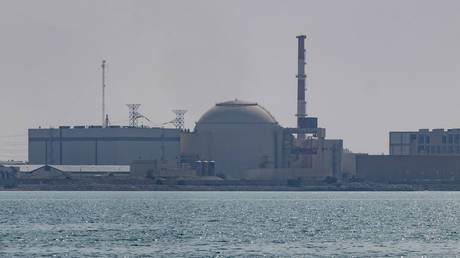
Social media goes into a frenzy every time the USGS reports a tremor near Semnan or Natanz. The rumors start instantly. "Was it a secret nuclear test?" "Did Israel sabotage an underground facility?"
Let's be real. Discriminating between a tectonic event and an explosion is basic science for global monitors. An earthquake starts with a slow "P-wave" followed by a jagged "S-wave." An explosion is a sudden, massive spike. Organizations like the CTBTO (Comprehensive Nuclear-Test-Ban Treaty Organization) track these things in real-time.
However, the perception matters. If the Iranian public believes their government is conducting risky underground experiments that cause tremors, internal dissent grows. If they think Israel has the power to trigger "artificial" quakes through cyber-attacks or deep-penetration bunkers, the fear factor skyrockets. In the current Iran-Israel conflict, psychological warfare is just as important as the range of a Fattah missile.
Infrastructure Under Pressure
War isn't just about soldiers. It's about power grids, water lines, and bridges. Iran's infrastructure is aging. Decades of sanctions mean that many buildings in major cities don't meet modern seismic codes.
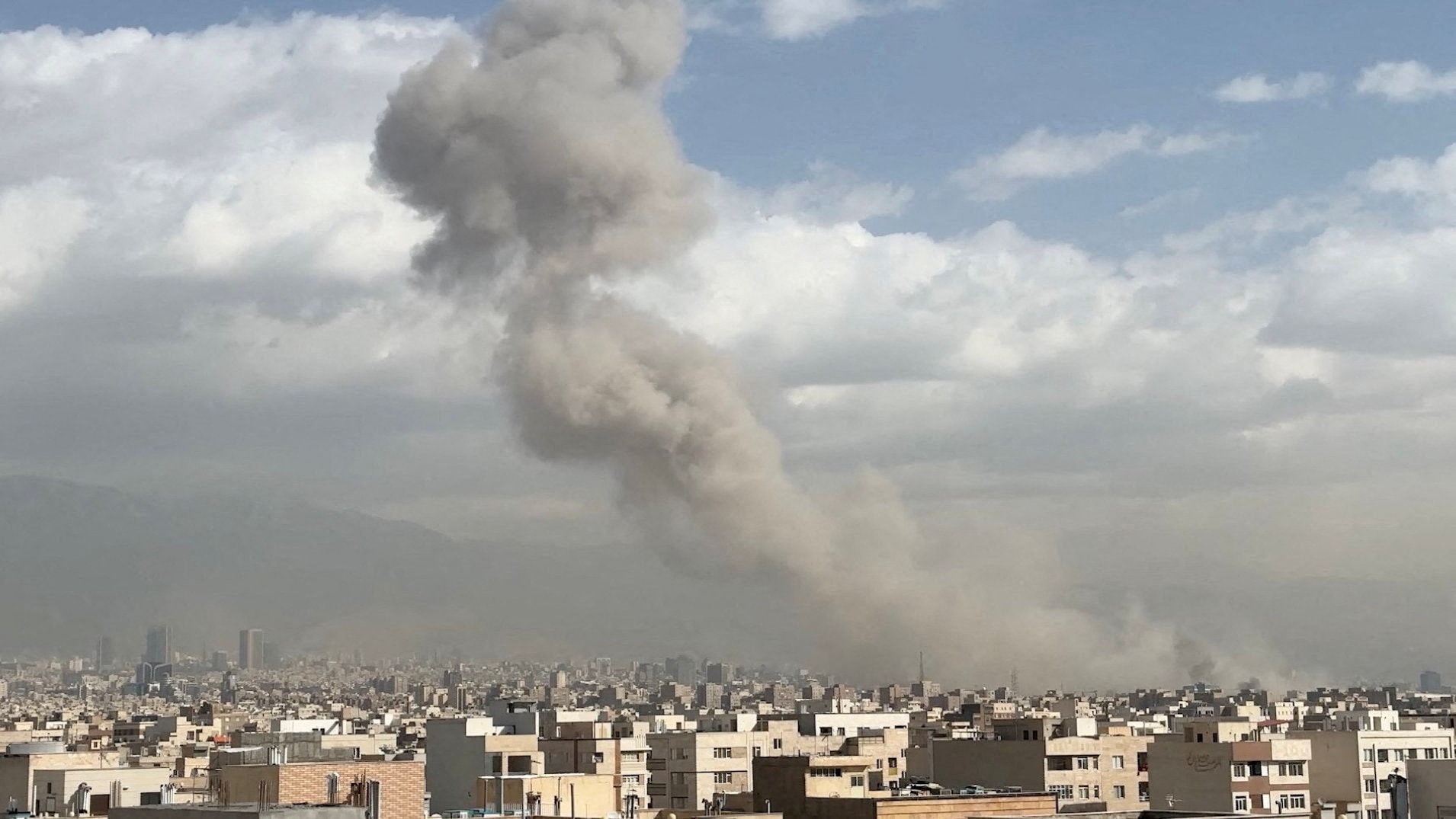
Now, imagine a scenario where Israeli precision strikes have already damaged command-and-control centers or energy hubs. Then, a 6.0 magnitude quake hits. The cascading failure would be total. Emergency services that should be putting out fires from an airstrike are instead digging people out of collapsed apartments. It's a nightmare for any military strategist.
I've looked at the data on Iranian urban density. Cities like Tehran are incredibly vulnerable. The narrow streets of older districts make it impossible for rescue vehicles to pass. If the IRGC (Islamic Revolutionary Guard Corps) has to choose between moving mobile missile launchers and moving ambulances, we all know which one they’ll pick. That choice breeds deep-seated resentment among the civilian population.
The Geopolitical Fallout of a Shaking Earth
Regional rivals aren't just watching the missiles; they're watching the response. If Iran looks weak or disorganized after an earthquake, its "Axis of Resistance" partners—Hezbollah, the Houthis, and militias in Iraq—might start to doubt the stability of their benefactor.
On the flip side, a disaster can sometimes offer a weird "off-ramp" for de-escalation. Historically, "earthquake diplomacy" has allowed bitter rivals to send aid and open communication channels without looking like they're surrendering. But don't hold your breath. The current animosity between the Netanyahu government and the Khamenei regime is too deep for a few boxes of bandages to fix.
What Happens if the Big One Hits Now
The statistical probability of a major quake in the Tehran region is terrifyingly high. Experts have warned for years that a 7.0+ magnitude event is overdue. If that happens while the IRGC is focused on a counter-strike against Israel, the Iranian state could effectively cease to function in its current form.
The focus shifts from "how do we hit Tel Aviv?" to "how do we stop the capital from burning?" Israel knows this. The US knows this. Most importantly, the Iranian people know this. They are trapped between a hard-line government and a restless earth.
If you're tracking this conflict, don't just look at the flight paths of drones. Watch the seismic monitors. A major geological event in Iran right now wouldn't just be a news cycle distraction. It would be a strategic pivot point that could end the conflict—or turn it into a multi-generational tragedy.
Keep an eye on the official reports from the Iranian Seismological Center but cross-reference them with independent data from the USGS or the European-Mediterranean Seismological Centre (EMSC). If the depths are shallow (less than 10km) and the location is near a known military site, the "natural disaster" narrative gets a lot more complicated. Check the satellite imagery of the epicenters for any signs of surface disruption that don't match typical faulting patterns.