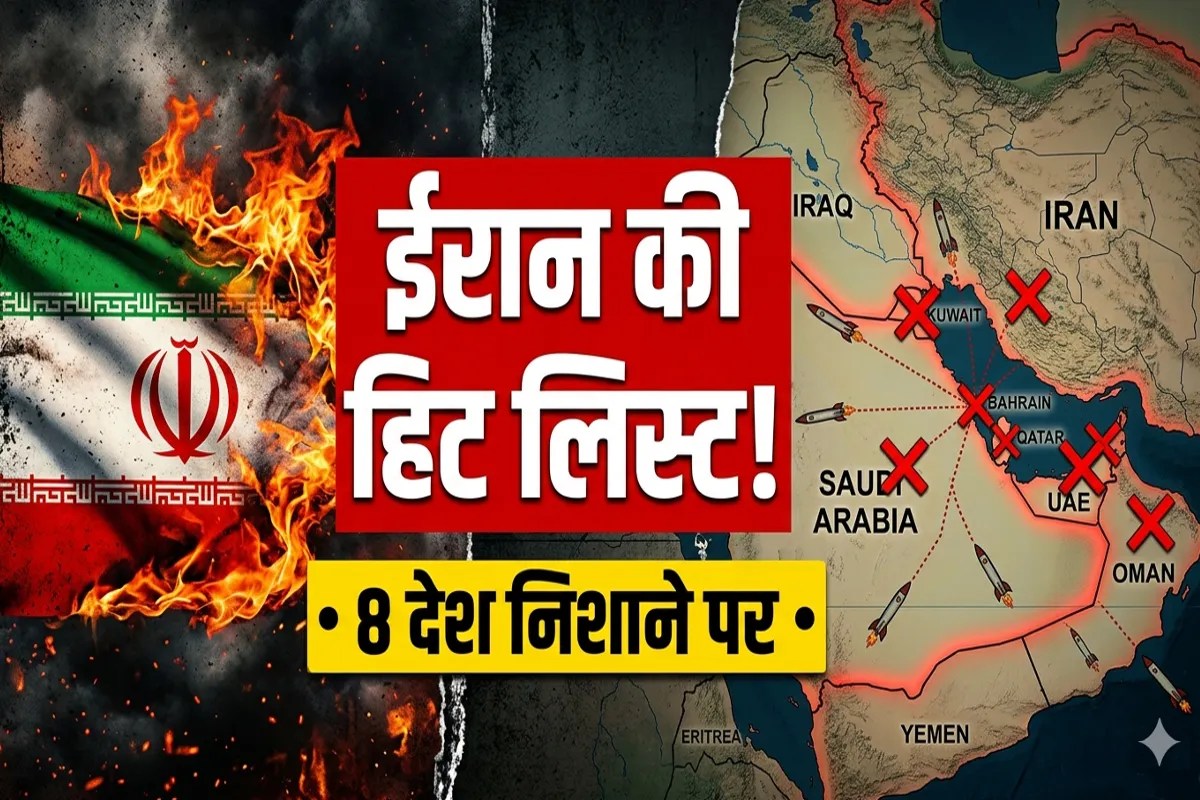
The air in Tehran does not just carry the scent of exhaust and jasmine; these days, it carries the weight of a heavy, vibrating silence. It is the kind of quiet that precedes a desert storm, where the sand has not yet begun to fly but the birds have already stopped singing. On the dome of the Jamkaran Mosque, a crimson flag unfurls against the blue sky. To a casual observer, it is a piece of fabric. To those who live under its shadow, it is a blood debt. It is the Ya Laytharat al-Hussein—a call for vengeance that hasn't been sounded lightly in centuries.
Geopolitics is often discussed in the sterile language of "strategic assets" and "surgical strikes," but for a father sitting in a cramped apartment in Isfahan or a drone operator staring at a flickering screen in an underground bunker near Kermanshah, the stakes are visceral. They are human. The headlines scream about eight specific targets and a "full plan," yet the true story isn't found in the coordinates of a map. It is found in the calculated, agonizing wait.
The Architecture of a Shadow War
War is no longer just steel meeting steel. It is a digital pulse sent through a fiber-optic cable that shuts down a water treatment plant. It is a ghost on a radar screen that forces a billion-dollar fighter jet to divert. When Iran speaks of "blood for blood," they aren't just talking about the primitive exchange of shells. They are talking about a sophisticated, multi-layered symphony of disruption designed to prove one thing: no one is untouchable.
Imagine a technician in Haifa. Let’s call him Elias. Elias spends his days ensuring the smooth operation of power grids. He doesn't think of himself as a soldier. But in the grand "Full Plan" mapped out in the war rooms of the Revolutionary Guard, Elias’s workstation is a frontline. If the lights go out in Haifa, the psychological blow is far greater than the physical damage. It sends a message to every kitchen table in the region that the shield has a crack.
The eight targets being whispered about are not just buildings. They represent the nervous system of a modern state. We are looking at airbases like Nevatim, where the F-35s sit like expensive birds of prey. We are looking at the ports where the lifeblood of trade flows. We are looking at the very symbols of sovereignty that, if touched, turn a confident nation into a vulnerable one.
The Ghost in the Machine
The sophistication of this planned retaliation relies heavily on what we might call the "invisible infantry." These are the lines of code and the low-cost, high-impact suicide drones that have redefined 21st-century conflict.
A drone like the Shahed-136 costs less than a luxury sedan. It is noisy, slow, and relatively simple. Yet, when launched in a swarm, it becomes a mathematical nightmare for the most advanced defense systems. Think of it like a cloud of locusts. You can swat ten, twenty, or fifty. But if fifty-one are sent, and that one lone survivor finds its way to a radar array or a fuel depot, the mission is a success.
This is the asymmetry of modern anger.
The planners in Tehran know they cannot win a conventional, ship-to-ship, jet-to-jet war against a superpower-backed adversary. They aren't trying to. Their strategy is rooted in the "death by a thousand cuts" philosophy. They want to make the cost of defiance too high to pay. They want to ensure that every time a siren wails in Tel Aviv or an American base in Erbil goes into lockdown, the psychological fatigue deepens.
The Weight of the Red Flag
There is a specific kind of dread that comes with knowing you are on a list. For the personnel stationed at the Port of Eilat or the Dimona research facility, the "Full Plan" isn't an abstract news item. It is the reason they don't sleep through the night. It is the reason they look at the sky a little longer before entering a building.
The Iranian leadership is balancing on a razor's edge. To do nothing is to admit weakness to their own people and their proxies across the "Axis of Resistance." To do too much is to invite a rain of fire that could end the regime. So they calibrate. They measure the "blood debt" in increments.
Consider the hypothetical commander tasked with the final "go" order. He sits in a room devoid of windows, surrounded by maps of the Negev desert and the Mediterranean coast. He knows that his finger on the button doesn't just launch a missile; it launches a decade of consequences. He is thinking of his legacy, yes, but he is also thinking of the retaliatory strike that will inevitably follow.
This is the human element of the "Full Plan." It is a game of high-stakes poker where the chips are human lives and the house always wins.
The Eight Circles of Escalation
When the intelligence reports mention eight targets, they are describing a ladder. Each rung represents a higher level of pain.
- The Intelligence Hubs: The eyes and ears. Striking these is a way of saying, "We see you seeing us."
- Air Defense Batteries: Removing the shield before the sword falls.
- Energy Infrastructure: Turning the modern world back to the nineteenth century, if only for a night.
- Desalination Plants: In a land where water is more precious than oil, this is a strike at the very survival of the population.
- Command Centers: Targeting the brains of the military.
- Logistics Nodes: Stopping the flow of food, fuel, and ammunition.
- Economic Symbols: Attacking the stock exchange or major corporate headquarters to bleed the treasury.
- The Personal: Targeting high-ranking officials in a mirror image of the assassinations that started this cycle.
Each of these targets requires a different set of tools. Some require the precision of a Fattah hypersonic missile—a weapon that claims to dance around interceptors at speeds that defy human reaction. Others require a "sleeper cell" or a cyber-attack that has been sitting dormant in a server for three years, waiting for the right "handshake" to wake up and cause chaos.
The Invisible Stakes
We often focus on the explosions because they are loud and easy to film. But the invisible stakes are where the real war is won or lost. The real war is for the "narrative of invincibility."
For decades, the West and its allies have operated under the assumption that they possess a technological edge so vast that no one would dare a direct strike. Iran’s "blood for blood" vow is an attempt to shatter that assumption. They want to prove that the "Iron Dome" has holes and that the "Stealth" can be spotted.
If a single Iranian missile hits a significant target, the geopolitical map of the Middle East doesn't just change—it resets. It tells every minor power and non-state actor that the giants are bleeding.
But there is a cost to the hunter as well.
The Iranian people are not a monolith. While the red flag flies over the mosque, many in the streets of Tehran are more worried about the price of bread and the value of the rial. They know that a "Full Plan" of attack usually leads to a "Full Plan" of sanctions, or worse, a full-scale invasion. The emotional core of this story is a nation torn between a historical pride that demands respect and a modern reality that demands survival.
The Calculus of the Strike
The timing is the most cruel part of the plan. Revenge is a dish best served cold, but in the Middle East, it is often served with a side of psychological warfare. By announcing the plan, by letting the "eight targets" leak into the press, Iran has already achieved part of its goal.
Panic is a weapon.
Every day that passes without an attack is a day the enemy spends millions of dollars on high-alert status. It is a day the stock market fluctuates. It is a day the civilians live in a state of suspended animation. The "plan" is already working, even if a single shot hasn't been fired.
Wait.
Watch.
Listen.
The maps are drawn. The coordinates are locked. The drones are fueled, their small engines humming a low, persistent tune in the hangars of the western provinces. But the real story isn't the explosion that might happen tomorrow. It is the collective indrawing of breath from millions of people who realize that the world they woke up in this morning is not the same one they will inhabit tonight.
The red flag still ripples in the wind over Jamkaran. It doesn't move with the breeze; it moves with the pulse of a region that has forgotten how to breathe. The math of "blood for blood" is never simple, and in the end, the ledger is always written in the names of people who never asked for the war but will be the ones to pay for the peace.
Somewhere, in a room filled with the blue light of monitors, a finger hovers over a key. The "Full Plan" is no longer a document. It is a heartbeat away from becoming history.