The Economic Reality of the 2026 Crucible Victory
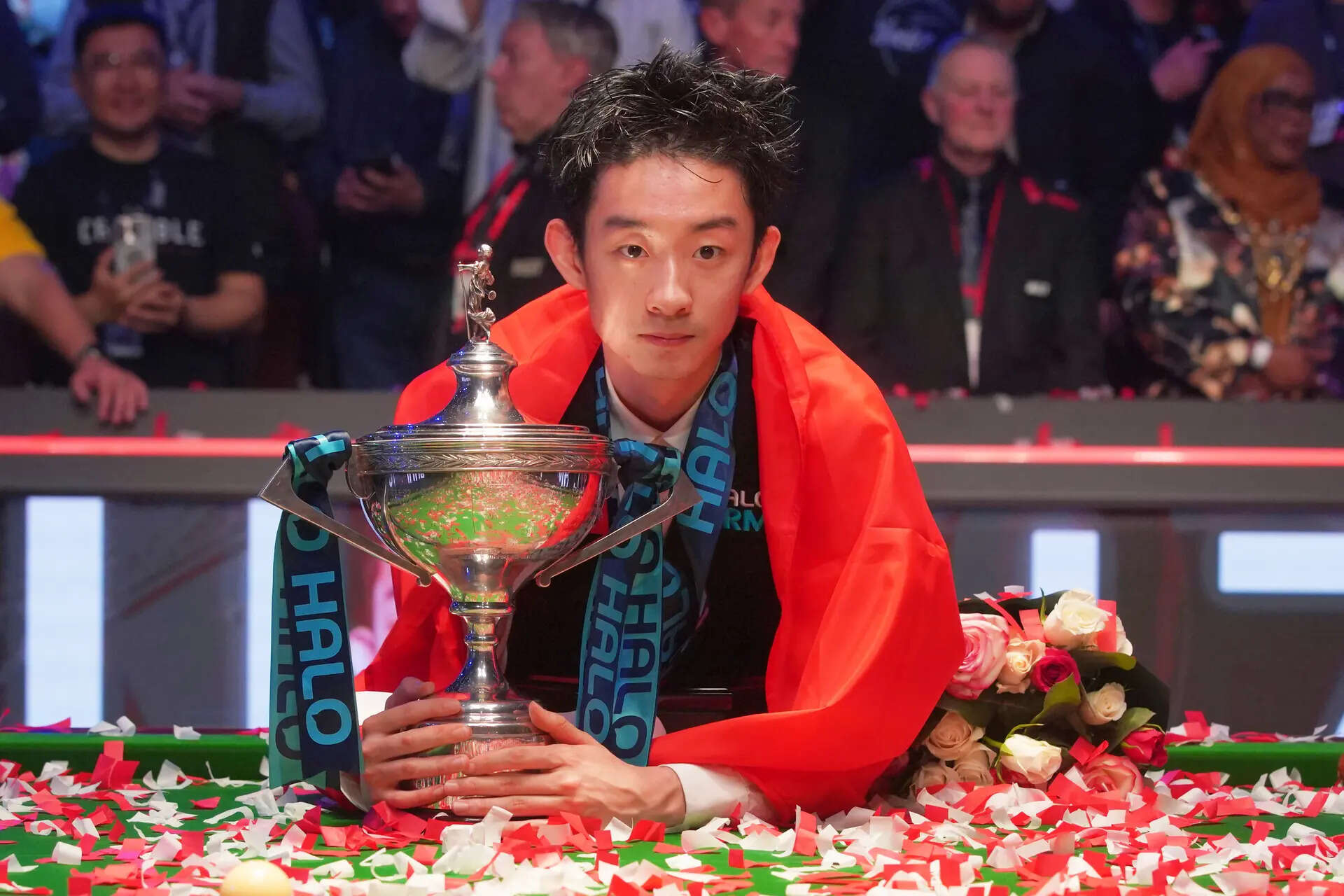
When a 22-year-old athlete secures the most prestigious title in professional snooker, the headlines inevitably focus on the raw prize money and the fairy-tale trajectory from a windowless flat to international stardom. Wu Yize’s 18-17 victory over Shaun Murphy at the 2026 World Snooker Championship represents far more than an inspiring narrative; it is a profound case study in capital allocation, risk-adjusted returns, and the economics of early human capital accumulation in elite sports. The gross prize of £500,000 offers a surface-level view of wealth, but a granular financial analysis reveals a far more complex reality regarding liquidity, taxation, and long-term asset strategy.
Rather than succumbing to lifestyle inflation, the newly crowned world champion has declared his intention to deploy approximately half of his earnings into real estate within the city of Sheffield. This decision challenges the traditional spending habits of young athletes who experience sudden, large windfalls. We must deconstruct the financial, strategic, and developmental implications of this choice to understand the underlying mechanics of modern sports economics.
The Cash Flow Analysis of the Crucible Victory
To evaluate Wu Yize's financial situation, we must establish the precise net cash flow generated by his tournament victory. The £500,000 gross payout does not represent liquid capital available for investment or personal expenditures. The United Kingdom tax regime imposes significant deductions on the earnings of professional athletes. Earnings derived from tournaments in the UK are subject to standard income tax rates and National Insurance contributions, alongside potential deductions if the athlete is considered a foreign resident or if there are agency/management fees involved.
- Gross Prize Pool: £500,000
- Estimated Tax Deductions (Income Tax and National Insurance): £235,000
- Net Liquid Capital: £265,000
This 53% retention rate shifts the financial calculus of the prize significantly. A £250,000 purchase, such as a property in Sheffield, would consume almost the entirety of the net after-tax earnings rather than half of the gross amount.
The cash flow analysis reveals a liquidity constraint. If Wu Yize spends £265,000 on real estate, his remaining liquid capital amounts to zero. The strategic question is whether locking 100% of the liquid returns into a single illiquid asset class constitutes a prudent risk-management strategy for a 22-year-old athlete.
The Cost Function of Elite Human Capital Formation
Understanding Wu Yize's financial choices requires analyzing the investment made in his early development. At the age of 16, Wu and his father, Wu Jianguo, relocated from Lanzhou, China, to Sheffield, England, to access the highest-quality training facilities and competitive circuits. During this period, they lived in a one-bedroom flat, sharing a bed. This required both a high tolerance for hardship and significant financial sacrifice.
We can model this early developmental phase through the lens of a human capital investment function:
$$I = C_{direct} + C_{opportunity} + C_{psychological}$$
- $C_{direct}$ encompasses the cost of travel, coaching, equipment, and accommodation in the UK over a six-year period.
- $C_{opportunity}$ represents the foregone earnings Wu could have accumulated had he pursued alternative careers or different developmental pathways in China.
- $C_{psychological}$ reflects the toll of living in poor conditions, facing isolation, and dealing with health issues due to the climate and living arrangements.
The Crucible victory is the payoff on this six-year investment. The £265,000 net payout represents a positive net present value (NPV) on the human capital investment. However, the depreciation of the athlete's physical and mental capital over the same period must be factored into the equation. Snooker requires immense psychological endurance and fine motor precision. The stress of the deciding-frame shoot-out against Shaun Murphy demonstrates the high-stress environment that athletes operate within.
Let us explore the human capital accumulation further. Wu's journey from an unseeded player to world champion demonstrates a non-linear trajectory. The initial years yielded few, if any, substantial prize payouts. During this period, his financial position was negative on an operational cash flow basis. The prize money earned in 2026 corrects this imbalance, but it represents the cumulative return on a highly risky, unhedged investment in athletic capability. In the field of sports economics, this mirrors a venture capital investment in an early-stage startup, where the founder must survive multiple funding rounds without seeing a return until a liquidation event occurs.
Strategic Real Estate Allocation in the Sheffield Cluster
Wu Yize's stated plan to purchase a house or apartment in Sheffield for £250,000 requires examination from a corporate finance perspective. The Sheffield housing market, while more affordable than London, has experienced distinct price movements. According to real estate valuation data from Rightmove, the average property price in the city is slightly above £250,000.
By purchasing a property in the city where his professional career developed, Wu creates several strategic advantages:
- Elimination of Rental Overhead: The athlete removes ongoing rental expenses from his monthly cost structure, insulating himself against future inflation in the UK housing market.
- Dedicated Practice Base: Owning a property allows for the installation of professional-grade tables and private training conditions, which reduces the reliance on public snooker halls and minimizes travel time between practice locations.
- Foreign Exchange Hedging: Holding a fixed asset in GBP allows a Chinese national to diversify their asset portfolio, creating a hedge against currency fluctuations between the Renminbi and the British Pound.
However, the liquidity sacrifice is the primary limitation of this strategy. A single concentrated asset leaves the athlete vulnerable to local housing market downturns. In the event of a dip in form or a career-ending injury, a fixed asset cannot be liquidated instantly without incurring transaction costs or potential losses. The opportunity cost of tying up £250,000 is the yield that could be earned on the same capital in a diversified investment portfolio, such as index funds or government bonds.
The Pipeline of Chinese Snooker Dominance
The rise of Wu Yize follows the 2025 victory of Zhao Xintong, another Chinese player who triumphed at the Crucible before facing career complications. The succession of Chinese champions at the World Snooker Championship is not an anomaly. It is the result of a deliberate structural shift in the sport's talent pipeline.
The cause-and-effect relationship can be mapped through the following structural factors:
- Institutional Support and Migration: The Chinese Billions and Snooker Association, along with private academies, facilitated the migration of young players to the UK at an early age. This creates an accelerated development pathway compared to domestic-only competitors.
- Intense Match-Play Experience: The UK-based circuit exposes young players to the pressure of British audiences and seasoned professionals. Wu Yize faced a tough path through the 2026 tournament, defeating Mark Selby, Hossein Vafaei, and Mark Allen before the final.
- Psychological Hardening: The experience of living under restrictive or harsh conditions during formative years builds a resilience that manifests in deciding-frame victories.
The structural succession signals that Chinese dominance in the sport is an intentional outcome of a pipeline built on early exposure to professional UK environments, rather than a stroke of random luck. The migration model forces young athletes to adapt to the highly competitive environment of the British circuit, making them tournament-ready when they reach their physical peak.
The Marginal Utility of the Prize Pool
The marginal utility of £500,000 diminishes as the absolute wealth of the athlete increases, but for a 22-year-old breaking into the top tier of the sport, this sum represents a transformative baseline. The marginal utility is highly dependent on how the capital is allocated across risk categories.
We can categorize the allocation into three distinct buckets:
- Risk-Free Assets: Government bonds or high-yield savings accounts that provide steady liquidity and baseline security.
- Fixed Assets: Real estate, which provides physical utility (training base) and potential capital appreciation but limits liquidity.
- Human Capital Expansion: Reinvesting in specialized coaching, sports psychology, and biomechanical analysis to maintain a competitive advantage.
If Wu Yize allocates 100% of his net prize money to real estate, he shifts his portfolio entirely to the second bucket. While this provides a strong sense of security, it exposes him to liquidity risk. A more balanced approach would involve reserving 20% of the net proceeds for human capital expansion, ensuring that the skills that won the championship remain sharp.
Market Comparison: Wu Yize vs. Shaun Murphy
To understand the magnitude of Wu's achievement, we must compare his performance to the veteran runner-up, Shaun Murphy. Murphy, who won his first world title in 2005, operates at a different stage of the career lifecycle. The difference in their respective match-play approaches can be mapped through their marginal break-building speed and shot selection under pressure.
In the 35th and final frame, Wu executed a match-winning break of 85. Murphy, despite his 21 years of Crucible experience, failed to capitalize on early chances, particularly after missing a black off the spot in the penultimate frame. The disparity in performance highlights a shift in athletic prime: younger, more aggressive players can sustain high-octane potting over longer sessions, whereas veteran players rely on tactical nuance and safety play.
The financial disparity is also stark. While Wu takes home approximately £265,000 after taxes, Murphy faces the same tax burden on his £200,000 runner-up prize, leaving him with approximately £106,000 net. The economic disparity between the winner and the runner-up highlights the winner-take-all dynamic of modern professional sports. The £159,000 difference in net payout is equivalent to an entire year of lower-tier tournament earnings, illustrating the high financial stakes of a single deciding-frame shoot-out.
Strategic Forecast: The Next Competitive Cycle
The immediate strategic priority for Wu Yize is not the acquisition of fixed assets, but the preservation of the technical mechanics that secured his 18-17 victory. The marginal return on spending £30,000 to retain a dedicated sports psychologist and a specialized coach far exceeds the return on upgrading a housing asset. The strategic play is to divide the net £265,000 into a 60/40 split: £160,000 allocated toward the Sheffield real estate purchase to secure the training base, and £105,000 held in liquid, high-yield reserves to fund tournament expenses, coaching, and mental conditioning for the upcoming 2027 season.