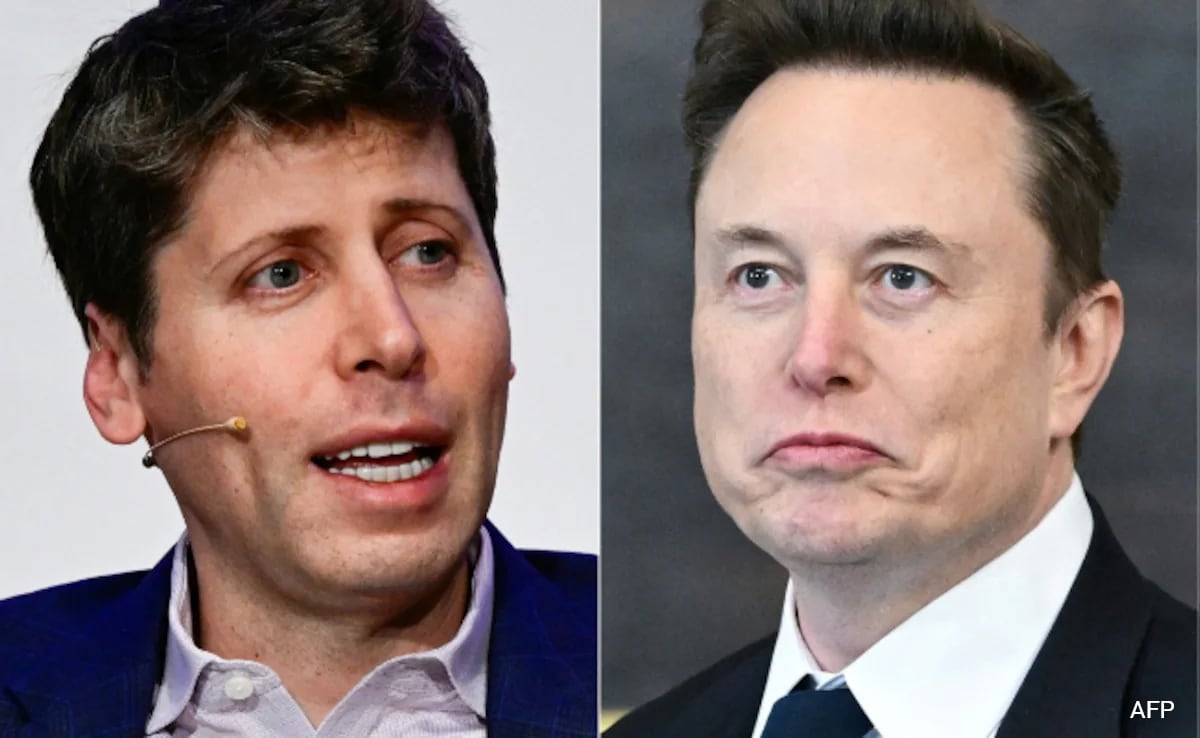
Elon Musk and Sam Altman finally faced off in an Oakland federal courtroom this week, and it wasn't just another dry legal spat between billionaires. This is a full-blown autopsy of OpenAI's soul. Musk claims he was "swindled" into donating $38 million to a non-profit that he says Altman later strip-mined for personal gain. On the other side, OpenAI's legal team is essentially calling Musk a jealous ex-founder who's mad he missed out on the biggest tech gold rush in a generation.
If you've been following the headlines, you've heard the basics. But the trial that started on April 27, 2026, is pulling back the curtain on details that usually stay buried in "highly confidential" Slack channels. Musk wants the court to force OpenAI to give up roughly $134 billion—money he says should go back to the original non-profit mission—and he's demanding the removal of Altman and Greg Brockman from the board.
OpenAI is currently staring down a $1 trillion valuation and a massive public listing. Musk’s lawsuit isn’t just a nuisance; it’s a direct threat to the financial plumbing of the world’s most powerful AI lab.
The broken promise at the center of the trial
The core of Musk's argument is simple: he wouldn't have written those checks if he knew the company would eventually become a "wealth machine" for Microsoft. His lawyers, led by Marc Toberoff, are hammering the idea of a "breach of charitable trust." They’re showing the jury early emails where Altman and Brockman explicitly promised that OpenAI would be the "opposite" of Google—open, transparent, and focused on humanity rather than profits.
I’ve looked at these filings, and honestly, the paper trail is awkward for OpenAI. In 2015, the mission was "to benefit humanity as a whole, unconstrained by a need to generate financial return." Fast forward to today, and OpenAI is arguably the most aggressive commercial entity in Silicon Valley. Musk’s team is betting that a jury of regular people from Oakland will see this as a classic bait-and-switch.
OpenAI isn't taking this lying down. They’ve basically pivoted to a "Musk is a hypocrite" defense. They’ve produced documents suggesting that as early as 2017, Musk himself was pushing for a for-profit pivot, but only if he could have majority control. When the other founders said no, Musk walked away. Their argument is that Musk didn't leave because of the "non-profit mission"—he left because he couldn't be the boss.
What the jury selection tells us about the public mood
Jury selection on Monday was a masterclass in how much people’s feelings about tech have soured. One prospective juror called Musk "a jerk." Another said he "doesn't care about people." It’s clear that Musk’s public persona is a massive liability here.
But Altman isn't exactly the hometown hero either. While he doesn't have Musk's polarizing track record on X (formerly Twitter), jurors expressed plenty of anxiety about AI taking their jobs. That’s a subtle win for Musk. If he can convince the jury that Altman turned a "safe" AI project into a "dangerous" profit-driven one, he might just win on the optics alone.
The Microsoft factor
You can’t talk about this trial without mentioning Microsoft. Satya Nadella is expected to testify, and that's going to be the moment the room gets really quiet. Musk claims that OpenAI has basically become a "closed-source de facto subsidiary" of the Redmond giant.
OpenAI’s defense hinges on the idea that building Artificial General Intelligence (AGI) is so expensive that a pure non-profit model was never going to work. They needed billions for compute power, and Microsoft was the only one willing to provide it. It's a pragmatic argument: "We had to change the rules to survive."
Musk’s response? "Then don't take my money under the old rules."
Why this isn't just about $134 billion
If Musk wins, it could set a massive precedent for how non-profits are allowed to restructure. If a founder can successfully sue to "unwind" a for-profit pivot years later, it’ll send a chill through every venture-backed lab in the country.
Musk is also pushing for a legal definition of AGI. This is the "hidden" part of the lawsuit. OpenAI’s deal with Microsoft supposedly only covers "pre-AGI" technology. If Musk can get a court to agree that GPT-5 or whatever comes next is AGI, he could effectively cut off OpenAI’s revenue pipeline from Microsoft. It’s a surgical strike disguised as a messy brawl.
What you should watch for next
The trial is slated to last about three weeks. Opening statements are where both sides will try to set the narrative—Musk as the betrayed visionary and Altman as the pragmatic savior of the company.
Keep an eye on the "discovery" documents. Musk has already teased that the testimony will "blow your mind." We’re talking about unsealed texts, board meeting minutes from the chaotic 2023 "firing" of Sam Altman, and internal memos about how close they really are to AGI.
If you’re a developer or a tech founder, pay attention to the "unjust enrichment" claims. It’s a rare look at how much equity is actually on the table for OpenAI’s top brass.
Action steps for following the case
- Track the witness list: When Satya Nadella or Greg Brockman takes the stand, look for their answers regarding the specific date OpenAI shifted its focus from "open" to "closed."
- Monitor OpenAI’s stock listing plans: Any major ruling in this case will immediately delay or drastically change their rumored IPO.
- Read the unsealed emails: Don't just trust the summaries. The tone of the 2015-2018 emails between Musk and Altman shows exactly when the relationship started to rot.
This isn't just a fight over money. It’s a fight over who gets to own the future of intelligence. Whether you like Musk or not, he’s forcing a conversation about transparency that the rest of Silicon Valley would much rather avoid.